


Miniature Cartridge Heater
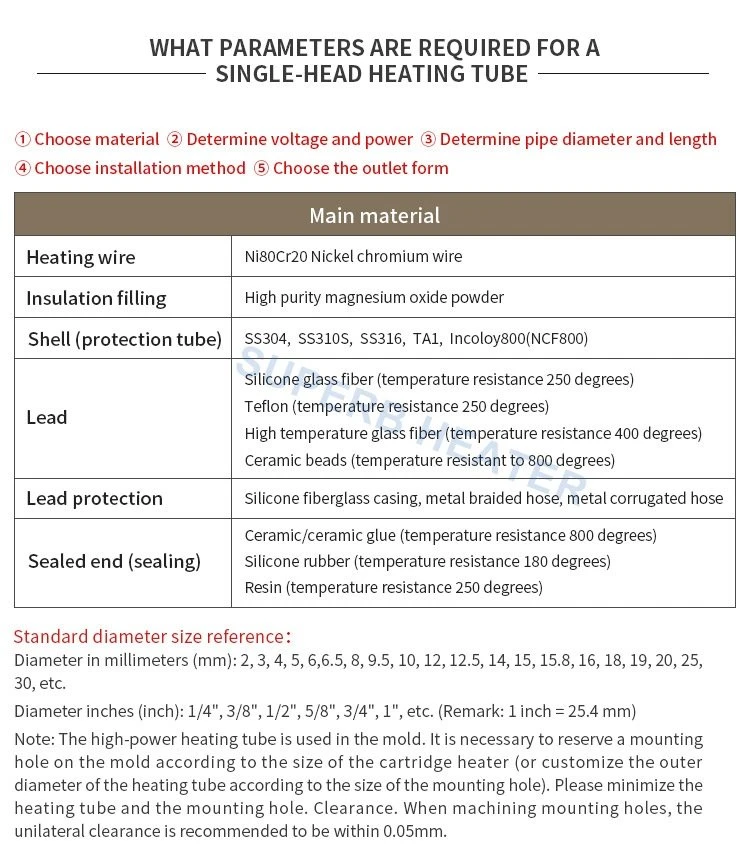
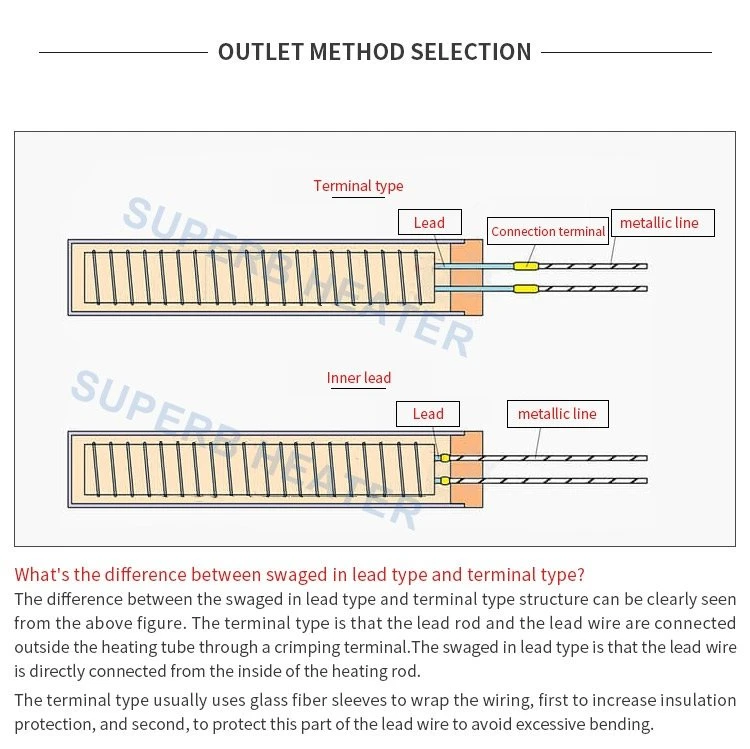
A MgO powder or MgO tube, ceramic cap, NiCr2080 resistance wire, high temperature leads, and a seamless stainless steel sheath are the components of Miniature Cartridge Heater. It is placed into metal blocks through a series of drilled holes for use in heating applications and is typically in tube shape. High density and low density variants of 3D printer cartridge tubes are produced.
Description
Product description
A MgO powder or MgO tube, ceramic cap, NiCr2080 resistance wire, high temperature leads, and a seamless stainless steel sheath are the components of Miniature Cartridge Heater. It is placed into metal blocks through a series of drilled holes for use in heating applications and is typically in tube shape. High density and low density variants of 3D printer cartridge tubes are produced.
In contrast to high density Miniature Immersion Cartridge Heater, which is used to heat plastic injection molds, dies, platens, and other things, low density Miniature Cartridge Heater is better suited for applications including packing machinery, heat sealing, labeling machines, and hot stamping.
Advantages
1: Simple design, high heating power
2: Simple and affordable installation
3: Miniature Immersion Cartridge Heater is Designed and manufactured with good materials
4: Uniform temperature . Accurate dimensions,
5: Maximum heat transfer
6: Convenient maintenance and replacement
7: CE & RoHS approved


Product Application
1:Semiconductor chamber heating
2:Semiconductor wafer lead connection
3:Semiconductor wire and die bonding
4:Freeze protection and deicing of equipment in cold climates or applications
5:Humidity Control
6:Patient Comfort heating used in medical devices
7:Mold die and platen heating
8:Seal bars used in packaging equipment
9:Test sample heating in gas chromatography


FAQ
1.Why the product is so cheap?
A: Because You are ordering directly from the factory.
2.How can I get the quotation and specifications?
A: Superb heater’s heating element and temperature sensor is customized,can produce based on clients' requirements.
3.Where is your factory located? How can I visit there?
A: Our factory located in Dong guan City,Guangdong Province,China
4.What type of payment do you be available?
A: TT and L/C are accepted,for example,the west union/money gram and Paypal are available.
5.How can I get some samples?
A: Samples are available,just contact me.
6.How does your factory do regarding quality control?
A: Superb heater has over 30 years experience for heating elements,quality is proved by CE,ROHS and other quality certifications.
7.How much power does a car heater use?
Assuming a combustion engine, the heat itself uses no power at all. It’s just waste heat the engine produced that would otherwise be dumped under the hood by the radiator anyways.The blower motor, however, does use power, The heater on an electric vehicle can use several kilowatts of power from the battery.
8.How do the heaters in electric vehicles work?
There are three types of heater used in the electric vehicles . Resistance heaters producing the usual vent output to the cabin, or for some cars a heat-pump function using the air conditioner to produce heat inside the car, rather than taking it out of it as it does when cooling the car. The third type is seat heating, which is also resistive, but more local to the passengers and thus uses less energy.
Tesla Model 3 heat within the car is modulated through a sophisticated “bottle” and valves that make use of the AC system for both functions as needed. While ICE cars have way too much heat produced from their engine cooling systems to use more than a small fraction of the hot water for cabin heating, there is still some “waste heat” produced in the running of an EV even though it is over 90% thermally efficient.
Like other efficient cars, Toyota Prius, for example, there does need to be a resistance heating element for the coldest mornings. That will be the greatest draw on an EV’s battery system until the car reaches normal operating temperatures in driving. in colder climates the 10% or so of general usage waste heat will not be sufficient to keep the cabin comfortable so it will affect range to use the heater vents. Just as using the AC in other cars, especially in the past, would drive the mileage down
Send Inquiry
You Might Also Like


