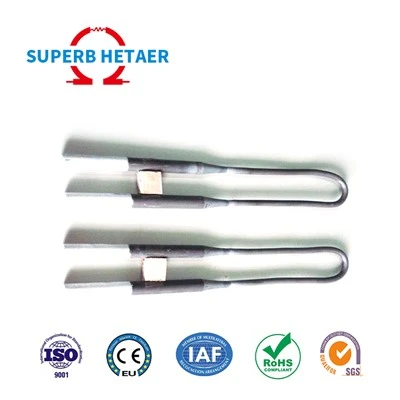
1200℃ Ceramic fiber furnace with silicon carbon rod heating high temperature resistance furnace
Leave a message
The introduction of an intelligent temperature control system marks another revolution in high-temperature resistance furnaces. Multi-stage programmable temperature control technology based on a fuzzy PID algorithm, combined with real-time temperature field monitoring using an infrared thermal imager, can control the temperature difference within the furnace within a ±2°C range. Application data from an aerospace materials research institute shows that this system has improved grain uniformity by 28% during the heat treatment of high-temperature alloys, significantly enhancing the fatigue strength of key components.
1200°C Ceramic Fiber Chamber Silicon Carbon Rod Heating High-Temperature Resistance Furnace
This type of resistance furnace is a commonly used high-temperature heating device in industry and laboratories. Its core features include a high operating temperature of up to 1200°C, ceramic fiber as the furnace insulation material, and silicon carbon rods as the heating elements. It combines high heating efficiency, excellent temperature control, and excellent heat preservation, making it widely used in material sintering, heat treatment, experimental analysis, and other applications.
Core Components and Features
1. Furnace Chamber: Ceramic Fiber
Material Characteristics:
Ceramic fiber is a lightweight, high-temperature-resistant material (capable of long-term operating temperatures exceeding 1260°C). Compared to traditional refractory brick furnace chambers, it offers advantages such as light weight, low thermal conductivity, and excellent insulation, reducing heat loss from the furnace and shortening heating time.
Structural Design:
Usually employing a folded or modular structure, the furnace chamber interior is smooth and flat, reducing thermal inertia. Furthermore, ceramic fiber is resistant to high-temperature shock and resists cracking during frequent temperature increases and decreases, extending the furnace chamber's service life.
2. Heating Element: Silicon Carbide Rod
Operating Principle:
Silicon Carbide Rod (SiC) is a semiconductor heating element. When powered, it generates heat through its own electrical resistance. It can operate stably in high temperatures in air (maximum operating temperature up to 1400°C), fully meeting heating requirements up to 1200°C.
Advantages:
Fast heating speed: Rapid thermal response allows for rapid reaching of the target temperature.
Uniform heating: The surface temperature of the rod is evenly distributed, ensuring consistent temperature within the furnace.
Long service life: When used at 1200°C for extended periods, the lifespan typically reaches 1000-2000 hours (avoiding rapid heating and cooling or mechanical impact).
3. Temperature Control System
Equipped with an intelligent temperature controller (such as PID control), the temperature control accuracy typically reaches ±1°C, with some high-end models achieving ±0.5°C.
Supports programmable temperature control, allowing for multiple heating, holding, and cooling curves to meet complex process requirements (such as step-by-step heating for sintering).
4. Furnace Structure
The outer shell is typically constructed of cold-rolled steel, coated with a high-temperature resistant paint for both aesthetics and durability.
Some models feature a double-layer shell with insulation filling the middle to reduce the outer shell temperature (to prevent burns).
The furnace door features a sealed design (such as a silicone seal) to minimize heat leakage, and is equipped with an observation window (high-temperature quartz glass) for real-time observation of internal conditions.
Applicable Applications
Laboratory Applications: Suitable for high-temperature sintering and melting experiments of ceramics, glass, and metals, or high-temperature roasting and ashing of chemical samples.
Industrial Small-Batch Production: Suitable for heat treatment of small electronic components and shaping of specialty materials.
Research Applications: Suitable for thermal stability testing of materials and high-temperature reaction kinetics research.
Usage Precautions
Heating Specifications: Avoid rapid heating (especially from room temperature to 500°C) to prevent the silicon carbide rods from thermal shock and fracture.
Atmosphere Requirements: Silicon carbide rods operate stably in air, but avoid use in reducing atmospheres (such as hydrogen) to prevent corrosion.
Furnace Maintenance: Regularly clean impurities (such as sintering residue) from the furnace to prevent melted impurities from adhering to the furnace and damaging the silicon carbide rods.
Safety Precautions: The furnace surface remains hot during operation and should be avoided. Wear heat-insulating gloves and goggles when operating at high temperatures.
Comparison with Similar Equipment (Taking 1200°C as an Example)
Comparison Items
Ceramic Fiber Chamber Silicon Carbon Rod Furnace
Refractory Brick Chamber Nickel-Chromium Wire Furnace
Heating Rate Fast (approximately 5-10°C/min) Slow (approximately 2-5°C/min)
Insulation Energy Consumption Low (Ceramic fiber offers excellent thermal insulation) High (Refractory bricks dissipate more heat)
Furnace Weight Light (Suitable for mobile or small installations) Heavy (Requires fixed installation)
Applicable Temperature Stability Good (High Temperature Control Precision) Average (High Thermal Inertia)
In summary, this type of resistance furnace is the optimal choice for the 1200°C temperature range, balancing efficiency, precision, and cost-effectiveness. It is particularly suitable for applications requiring high heating rate and temperature control.