1400 degrees Ceramic Fiber Intelligent High Temperature Sintering Furnace
Leave a message
The core advantage of the 1400°C Ceramic Fiber Intelligent High-Temperature Sintering Furnace lies in its groundbreaking thermal field design. The furnace chamber is constructed using multi-layer composite ceramic fiber modules. Using a topology optimization algorithm, the furnace increases heat radiation reflection efficiency to 92%. Its unique honeycomb pore structure reduces heat loss by 37% compared to conventional furnaces. This innovative structure achieves industry-leading furnace temperature uniformity of ±5°C, creating an ideal environment for the crystal phase transformation of precision ceramic components.
The intelligent temperature control system, equipped with a fourth-generation fuzzy PID algorithm and a distributed infrared temperature measurement array, can capture temperature gradients in 16 zones within the furnace in real time. When the system detects that the zirconia ceramic blank is entering the sintering shrinkage phase, it automatically adjusts the heating curve with an accuracy of 0.1°C/s, effectively avoiding the cracking and deformation common in conventional sintering. Experimental data shows that the roundness error of silicon nitride bearing balls sintered using this equipment can be controlled to within 0.8μm, a three-order-of-magnitude improvement compared to conventional processes.
The 1400°C ceramic fiber intelligent high-temperature sintering furnace is a device used for high-temperature sintering processes. It uses ceramic fiber as the furnace material and features intelligent control functions, with a maximum operating temperature of 1400°C. The following is a detailed description:
Structural Design:
Furnace: Typically constructed of a double-layer stainless steel structure, the center is filled with insulating materials such as ceramic fiber to reduce heat loss and ensure the external temperature remains within a safe range.
Furnace: Made of ceramic fiber materials such as high-purity alumina fiber or mullite polycrystalline fiber, it offers high-temperature resistance, low thermal conductivity, and excellent thermal shock resistance.
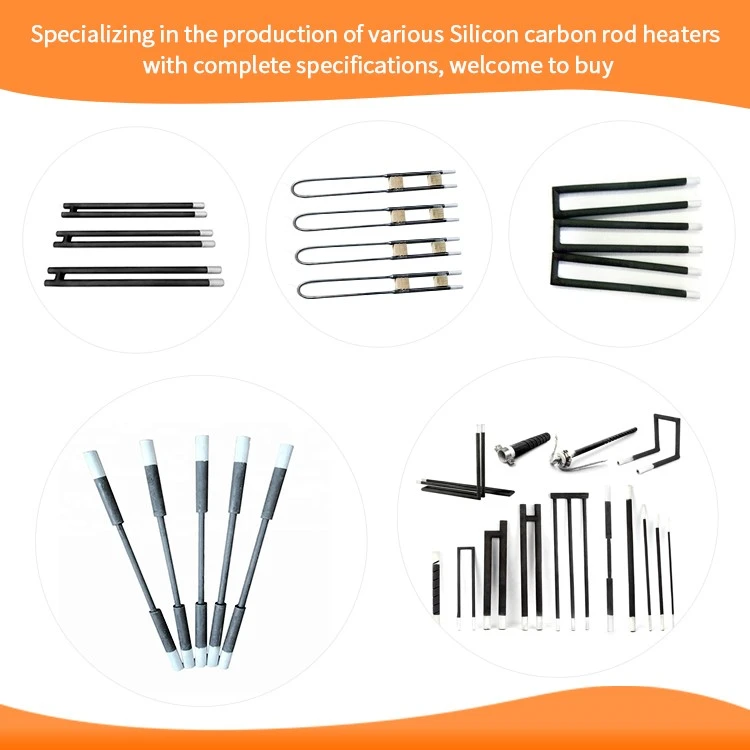
Heating Elements: Silicon carbide rods or silicon molybdenum rods are generally used. Silicon carbide rods offer excellent heat generation and oxidation resistance at 1400°C; silicon molybdenum rods are more suitable for operation in high-temperature, low-oxygen, or vacuum environments, and have a longer service life.
Vacuum System: This includes components such as a vacuum pump, vacuum piping, vacuum valves, and a vacuum gauge, used to extract air from the furnace to achieve a high vacuum.
Gas system: Consists of a gas cylinder, pressure reducing valve, gas flowmeter, and piping. It allows the introduction of inert gases such as nitrogen and argon to create a protective atmosphere around the sample.
Features:
Precise Temperature Control: Equipped with an intelligent temperature control system utilizing advanced PID control technology, the temperature control accuracy reaches ±1°C. Multiple heating, holding, and cooling curves can be pre-set for automated temperature control.
High Vacuum: Typically reaching 10⁻³Pa or higher, it effectively removes air and impurities from the furnace, preventing oxidation and nitridation reactions at high temperatures.
Excellent Atmosphere Protection: A variety of inert gases can be introduced, and the specific atmosphere requirements of different materials can be met by controlling gas flow and pressure.
Excellent Temperature Uniformity: Through the rational design of the heating element layout, furnace structure, and airflow distribution, combined with devices such as deflectors and fans, the furnace temperature uniformity can be maintained within ±5°C.
Functional Configuration:
Intelligent Control System: Equipped with a touch screen or computer control interface, the system allows users to easily set parameters such as temperature, holding time, gas flow rate, and vacuum level, monitor furnace status in real time, and enable remote control and monitoring.
Safety Protection: Equipped with various safety features, including over-temperature alarm, burnout protection, overcurrent protection, leakage protection, and gas leak detection, to ensure operator and equipment safety.
Data Recording and Storage: Records temperature, time, gas flow rate, vacuum level, and other data during experiments or production, and stores them in the device's internal memory or external storage device for convenient data analysis and processing.
Application Areas: Widely used in electronic ceramics, powder metallurgy, new energy materials, and specialty materials research. Examples include the sintering of electronic ceramics such as alumina and zirconia ceramics, the preparation of iron- and copper-based powder metallurgy materials, the sintering of lithium battery cathode materials, and the research and development of specialty materials such as new ceramic composites and intermetallic compounds.
Technical Parameters: The temperature range is typically room temperature to 1400°C; the temperature control accuracy is ±1°C; the vacuum degree can generally reach 10⁻³-10⁻⁵Pa; the gas flow rate is adjustable from 0 to 1000sccm; a variety of furnace sizes are available, such as 300×200×200mm and 400×300×300mm. The heating power is generally between 6-20kW, and the heating rate is typically 1-20°C/min.