Band Heaters vs. Cartridge Heaters: Choosing for Hot Runner Use
Leave a message
Hot runner systems rely heavily on consistent, precise heating to maintain material flow and product quality-but selecting the right hot runner heater often becomes a bottleneck. Many manufacturers face issues like uneven temperature distribution, frequent heater failures, or inefficient energy use simply because the heater type doesn't align with their hot runner setup. Understanding the key differences between band heaters and cartridge heaters is critical to avoiding these headaches and optimizing production.
Band heaters are designed to wrap around cylindrical components, such as hot runner manifolds or barrel sections. They operate by transferring heat directly through contact with the surface, making them ideal for applications where uniform heat spread across a large area is necessary. Based on experience, band heaters work best with larger-diameter hot runner parts, as their wraparound design ensures full surface coverage. They're also relatively easy to install and replace, which helps minimize downtime when maintenance is needed.实际上, their ability to handle moderate to high power outputs makes them suitable for materials that require steady, broad heating, like polyethylene or polypropylene.
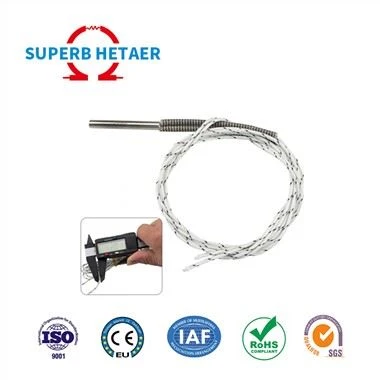
Cartridge heaters, by contrast, are slender, cylindrical heaters inserted into pre-drilled holes in hot runner nozzles or small-diameter components. Their design allows for concentrated heat delivery to specific points- a major advantage for applications needing precise temperature control in tight spaces. These heaters excel at reaching high temperatures quickly, which is essential for processing heat-sensitive materials that demand rapid, targeted heating without overexposing the entire system. Unlike band heaters, their compact size means they don't rely on full surface contact, making them a better fit for intricate hot runner designs with limited space.
When picking between the two for hot runner use, several factors come into play beyond just design. Temperature accuracy is a top consideration: cartridge heaters offer tighter control, often within ±1°C, making them preferable for delicate materials like ABS or PC that are prone to degradation. Band heaters, while less precise in focused areas, provide more consistent heat across larger surfaces, reducing the risk of cold spots in manifolds.
Durability in harsh production environments also matters. Band heaters are more exposed to external impacts, dust, and chemical spills, so selecting models with robust insulation and corrosion-resistant casings is vital. Cartridge heaters, being enclosed in drilled holes, are better protected from external damage but can suffer from overheating if the hole fit is too loose-air gaps between the heater and component reduce heat transfer and shorten lifespan. Based on experience, ensuring a snug fit (typically 0.05–0.1mm clearance) is a simple yet effective way to extend cartridge heater life in hot runner systems.
Energy efficiency shouldn't be overlooked either. Cartridge heaters waste less energy since heat is directed inward to the component, rather than outward to the surrounding environment. Band heaters, however, can be optimized with insulation sleeves to reduce heat loss, making them more efficient for long-duration, high-temperature operations.
The bottom line is that there's no one-size-fits-all hot runner heater. Band heaters shine in large-diameter manifolds and applications prioritizing uniform surface heating, while cartridge heaters are the go-to for precise, targeted heating in nozzles and compact components. Matching the heater type to the hot runner's design, material requirements, and temperature needs is key to reliable performance.
Hot runner systems vary widely in complexity, from simple single-nozzle setups to multi-cavity manifolds with intricate temperature zones. Achieving optimal results often requires tailored heating solutions that account for specific component dimensions, material properties, and production goals. Professional hot runner heater selection and system integration ensure that heating performance aligns with overall production demands, minimizing issues and maximizing efficiency.