Common faults and troubleshooting methods of ceramic electric heating bands: How to solve the problem of uneven heating or overheating?
Leave a message
Ceramic electric heating coils are widely used in various industrial and commercial fields, especially in environments with high-temperature heating requirements, such as electric furnaces, drying equipment, food processing, etc. With its advantages of high temperature resistance, corrosion resistance, and high heating efficiency, it has become an indispensable component in many equipment. However, during long-term use, ceramic electric heating coils may have some faults, especially problems such as uneven heating or overheating. These problems will not only affect the normal operation of the equipment, but may also cause safety hazards. Therefore, it is very important to find problems in time and take effective troubleshooting measures.
This article will focus on the common faults that ceramic electric heating coils may encounter during use and provide corresponding solutions.
1. Common causes and troubleshooting methods for uneven heating
1. Unstable power supply or voltage fluctuations
Instability of power supply or voltage fluctuations will cause uneven heating effect of ceramic electric heating coils. Low voltage may cause the heating coil to fail to reach the expected heating temperature, while high voltage may cause overheating problems.
Solution:
- Check whether the power supply voltage meets the working requirements of the heating coil and ensure that the power supply is stable.
- Use a voltage stabilizer or UPS (uninterruptible power supply) to avoid the influence of voltage fluctuations on the heating effect.
2. Poor or loose contact of the heating coil
If the ceramic electric heating coil has poor contact with the connection of the heating system, it may cause insufficient local heating and uneven heating. Common reasons include cable aging, oxidation of contact points or loose connections.
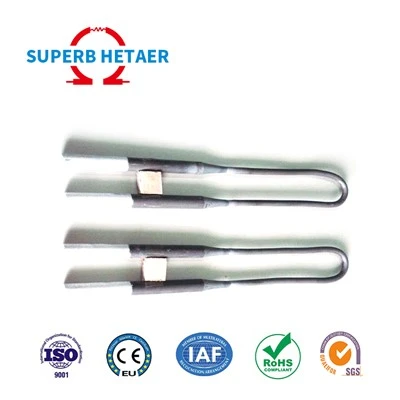
High-power ceramic heating coil
Solution:
- Check the cables and terminals regularly to ensure that they are in good contact and rewire if necessary.
- Replace damaged or aged cables and terminals to maintain good electrical connections.
3. Damage to the ceramic electric heating coil
After long-term use, the surface of the ceramic electric heating coil may crack, fall off or be otherwise damaged, resulting in uneven heating or malfunction.
Solution:
- Check the ceramic electric heating coil for physical damage such as cracks and fall off, and replace the damaged parts in time.
- Perform regular inspections to ensure that the surface of the heating coil is intact to avoid uneven heating due to ceramic damage.
4. Temperature sensor failure
If the temperature sensor fails, it may cause inaccurate temperature control during the heating process, resulting in uneven heating.
Solution:
- Check the temperature sensor regularly to ensure that it is working properly.
- If the sensor is damaged or the measurement is inaccurate, it should be replaced in time.
5. Uneven heating environment
In some heating equipment, uneven heat conduction between the heating coil and the surrounding environment may also cause uneven heating. For example, poor air circulation inside the equipment leads to uneven heat distribution.
Solution:
- Check whether the air circulation inside the equipment is smooth, and optimize the design of the heating chamber if necessary to ensure uniform heat distribution.
- Use fans or forced air flow equipment to promote uniform heat distribution.
2. Common causes and troubleshooting methods of overheating problems
1. The heating temperature is set too high
If the temperature of the ceramic electric heating coil is set too high, it may cause overheating and even burn the heating coil or related components.
Solution:
- Ensure that the temperature control system is set reasonably to avoid excessively high temperatures.
- Check the temperature control system regularly to ensure that the temperature setting meets the process requirements.
2. Overload use
The ceramic electric heating coil will overheat if it is overloaded for a long time. Overload may be caused by insufficient capacity of the heating coil, overload operation or long-term high temperature operation.
Solution:
-Use strictly according to the load range recommended by the manufacturer to avoid overload operation.
-Check the load of the heating coil regularly to ensure that it does not exceed its rated power when used.
3. Heat accumulation
If the space around the ceramic electric heating coil is not well cooled, heat will accumulate inside the heating coil, causing overheating. Common reasons include poor ventilation in the surrounding environment or accumulation of materials around the heating coil, which affects heat dissipation.
Solution:
-Make sure there is enough heat dissipation space around the heating equipment to avoid objects blocking the heating coil.
-Install a fan or add a heat dissipation system to help accelerate heat dissipation and prevent overheating.
4. Uneven resistance of the heating coil
If the resistance distribution of the ceramic electric heating coil is uneven, overheating may occur in some areas. The reason for the uneven resistance may be raw material problems or defects in the manufacturing process.
Solution:
-Check the resistance distribution of the heating coil regularly to ensure that the resistance of each part is uniform.
- For heating coils with uneven resistance, they should be replaced in time to avoid overheating and causing equipment damage or safety accidents.
5. Temperature control system failure
If the temperature control system fails and the temperature cannot be adjusted in time, it may also cause the ceramic electric heating coil to overheat. Common faults include thermostat failure, temperature sensor damage, etc.
Solution:
- Regularly check and calibrate the temperature control system to ensure that it works properly.
- Replace faulty thermostats and sensors in time to avoid system out of control.
3. Other common faults and solutions
1. Aging or damage of the power cord
Aging or damage of the power cord will affect the power supply stability of the heating coil, resulting in uneven heating or malfunction.
Solution:
- Regularly check the status of the power cord to ensure that it is not worn, aged or broken.
- Replace damaged power cords to ensure stable power supply.
2. Dirt on the surface of the heating coil
If too much dirt or dust accumulates on the surface of the heating coil, it will affect the conduction of heat, resulting in reduced heating efficiency and even overheating.
Solution:
- Clean the surface of the ceramic electric heating coil regularly to keep it clean and free of dirt.
- Use a soft cloth or brush to remove dust from the surface and avoid scratching the surface with hard objects.
4. Summary
There are many reasons why the ceramic electric heating coil has uneven heating or overheating problems during heating, which may be related to factors such as power supply, equipment installation, temperature control system, and material quality. In order to solve these problems, manufacturers and users need to regularly inspect and maintain the equipment to detect and eliminate problems in time. Through reasonable maintenance, scientific operation and timely troubleshooting, the service life of the ceramic electric heating coil can be effectively extended, the heating efficiency of the equipment can be improved, and the stability and safety of the production process can be ensured.