Common Misconceptions About Hot Runner Heaters Debunked
Leave a message
Many manufacturing facilities relying on injection molding often face unexpected downtime or subpar product quality due to misunderstandings about hot runner heaters. These small but critical components are frequently overlooked in terms of proper selection and maintenance, leading to assumptions that cost time and resources. Let's clear up the confusion with practical insights and evidence-based facts.
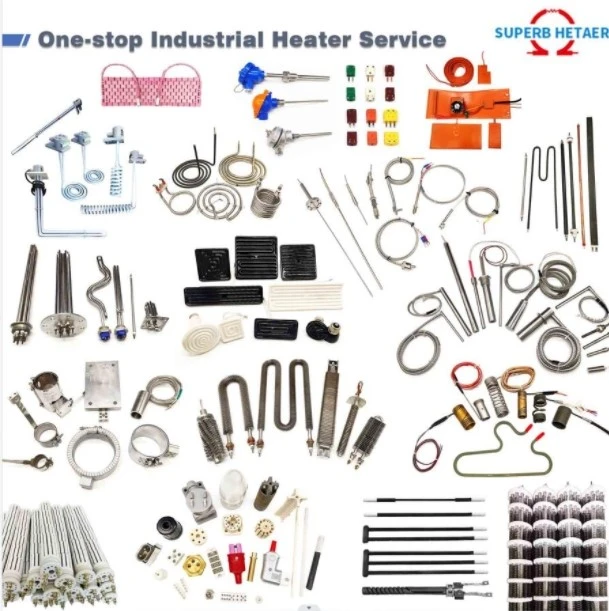
A widespread myth is that all hot runner heaters perform the same across different applications. According to experience, this couldn't be further from the truth. Hot runner heaters come in various types-such as coil heaters, cartridge heaters, and strip heaters-each designed for specific hot runner systems and molding requirements. In contrast to general electric heaters used for space heating or water heating, hot runner heaters prioritize precise temperature control within a narrow range, usually ±1°C, to ensure consistent melt flow of plastics. Electric space heaters focus on large-area heat distribution with moderate accuracy, while boilers rely on fluid circulation and are unsuitable for the localized, high-precision needs of hot runner systems. In reality, using a one-size-fits-all hot runner heater often results in uneven heating, plastic degradation, or even heater burnout.
Another common misconception is that higher wattage equals better performance. Many operators assume cranking up the wattage will speed up heating and improve efficiency, but this is a risky move. Excessive wattage can cause localized overheating, damaging the hot runner manifold and plastic materials. According to experience, wattage selection should align with the manifold's size, material thermal conductivity, and the plastic's melting point. For example, engineering plastics like PEEK require gradual, consistent heating, so a lower-wattage heater with uniform heat distribution works better than a high-wattage one. Additionally, poor contact between the heater and manifold-often ignored during installation-leads to energy waste and temperature fluctuations. Ensuring tight fitting and cleaning surface contaminants before installation is crucial to maximize heat transfer.
Maintenance is another area where myths prevail. Some believe hot runner heaters are "set-it-and-forget-it" components, but regular checks are essential for longevity. In reality, mineral deposits, plastic residue, and wear over time can affect heater performance. Periodic resistance testing helps detect internal damage early-most quality hot runner heaters have a stable resistance range, and deviations of more than 10% indicate a need for replacement. Avoiding rapid temperature changes is also key; sudden heating or cooling shocks the heater element, reducing its lifespan significantly.
To sum up, understanding hot runner heater types, matching wattage to application needs, and prioritizing regular maintenance are core to avoiding common pitfalls. Properly selected and maintained hot runner heaters boost production efficiency, reduce downtime, and ensure consistent product quality. Different injection molding setups, plastic materials, and production volumes demand tailored solutions-there's no universal approach to hot runner heater integration. Professional scheme design, considering factors like manifold geometry and process requirements, is essential to unlock the full potential of hot runner systems and optimize molding operations.