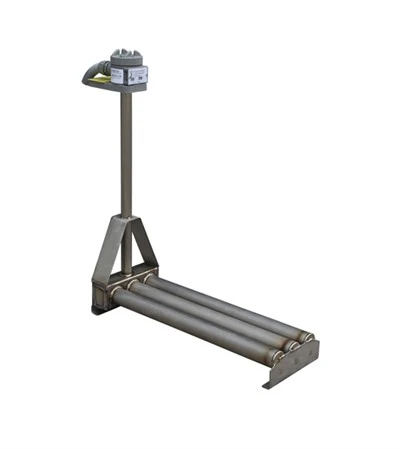
Explanation of the Heating Part of Plastic Extruder
Leave a message
Energy saving in the heating part of plastic extruders: Most of the energy saving in the heating part is achieved by using electromagnetic heaters, with an energy saving rate of about 30% -70% of that of old-fashioned resistor coils.
1. Compared to resistance heating, electromagnetic heaters have an additional insulation layer, which increases the utilization rate of thermal energy.
2. Compared to resistance heating, the heating speed of electromagnetic heaters is not slow, which improves the production power and keeps the motor in a saturated state, reducing the energy loss caused by high power and low demand.
3. Compared to resistance heating, electromagnetic heaters have a heating speed that is more than three-quarters faster, reducing heating time.
4. Compared to resistance heating, electromagnetic heaters directly act on the heating of the material tube, reducing heat transfer and energy loss.
Precautions for the operation process of plastic extruder:
1. Special attention should be paid to stable fire protection, and fire extinguishers should be placed near machinery and equipment that use thermal oil.
2. To determine stable equipment, it is not advisable to pursue stable protection measures for faulty equipment in the speed range.
3. During the operation of plastic machinery equipment, if the material temperature does not reach the set temperature but the temperature time is insufficient, the plastic extruder screw cannot be started and operated.
4. During the operation of plastic machinery equipment, gear oil with cleanliness, viscosity and other indices that meet the requirements should be used, and sufficient flow of cooling circulating water should be provided to the water cooler to prevent hydraulic components and pipelines from being contaminated by compressor lubricating oil or from continuing to be damaged due to high temperature, such as blockage and oil leakage. Plastic extruders should add lubricating oil that meets the requirements to the reducer.
5. When abnormal or abnormal situations occur, it should be reported to the relevant personnel and handled by the maintenance center staff. If any abnormal problem that damages stability occurs, immediately press the emergency stop button.
6. Do not use low-quality recycled materials with metal residue or fine sand, and do not place metal objects that may fall into the vicinity of the feed inlet to prevent damage or jamming of the plastic extruder screw and barrel.
7. The operation process is carried out by personnel who have been trained to understand the structural performance and operating procedures of plastic machinery equipment.
Extruder is one of the types of plastic machinery. Based on the direction of the material flow in the extruder head and the angle between the centerline of the screw, the extruder head can be divided into angled and angled heads. Different types also play different roles in practical operations. When making different plastic products, the key operation of the extruder is different, but there are also similarities.
Plastic pipe extruders play a crucial role in our daily lives and can be used in a normal manner during operation. Especially in the production workshop, their use is particularly extensive.
For example, the PE pipes commonly used are produced by such equipment, as well as plastic sheet production lines, twin-screw sheet extruders, ABS sheet extruders, and other practical specifications. In the process of use, there are also practical specifications. Such plastic pipe extruders are also divided into single and twin-screw types. The more selective the application.
Characteristics of plastic extruder extrusion molding
1. The production rate is good: the average annual production capacity of the extruder is three times that of the injection molding machine.
2. Continuous production process: Parts of any length can be produced as needed.
3. Widely used: Most thermoplastic and some thermosetting plastics can be processed by extrusion method. Can process pipes, plates, rods, films, cables, special-shaped profiles, etc. In the molding process of plastic parts, extrusion molding accounts for more than half.