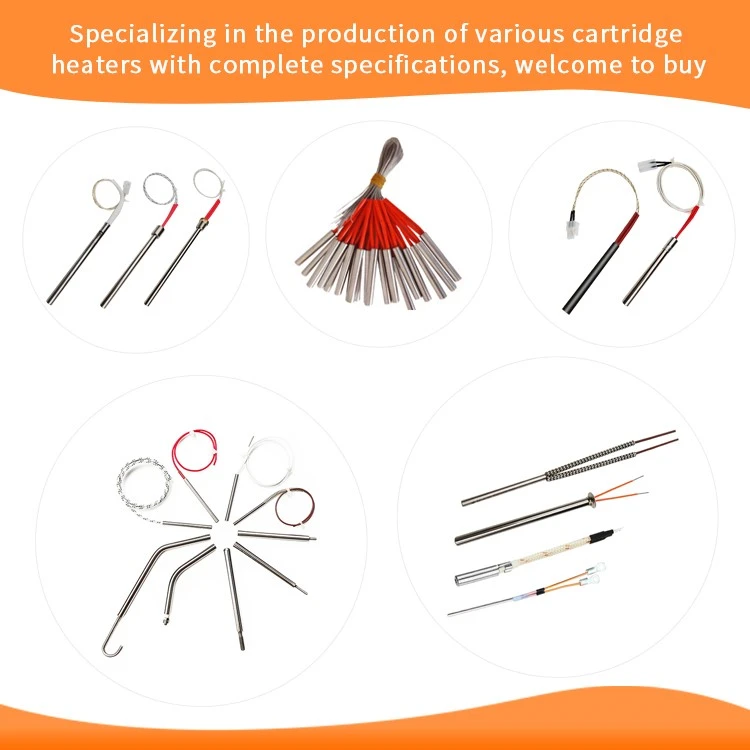
Export standards for single-ended electric heating elements: EU CE and US UL certification requirements.
Leave a message
Single-ended heating elements are commonly used in industrial heating, home appliance manufacturing, and other fields. Exporting to the EU requires CE certification, while entering the US market requires UL certification. Both certifications are mandatory entry requirements, directly impacting product compliance and market access eligibility. This article will break down the core requirements, applicable directives/standards, and key testing items for these two certifications for single-ended heating elements.
I. Export to the EU: Core Requirements for CE Certification
CE certification is a mandatory safety conformity mark established by the EU for products entering its market. Single-ended heating elements must comply with multiple EU directives and harmonized standards, and can only affix the CE mark after passing a compliance assessment. Key applicable directives include the Low Voltage Directive (LVD) and the Electromagnetic Compatibility Directive (EMC). In some cases, the Machinery Directive (MD) or the Pressure Equipment Directive (PED) must also be met.
1. Core Applicable Directives and Scope
- Low Voltage Directive (LVD, 2014/35/EU): Applicable to single-ended heating elements with rated voltages in the range of 50V~1000V AC or 75V~1500V DC. The core objective is to ensure that the product, under normal use and foreseeable abnormal conditions, will not pose safety risks such as electric shock or fire to the human body. This is the foundational directive for CE certification of single-ended heating elements.
- Electromagnetic Compatibility Directive (EMC, 2014/30/EU): This requires that the electromagnetic radiation generated by the single-ended heating element during operation will not interfere with surrounding electronic equipment (EMI), and that it can resist electromagnetic interference (EMS) from the surrounding environment, ensuring normal operation of the product in an electromagnetic environment.
- Additional Directives for Special Scenarios: If the single-ended heating element is integrated into mechanical equipment (such as industrial heating equipment), it must additionally comply with the Machinery Directive (MD, 2006/42/EC); if used in a pressure environment (such as high-pressure heating vessels), it must meet the relevant requirements of the Pressure Equipment Directive (PED, 2014/68/EU).
2. Key Harmonized Standards
CE certification requires testing based on harmonized standards officially recognized by the European Union. Common standards for single-ended heating elements include:
- EN 60335-1: General requirements for safety of household and similar electrical appliances, applicable to single-ended heating elements for household use;
- EN 60335-2-15: Safety of household and similar electrical appliances – Part 2-15: Particular requirements for heating and thermostatic equipment;
- EN 61010-1: General requirements for safety of electrical equipment for measuring, controlling and laboratory purposes, applicable to single-ended heating elements for industrial control applications;
- EN 55014-1/2: Electromagnetic compatibility – Emission/immunity requirements, corresponding to testing standards under the EMC directive.
3. Core Test Items
(1) LVD Directive Related Tests
- Electric Shock Protection Test: Includes insulation resistance test, withstand voltage test, and grounding continuity test to ensure good insulation performance and reliable grounding, preventing electric shock to users;
- Temperature Rise Test: Simulates normal operating conditions, measuring the temperature rise of the heating element shell, lead terminals, etc., which must meet the limits specified in the standard to prevent overheating and fire;
- Mechanical Strength Test: Conducts impact and compression tests on the heating element shell and heating tube body to verify that it will not cause safety hazards due to mechanical damage during transportation and use;
- Abnormal Operation Test: Simulates abnormal scenarios such as dry burning, overload, and voltage fluctuations to test whether the product's safety protection mechanisms (such as fuses and thermostats) can be effectively triggered to prevent danger. (2) EMC Directive Related Tests
- Electromagnetic Emission Testing (EMI): Includes radiated and conducted emissions, limiting the electromagnetic energy generated during product operation to prevent interference with peripheral electronic devices such as radios and televisions;
- Electromagnetic Immunity Testing (EMS): Includes electrostatic discharge immunity, surge immunity, and radio frequency electromagnetic field radiation immunity, verifying whether the product can operate normally and without interference in complex electromagnetic environments.
4. Certification Process
1. Determine the product category and applicable directives and standards; 2. Select a third-party testing organization with EU accreditation (or a self-declaration by the company, applicable to some low-risk products); 3. Submit product samples and technical documents (such as circuit diagrams, nameplates, and instruction manuals); 4. Conduct various tests; 5. After passing the tests, prepare technical documents, sign the declaration of conformity, and affix the CE mark.
II. Exporting to the United States: Core Requirements of UL Certification
UL certification is a voluntary certification offered by Underwriters Laboratories Inc. in the United States. However, in actual market access, the UL mark is considered an important guarantee of product safety, and most US importers, retailers, and consumers require products to have UL certification. UL certification for single-ended heating elements is mainly based on relevant UL standards, with a core focus on the product's safety performance.
1. Core Applicable Standards
UL certification standards for single-ended heating elements are commonly categorized based on application scenarios:
- UL 1048: Safety standard for electric controllers, applicable to single-ended heating elements with temperature control functions;
- UL 1082: Safety standard for electric heating equipment for household and similar uses, applicable to single-ended heating elements in household applications;
- UL 1310: Safety standard for Class 2 power supply units, applicable to low-power single-ended heating elements;
- UL 508: Safety standard for industrial control equipment, applicable to single-ended heating elements in industrial applications;
- UL 60335-1/2-15: Equivalent to IEC standards, can replace the above standards in some scenarios.
2. Core Test Items
UL certification testing focuses on the safety and reliability of products under normal and abnormal use. Core items include:
- Insulation and Electrical Safety Testing: Similar to CE-LVD testing, including insulation resistance testing, withstand voltage testing, and grounding resistance testing, but the test limits and methods differ slightly. For example, withstand voltage test voltage is usually set according to the product's rated voltage and must meet the duration specified by UL standards (generally 1 minute);
- Temperature rise test: Using a test environment specified by UL standards, the temperature rise of key components of the heating element is measured, with particular attention paid to the temperature rise of the heating element body, leads, terminals, and surrounding flammable materials to prevent overheating from igniting surrounding items;
- Fire resistance test: Includes glow wire test and needle flame test, simulating the high temperatures generated when the product has an internal short circuit or overheats, testing the flame retardant performance of the product's casing and insulation materials to ensure that a fire will not spread;
- Abnormal operation and fault condition test: Simulates fault scenarios such as dry burning, thermostat failure, and lead short circuit to test whether the product's safety design can effectively contain dangers, such as whether the fuse melts in time and whether the casing can withstand the high temperatures generated by the fault;
- Mechanical performance test: Includes impact test, vibration test, and tensile test (for leads) to verify the structural stability of the product during transportation, installation, and use.
3. Certification Process and Key Requirements
- Select a UL-accredited testing organization or cooperate directly with UL, submitting product samples and technical documents (including design drawings, bill of materials, and nameplate information);
- UL engineers conduct an initial assessment of the product to determine the testing plan and applicable standards;
- Sample testing is conducted. If any non-conformities are found during testing, the product must be rectified according to UL requirements until it passes the test;
- After passing the test, UL will conduct an initial factory inspection (FMI) of the manufacturing plant to verify whether the plant's production processes and quality control system can ensure that mass-produced products are consistent with the test samples;
- After certification, the company can use the UL mark on the product. UL will conduct regular follow-up inspections of the factory to ensure continued product compliance;
- Key points to note: UL certification has strict requirements for product materials. The insulation materials, shell materials, leads, etc., used must be UL-approved materials (with a UL yellow card), otherwise it will affect the certification progress.