How Do Petrochemical Industry Thermocouples Handle Corrosive Environments?
Leave a message
Thermocouples in the petrochemical sector are continuously in some of the most hostile and corrosive conditions available. These temperature-measuring tools have developed amazing survival and functioning mechanisms to operate precisely under these demanding circumstances.
The Seebeck effect drives a thermocouple from its basic point of view. Temperature measurement is made possible by the generation of a voltage when two distinct metals are coupled at a junction and a temperature difference results. But in the petrochemical setting, this fundamental idea has to be used inside a corrosive agent-filled surroundings.
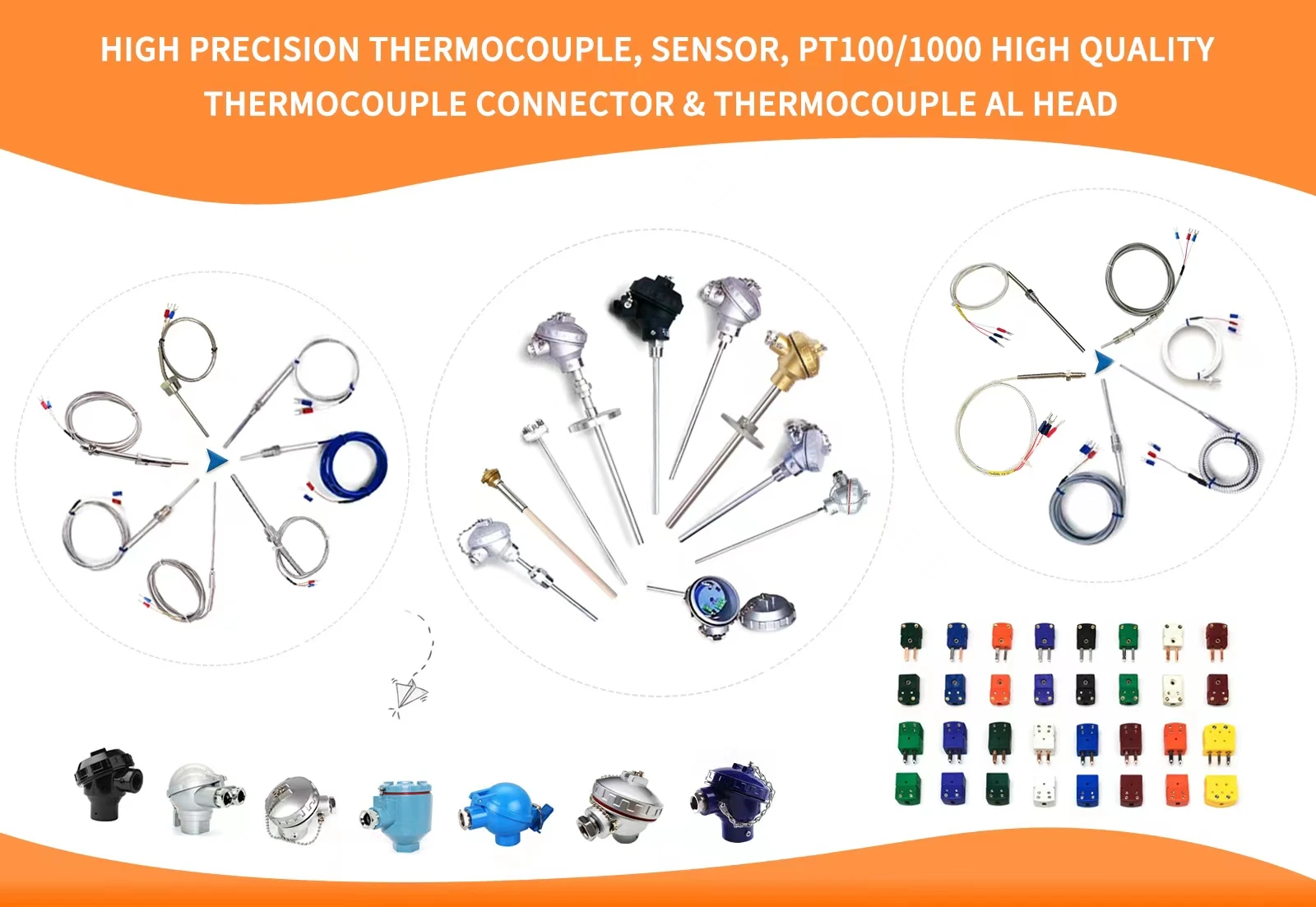
Petrochemical thermocouples' components are first line of protection against corrosion. Usually composed of ceramic or specific alloy materials, these thermocouples include an outer sheath. One particularly extremely resistant to chemical assault is ceramic sheaths. Like a set of unbreakable armor, they serve as a protective barrier covering the fragile thermocouple wires inside from the corrosive chemicals in the petrochemical environment. In systems where sulfur-containing substances are prevalent, including as oil refining, these ceramic sheaths stop the sulfur from interacting with the thermocouple's metals.
Thermocouple wires are built using special metals as well. These alloys have been chosen especially for their corrosion resistance. Some alloys, for example, include chromium and nickel, which when exposed to corrosive conditions build a passive oxide coating on the surface of the wire. Considered as a self-healing barrier, this oxide layer constantly guards the underlying metal from more corrosion. The wire seems to have a built-in mending mechanism that continuously renews its resistance against the corrosive attack.
Handling corrosive conditions also depends critically on the design of petrochemical thermocouples. Usually, the junction of the two metals-where the temperature-sensitive voltage is produced-is covered within the general construction. Certain designs have the junction buried in a less corrosion-prone material or enclosed inside a protective case. This guards against the corrosive substances affecting the most important component of the thermocouple directly. It's like protecting the heart of a machine within a guarded chamber, guaranteeing its flawless performance in face of outside hazards.
The covering put on the thermocouple components is another consideration. Certain thermocouples use unique coatings that provide another layer of security. One may build these coatings to resist certain corrosive agents. In an atmosphere where acidic vapors are prevalent, for instance, a coating with basic characteristics might neutralize the acid that comes into touch with the thermocouple, therefore lowering the possible corrosion potential. This is comparable to possessing a magical shield that not only stops the assault of the opponent but also renders its negative impacts useless.
Furthermore, the methods of installation and maintenance connected to petrochemical thermocouples are very carefully planned to reduce corrosion. Correct sealing and insulation methods are used during installation to stop corrosive agent entry. In a distillation column, for instance, where the thermocouple is placed, materials resistant to the chemicals in the column seal the connection points. Additionally part of regular maintenance are checks looking for any corrosion indicators. Should any component of the thermocouple exhibit degeneration, it may be changed or fixed right away. This proactive approach is like a watchful gardener who routinely searches plants for pests and illnesses and responds right away to guard them.
Petrochemical thermocouples' capacity to manage corrosive surroundings is not only crucial for their own lifetime but also for the precision of temperature measuring. Should a thermocouple develop corrosion, erroneous temperature readings might follow. In a petrochemical process like polymerization, where exact temperature control is critical for the quality of the end product, an incorrect thermocouple resulting from corrosion might produce polymers with sub-optimal characteristics. In a refinery operation, too accurate temperature data from a corroded thermocouple might cause inefficiencies in the separation of many oil fractions.
In essence, petrochemical industry thermocouples have a multifarious method to manage corrosive surroundings. These thermocouples endure the severe chemical conditions by means of corrosion-resistant materials, smart design, protective coatings, appropriate installation and maintenance techniques. Reliable operation of petrochemical processes depends on their capacity to do so, which guarantees correct temperature readings and the manufacturing of high-quality goods.