How to choose between electric heat tracing and electric heating?
Leave a message
In industrial production and everyday scenarios, heating or heat preservation often requires electric heat tracing and electric heating equipment. While their functions may seem similar, their applicable scenarios differ significantly, and choosing the wrong one can lead to energy waste or poor results. By understanding the core differences and selecting according to your specific needs, you can ensure both effectiveness and efficiency, stably meeting your heating requirements.
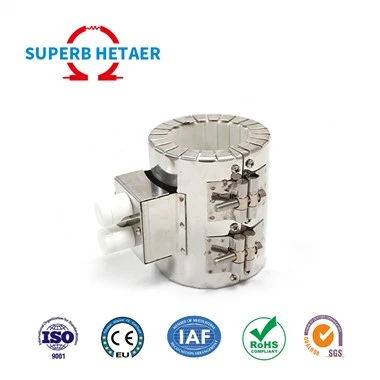
Their core working principles differ, leading to different applications. Electric heating (such as heating elements and heaters) relies on high-power heating elements to concentrate heat release, focusing on "active heating," rapidly raising the temperature of objects, suitable for scenarios requiring significant temperature increases. Electric heat tracing (such as heating tape) dissipates heat evenly through low-temperature radiation, focusing on "heat preservation and freeze protection," providing gentler heating and primarily maintaining the temperature within a set range to prevent freezing. For example, a factory used electric heating elements to heat raw materials from 20℃ to 80℃ in one hour; electric heat tracing was used to maintain outdoor water pipes above 5℃ for freeze protection, consuming only one-third the energy of electric heating.
Energy consumption and temperature control accuracy differ, leading to different application priorities. Electric heating has high power (hundreds to thousands of watts), heats up quickly but consumes a lot of energy, has low temperature control accuracy, and a temperature difference of 5-10℃. Electric heat tracing has low power (10-25W/m), only starts when the temperature is insufficient, consumes little energy, and with a thermostat, the temperature difference can be controlled within 2℃. A restaurant using electric heating for its insulated soup containers incurred a monthly electricity cost of about 300 yuan; after switching to electric heat tracing, the monthly electricity cost was only 80 yuan, and the soup temperature remained stable without affecting the taste.
The installation adaptability differs, and precise matching of scenarios is necessary. Electric heating is large and has a fixed shape, suitable for centralized heating of large equipment, but requires reserved space for installation. For example, high-power electric heating tubes are used for centralized heating of community heating boilers, resulting in higher efficiency. Electric heat tracing is flexible, can be cut and bent, and can be tightly attached to irregular parts such as pipes and valves. Installation is flexible and has no space limitations. For example, heat tracing is used to wrap and lay outdoor water supply networks in communities, covering all pipes and valves without any dead corners in insulation.
Clearly defined application scenarios allow for targeted selection to avoid pitfalls.
**Electric Heating:** Scenarios requiring rapid temperature increases (e.g., raw material heating, equipment preheating), significant temperature increases (e.g., high-temperature reactions, hot water supply), and centralized heating (e.g., large tanks, boilers). Examples include heating chemical plant reactors and preparing hot water in hotels.
**Electric Heat Tracing:** Scenarios requiring insulation and freeze protection (e.g., outdoor pipelines, winter equipment protection), precise temperature control (e.g., food insulation, precision instrument temperature control), and heating of irregular components (e.g., valves, interfaces). Examples include freeze protection for outdoor fire-fighting pipelines in northern regions and cold chain logistics insulation.
While both electric heat tracing and electric heating can provide heating and insulation, their core differences are significant: electric heating is suitable for rapid and significant temperature increases and centralized heating, while electric heat tracing excels in insulation, freeze protection, and precise temperature control. Choosing the right option for your specific scenario ensures effectiveness while avoiding energy waste, efficiently meeting various heating and insulation needs.