How to protect 304 stainless steel plate
Leave a message
How to protect 304 stainless steel plate
The corrosion resistance of 304 stainless steel plate mainly depends on its internal alloy composition and microstructure. Due to the stable hemostatic performance of chromium element in 304 stainless steel, a stable passivation film is formed to provide protection for the 304 stainless steel plate. Therefore, in order to protect 304 stainless steel from the risk of corrosion, it is necessary to do a good job in cleaning the 304 stainless steel plate. So how to protect 304 stainless steel plates?
When cleaning 304 stainless steel plates, WP-760 is used as the cleaning agent. The characteristic of this cleaning agent is that it can efficiently clean 304 stainless steel plates, not only thoroughly removing dirt and oil on the surface, but also ensuring that the surface of the steel plate is clean and bright. Moreover, this cleaning agent can quickly remove dirt. Generally, it takes about three to five minutes to clean the surface of the steel plate. Moreover, the formula of this cleaning agent is very safe and will not cause damage or corrosion to the surface of the steel plate. It is also a non-toxic and non flammable liquid. Water solubility and permeability are also very good. When diluted with water, it can still be effectively used up to five times the liquid, making it a very suitable cleaning agent for 304 stainless steel plates.
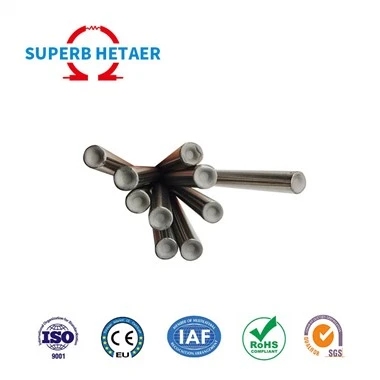
The role of fillers in electric heating tubes:
The filling material plays an insulation role between the electric heating wire and the electric heating tube;
The filling material conducts the heat emitted by the electric heating wire to the outer shell of the electric heating tube;
Filler is used to fix the spatial position of the electric heating wire.
After reading this, we should know that the surface of the electric heating tube is not charged, and the reason lies in this filling material.
So, what specific requirements do we have for filling materials?
Having sufficient insulation performance and electrical strength;
Having good thermal conductivity, i.e. having a high thermal conductivity coefficient;
Has an expansion coefficient similar to that of an electric heating wire;
Has chemical inertness towards electric heating wire materials;
Has high heat resistance;
Capable of withstanding sudden temperature changes;
Low hygroscopicity;
Has high mechanical properties;
Www.superbheater.com