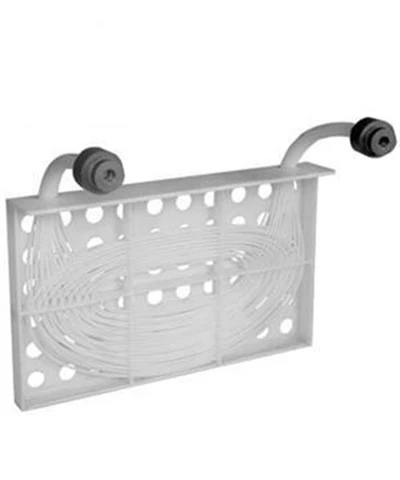
How to Select a PTFE Heater for Use with a Standby Generator for Critical Heating?
Leave a message
A crucial electroplating tank has to keep its chemistry warm in the event of a mains power outage to prevent freezing or crystallization. A standby generator starts on its own, but it is useless if the heater load is too high or if an electrical inrush hits the generator breaker. In crucial thermal operations, the heater and generator must be matched as a coordinated electrical system rather than considered as isolated components.
Reliable emergency heating needs careful consideration of continuous power consumption, beginning characteristics, controller compatibility, and generator stability. Critical baths, storage tanks, and process fluids can continue to function during blackouts without overtaxing the backup power supply when the PTFE heater standby generator power is chosen properly.
Why Backup Heating Matters in Chemical Processes
Long cooling times are intolerable for many industrial heating systems. Electroplating baths, chemical storage systems, semiconductor wet benches, and process rinse tanks may suffer permanent damage if temperature falls outside a specified range.
Potential effects include:
Chemical crystallisation
Increased solution viscosity
Separation of additives
Tanks or pipes that are frozen
Loss of plating bath chemistry
Extended restart and recalibration times
In some sites, the expense of replacing tainted chemicals or restarting production surpasses the cost of the backup power infrastructure itself.
Because of this, in important process applications, PTFE immersion heaters are often linked to standby generator systems.
Comprehending Generator Capacity Ratings
Making a clear difference between continuous and peak power capabilities is the first step in generator sizing.
Constant Power Rating
The generator's continuous rating indicates how much power it can produce continuously under steady working circumstances.
The overall running wattage of all linked PTFE heaters and control equipment should remain comfortably below this figure. A loading target of roughly 70–80% of generator continuous capacity is recommended in many industrial systems.
This operational margin has various advantages:
Improved voltage stability
Improved control over frequency
Decreased heat stress on the generator
Set aside space for further cargoes
Enhanced long-term dependability
Operating constantly near maximum capacity can reduce generator stability during sudden load changes.
Rating at Peak or Surge
The peak rating shows the short-duration overload capability available during motor starts or transient electrical events.
Although PTFE immersion heaters themselves are resistive loads with predictable steady-state consumption, accompanying control circuitry may produce brief inrush circumstances during startup.
Additionally, these brief surges have to stay within the generator's transient capacity.
Finding the Total Heater Load
Accurate PTFE heater standby generator power selection needs consideration of the overall electrical demand rather than merely the heater nameplate value.
The following loads should normally be included:
Wattage of a PTFE immersion heater
Power usage of the temperature controller
Pump and agitation motors
Systems of circulation
Alarm systems
Control panel transformers
Ventilation equipment linked with the heating process
It is also necessary to take into account the worst-case operational scenario.
Following a power restoration incident, all heaters in various systems may simultaneously request heat. This scenario can cause the highest instantaneous electrical demand experienced by the generator.
Therefore, rather than taking normal operating conditions into consideration, generator sizing calculations should take the worst-case starting sequence into account.
Why Inrush Current Matters
Although resistive heaters themselves do not produce major startup surges, related switching devices may introduce substantial transient current demand.
Inrush of Contactor Coils
The current drawn by large electromechanical contactors, which are frequently found in industrial heating systems, can be substantially larger during energization than during steady-state operation.
The steady-state coil current may be six to ten times higher than the contactor inrush current.
This transient is often negligible on a big utility system. However, standby generators respond differently.
A generator is a more delicate, compact grid.
Sudden transitory loads may cause:
Temporary voltage sag
Instability in frequency
Nuisance trips by breakers
Controller resets
Harmonic distortion difficulties
If numerous contactors activate simultaneously during a restart procedure, the cumulative transient can become large compared to generator capacity.
Advantages of Soft-Start Control with Solid-State Relays
For better compatibility with backup power systems, solid-state relays (SSRs) are increasingly being used in place of conventional contactors in modern PTFE heater systems.
Switching Zero-Cross
When AC voltage passes over zero potential, SSR controllers with zero-crossing functionality exactly activate the load.
This strategy prevents abrupt current spikes and decreases electrical stress on both the heater circuit and generator.
Soft-Start Benefits
Soft-start functionality progressively applies electricity rather than switching the load abruptly.
Advantages consist of:
Reduced transient loading
Improved generator voltage stability
Reduced harmonic stress
Decreased annoyance tripping
more seamless heater powering
SSRs have virtually no inrush current related to their switching action, in contrast to mechanical contactors.
This property makes SSR-controlled PTFE heaters substantially more generator-friendly in crucial backup applications.
Voltage and Frequency Compatibility
Generator quality directly influences temperature controller performance.
For precise operation, many electronic temperature controls need comparatively steady voltage and frequency settings. Poor generator regulation may produce:
Controller resets
Sensor reading instability
Relay chatter
Communication errors
False alarms
If control electronics share the same supply circuit, voltage dips that occur during heater starting might be very troublesome.
For this reason, generator specs should be studied carefully for:
Accuracy of voltage regulation
Frequency stability
Harmonic distortion performance
Transient response capacity
Precision thermal control systems are more compatible with high-quality automatic voltage regulation.
System Testing in Practice Prior to an Outage
Perform Testing of Controlled Generators
Before a real power outage happens, full-load operational testing is one of the most crucial commissioning procedures.
The full heating system should be operated on generator power while monitoring:
Voltage stability
Frequency response
Performance of a breaker
Heater startup sequencing
Controller actions
Functionality of alarms
Unusual voltage dips, harmonic sensitivity, and nuisance tripping are examples of hidden issues that are frequently found through controlled testing.
Unnoticed problems with utility operations could become serious in an emergency.
Testing should preferably emulate worst-case startup settings where all heating zones request power simultaneously after transfer to generator operation.
Strategies for Load Sequencing
Large facilities usually prevent simultaneous heater startup by tiered load scheduling.
Instead of energizing all heaters at once, controllers activate loads sequentially over several seconds or minutes.
Benefits consist of:
Lower peak generator demand
Improved voltage stability
Decreased stress on breakers
Smaller required generator size
Better control system reliability
Sequencing becomes especially critical in systems incorporating many high-wattage immersion heaters.
Safety and Environmental Aspects
Backup heating systems in chemical settings must also maintain safe functioning during generator use.
Special emphasis should be devoted to:
Ground fault protection compatibility
Neutral bonding arrangements
Exhaust ventilation for indoor generators
Interlocks for emergency shutdown
Chemical fume extraction continuum
Inadequate coordination between generating systems and safety infrastructure can generate hazardous operating circumstances during outages.
In conclusion
Ensuring seamless functioning between a PTFE heating system and standby generator power involves careful electrical design, realistic load calculations, and comprehensive operational testing. Continuous heater demand, transient control-system behaviour, startup sequencing, and generator voltage stability must all be examined collectively rather than singly.
Proper PTFE heater standby generator power selection takes emergency backup heating from a theoretical safety into a dependable operational system capable of sustaining crucial process chemistry during utility disruptions. Soft-start SSR controls, conservative generator loading margins, and pre-outage testing all contribute to reliable and robust operation.
True dependability planning extends beyond regular operation and into the time when the lights go out.