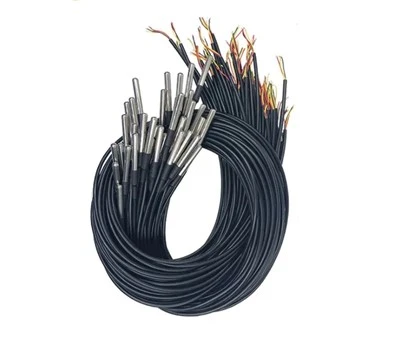
K-Type Thermocouples: Quality You Can Rely On for Temperature Measurement
Leave a message
K-Type thermocouples have firmly established themselves as a dependable and adaptable alternative in the varied and constantly changing field of temperature monitoring. They provide a mix of attributes that make them a popular choice in many applications. In addition to meeting the requirements for accuracy and precision, their performance and qualities also exhibit a degree of reliability that is essential in a variety of industrial and scientific contexts.
Chromel and alumel wires make up K-Type thermocouples, which function according to the basic idea of the thermoelectric effect. They can produce a voltage that is exactly proportionate to the temperature differential between the thermocouple's two ends according to this concept. Their precise temperature sensing skills are based on this simple yet efficient process.
The broad temperature measuring range of K-Type thermocouples is one of its best qualities. With the ability to measure temperatures precisely between -200°C and 1350°C, they are useful for a wide range of applications. K-Type thermocouples can provide accurate temperature readings in the cryogenic field, which is where very low temperatures are encountered, such as while handling and storing liquid nitrogen or helium. The correct circumstances for scientific research, medicinal uses, and industrial activities using cryogenic chemicals depend on their ability to operate precisely at these very low temperatures. For instance, K-Type thermocouples are used to precisely monitor the temperature of the experimental setup in a research lab that studies the characteristics of materials at low temperatures. On the opposite end of the spectrum, these thermocouples can tolerate high temperatures and yet offer precise readings in industrial operations that involve high temperatures, such as glassblowing, ceramics manufacture, and metal smelting. For example, they assist regulate the refining process and guarantee the quality of the finished product at a steel mill by keeping an eye on the temperature of the molten steel in the furnace.
Another factor that adds to K-Type thermocouples' reputation for excellence is their precision. For a variety of uses, they are designed to provide accurate and dependable temperature readings with a manageable margin of error. K-Type thermocouples are extensively employed in the food and beverage sector, where temperature control is essential for guaranteeing food safety and quality. They are used to precisely monitor the temperature during procedures like baking, cooking, and pasteurisation. This accuracy aids in maintaining the overall quality and flavour of the food, ensuring that items are cooked uniformly, and successfully killing germs during pasteurisation. For instance, K-Type thermocouples in the ovens of bakeries guarantee that the bread is cooked at the proper temperature all the way through, producing a reliable and superior product. Accurate temperature management is equally crucial in the pharmaceutical sector. In order to keep the temperature within the precise range needed for the pharmaceuticals' stability and effectiveness, K-Type thermocouples are used in drug production procedures including fermentation, drying, and crystallisation.
Another important benefit that makes K-Type thermocouples available to a broad spectrum of customers is their price. They are reasonably priced to manufacture and install in comparison to several other high-precision temperature measuring systems. Because of their affordability, they are a desirable choice for both major industrial operations and small and medium-sized enterprises. Using K-Type thermocouples to monitor the temperature of drying ovens or heat treatment processes might be an economical solution for a small manufacturing business that produces consumer products to guarantee product quality without having to make a large investment in monitoring equipment. K-Type thermocouples may still give precise temperature readings for experiments and studies at a small research facility or school lab with a tight budget, allowing for important research and education.
It is noteworthy that K-Type thermocouples are long-lasting. They are designed to resist mild mechanical stress, dampness, and certain chemical exposures, among other environmental stresses. They can function dependably in a variety of typical industrial and laboratory situations, although they may not be as resilient as specialised thermocouples in really hard or corrosive conditions. K-Type thermocouples may operate efficiently for a long time in a normal production facility with minor vibration and exposure to lubricants or light cleaning chemicals. Their longevity lessens the need for regular replacements, which increases their affordability and usefulness. K-Type thermocouples, for instance, may be used to monitor the temperature of the cooling fluids and the machine tools themselves in a machine shop where metal components are being machined and cooled. These thermocouples can tolerate vibrations and small chemical exposures in the surrounding environment.
Apart from its useful benefits, K-Type thermocouples provide installation freedom. They are easily adaptable to varied measuring settings since they are available in a variety of sizes and forms. K-Type thermocouples may be tailored to meet the unique needs of the application, whether it's a long sensor for tracking the temperature in a huge tank or a tiny probe for detecting the temperature within a tight pipe. Because of their adaptability, they may also be retrofitted into current systems without requiring significant changes. K-Type thermocouples, for instance, are simple to install in an older building's heating or cooling system to monitor the air or water temperature, maximising energy efficiency and guaranteeing appropriate inside temperatures.
K-Type thermocouples do have limits, however, just like any other technology. Their vulnerability to electrical interference in some situations is one possible disadvantage. Temperature measurements may not be as accurate in places with high electromagnetic fields. Appropriate grounding and shielding may be required to lessen this. Another drawback is that with time, their accuracy could deteriorate, particularly if they are not properly maintained or exposed to harsh environments. To guarantee correct readings, calibration must be done on a regular basis, which somewhat raises the total cost and complexity of operations.
K-Type thermocouples have a number of characteristics that make them a dependable option for measuring temperature. They are appropriate for a range of applications in many sectors and scientific domains because to their broad temperature range, precision, affordability, durability, and ease of installation. Although they do have some restrictions, they may be reduced with the right knowledge and care. K-Type thermocouples will probably continue to be crucial to the performance and safety of several activities as long as technology develops and the need for precise temperature monitoring increases. K-Type thermocouples are crucial for maintaining precise temperature control and enhancing the general effectiveness and calibre of processes because they deliver the quality and performance that users can trust, whether in manufacturing, food processing, HVAC systems, or other domains. They are a useful tool in the area of temperature monitoring because of their capacity to strike a balance between cost and performance, and their continuous development and usage will undoubtedly help progress several industries and scientific endeavours.