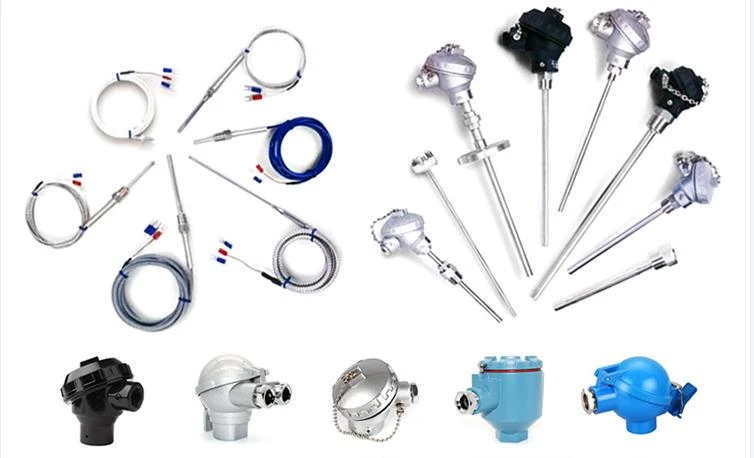
Method for measuring the potential of thermocouple thermometers
Leave a message
What is a thermocouple?
A thermocouple is a device that measures temperature by utilizing the potential difference in temperature difference between two different materials.
What is the principle of a thermocouple?
The principle of thermocouples is based on the thermoelectric effect, which generates a potential difference when the contact between two different materials is heated or cooled.
What are the components of thermocouples?
A thermocouple is composed of two different types of metal wires, which form a measuring point when connected at both ends. This point is placed at the temperature to be measured.
What is the working principle of a thermocouple thermometer?
When the temperatures at both ends of the thermocouple are different, there is a certain relationship between the thermoelectric potential difference, also known as the electromotive force, and the temperature difference between the two materials. By measuring this potential difference, the temperature can be derived.
How to measure the potential of a thermocouple thermometer?
Measuring the potential of a thermocouple thermometer requires the use of a voltmeter or multi-purpose tester, with their positive and negative poles touching the two ends of the thermocouple, and then reading the value displayed on the voltmeter.
What is the relationship between the value of thermocouple potential and temperature?
There is a linear relationship between the value of thermocouple potential and temperature, and the potential value can be converted to temperature value through calibration curves or by consulting relevant manuals.
The potential of a thermocouple thermometer can be measured by connecting a voltmeter or a multi-purpose tester. A thermocouple is composed of two different metal wires and uses the principle of thermoelectric effect for temperature measurement. There is a linear relationship between temperature and potential, and potential values can be converted into temperature values through calibration curves or by consulting manuals.