RTD Package Selection Guide: The Key to Stability and Lifespan
Leave a message
Behind precise temperature measurement lies the rigorous refinement of packaging technology.
In the field of industrial temperature measurement, the resistance temperature detector (RTD) acts as the "nerve ending" of temperature measurement, and its stability directly determines the reliability of the entire system. Packaging technology-this seemingly simple protective shell-is actually an armor against harsh environments and a core factor affecting the sensor's lifespan.
I. RTD Packaging: More Than Just a Protective Shell
RTDs measure temperature by utilizing the characteristic that the resistance of a metallic conductor (such as platinum or nickel) changes with temperature. The encapsulation structure not only protects the internal resistive components but also serves to:
Electrical insulation: prevent short circuits and signal interference
Mechanical protection: resist vibration, shock, and wear
Dielectric isolation: block corrosive gases/liquids
Optimized thermal conduction: ensure rapid temperature response
II. Six Mainstream Encapsulation Forms and Their Battlegrounds
1. Ceramic Encapsulation: Guardian of High Temperature and High Pressure
Structure: Magnesium oxide insulating powder filling + metal protective tube
Advantages: Temperature resistance up to 850℃, mechanical shock resistance, strong vibration resistance
Applicable Scenarios: Metallurgical furnace temperature monitoring, chemical reaction vessels, engine test benches
Case Study: After adopting ceramic encapsulation in a steel plant's sintering production line, the lifespan of the RTD increased from 3 months to 2 years.
2. Armored Encapsulation: Terminator of Vibration Environments
Innovation: Three-layer stainless steel sleeve + high-density insulating material filling
Performance: Vibration resistance improved by 300%, passed 100,000 mechanical shock tests
Practical Performance:
Injection molding machine vibration zone: lifespan increased from 1 month to 16 months
Photovoltaic pump room: failure rate reduced by 90%
3. Glass Encapsulation: The Nemesis of Corrosive Media
Characteristics: Acid and alkali resistant, moisture-proof
Breakthrough: Developed by IST (Switzerland) with an ultra-wide temperature range of -200℃ to 1000℃
Typical Applications: Electroplating tank temperature monitoring, seawater aquaculture temperature systems
4. Thin-Film Encapsulation: The Temperature Stethoscope for Precision Equipment
Technology: Platinum film sputtered ceramic substrate + laser fine-tuning
Advantages: Response speed <0.1 seconds, accuracy up to ±0.05℃
Scenarios: Semiconductor wafer manufacturing, medical CT scanner cooling systems
5. Epoxy Resin Encapsulation: The Invisible Guardian of Electronic Equipment
Features: Good insulation, low cost, easy mass production
Limitations: Temperature resistance only up to 150℃
Main Applications: Circuit board overheat protection, battery temperature monitoring
6. Specialty Packaging: Solutions for Extreme Conditions
Innovative Packaging Designs for Special Scenarios
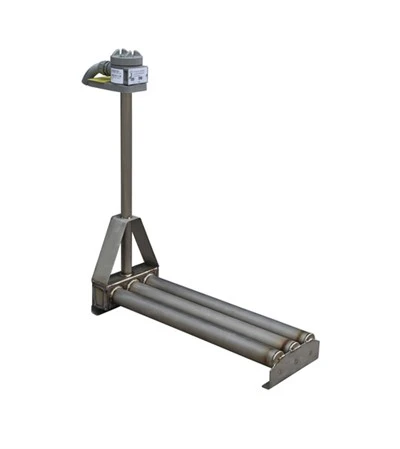
Magnetic End-Face Rare Earth Magnet Adsorption for Real-Time Temperature Measurement on Roller Surfaces
Teflon-Resistant Fully Sealed Fluoroplastic Layer for Temperature Monitoring in Strong Acid Media
Three or Four Steps to Lock in the Optimal Packaging Solution
Step 1: Diagnose Environmental Killers
Vibration Scenarios → Select Armored/Elastic Bellows Structure
Highly Corrosive Environments → Glass/Teflon Packaging
Space Constraints → Thin-Film Surface Mount Packaging
Step 2: Define Performance Limits
Aerospace: Error < 0.3% → Platinum Thin-Film Packaging
Food Machinery: Compliant with FDA Standards → 316L Stainless Steel Housing
Scientific Research Experiments: Response Speed < 1 Second → Unpackaged Bare Components
Step 3: Evaluate Economics
For general industrial scenarios, assembled RTDs (cost 15-50) are sufficient, while critical fields such as nuclear power require armored platinum RTDs costing 200+.
Step 4: Dynamic Protection Upgrade
For vibration zones such as injection molding machines and compressors, a three-stage buffer system can be added:
Elastic alloy bellows absorbs 80% of impact energy
360° rotary joint eliminates installation stress
Nano-ceramic flexible layer resists high-frequency vibration
IV. Hequan Instrument Technology: Giving Industrial Temperature Measurement a "Bulletproof Vest"
Faced with the problem of brittle fracture of thermal resistors caused by vibration, Suzhou Hequan Instrument Technology Co., Ltd. provides an innovative solution with its national patented technology (ZL202421282940.X):
Three Major Breakthroughs in Elastic Protection Devices
Military-grade reliability: Stable operation under extreme conditions of -50℃ to 850℃
Intelligent early warning system: Predicts wire breakage risk 48 hours in advance
15-minute rapid retrofit: Direct upgrade of existing equipment without modification