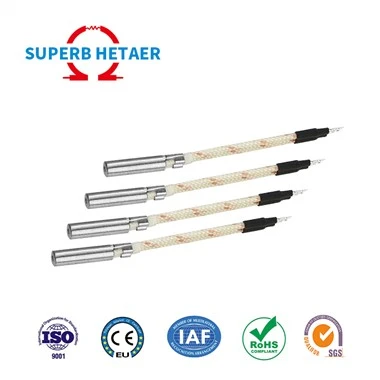
Thermal Insulation Thermocouples: Maintaining Accuracy Under Pressure
Leave a message
Within the intricate field of temperature measurement, thermal insulation thermocouples have become a dependable and necessary instrument. These specialist tools are designed to keep accuracy even in the most difficult surroundings, where temperature measurements might be influenced by pressure, heat, and other elements.
Unique construction using insulating materials to reduce heat transmission from the surrounding environment defines thermal insulation thermocouples. By serving as a barrier, this insulating layer guarantees that the thermocouple fairly reflects the temperature of the item or process under observation and helps to prevent outside elements from affecting the temperature measuring.
Thermal insulation thermocouples have one of the primary benefits in that they can keep accuracy under pressure. In industrial environments, where high pressures are typical, conventional thermocouples may be distorted by surrounding medium compression, producing erroneous readings. Conversely, thermal insulation thermocouples are meant to resist these pressures and provide precise temperature readings.
Thermal insulation thermocouples, for instance, may be employed in a chemical processing facility where high pressures are often present during the reaction process to track the temperature of the reaction vessel. By helping to prevent the pressure from influencing the thermocouple, the insulating layer guarantees precise and consistent temperature readings. Ensuring the safety and effectiveness of the chemical process depends on this as erroneous temperature readings could cause harmful reactions or problems with product quality.
Thermal insulation thermocouples have numerous advantages in addition to keeping accuracy under duress. They resist mechanical stress, corrosive chemicals, and severe temperatures as well as other demanding conditions. These thermocouples are made from insulating materials chosen for their resistance to these elements, therefore guaranteeing extended service life and low maintenance needs.
Thermal insulating thermocouples may be placed on boilers and turbines in a power generating facility, for example, where temperatures might be quite high and the surroundings is hostile, to track temperature. By shielding the thermocouple from the strong heat and mechanical stress, the insulating layer helps it to provide reliable readings over a long time. This is very necessary to guarantee the power plant runs efficiently and to avoid equipment breakdown.
Furthermore improving the accuracy of thermal insulation thermocouples are their quality control and calibration procedures. Usually calibrated to satisfy certain criteria, these thermocouples provide precise temperature readings within a limited margin of error. Manufacturers also often rigorously test thermal insulation thermocouples to guarantee their dependability and lifetime.
For instance, thermal insulation thermocouples are used to track aircraft engine and other vital component temperature in the aerospace sector, where accuracy is very vital. The performance and safety of the airplane depend on these thermocouples being accurate. To guarantee that their goods satisfy the best criteria, manufacturers of aircraft thermocouples may conduct rigorous calibration and quality control processes.
Thermal insulation thermocouples do, however, have some restrictions, much like any technology. Their cost is one such possible disadvantage. These thermocouples may be more costly than conventional thermocouples depending on their sophisticated building methods and insulating materials. Furthermore, correct installation and calibration need for certain expertise and tools, which may increase the whole cost.
The reaction times of thermal insulation thermocouples provide yet another constraint. The thermocouple's reaction time may be slowed down by the insulating layer, so it is less appropriate for uses where quick temperature changes must be sensed. Under such circumstances, different kinds of thermocouples or temperature sensors might be more suitable.
All things considered, thermal insulation thermocouples are a great instrument for preserving accuracy in demanding surroundings and under pressure. Their unusual building, robustness, precision, and calibration techniques make them a necessary part in many different kinds of businesses. Although their reaction times and cost may be somewhat limited, the advantages they provide usually exceed these negatives. Thermal insulation thermocouples are probably going to be more and more crucial in guaranteeing the safety and efficiency of different operations as technology develops and the need for precise temperature measuring rises. These thermocouples provide a consistent and efficient approach to monitor temperature and preserve precision under pressure whether in chemical processing, power generation, aerospace, or any other sector. Their special qualities and capacity make them a major addition to the area of temperature measuring technology, therefore facilitating more effective and efficient operations in many different environments.