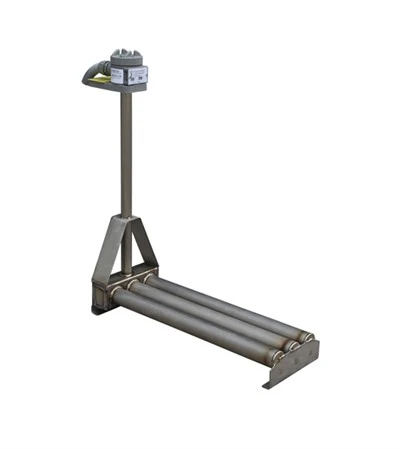
Wear-Resistant Resistance Thermometers: Built to Withstand Harsh Industrial Conditions
Leave a message
Wear-resistant resistance thermometers are specifically designed to endure the rigors of harsh industrial environments, where abrasive materials, high temperatures, and mechanical stress are common. These robust temperature sensors, often built with durable materials and advanced engineering, provide reliable and accurate temperature measurements in applications where standard sensors would quickly fail. Industries such as mining, cement production, power generation, and metal processing rely on wear-resistant resistance thermometers to maintain efficient and safe operations in challenging conditions.
One of the standout features of wear-resistant resistance thermometers is their ability to withstand abrasive materials. In industries like mining and cement production, equipment is frequently exposed to high levels of dust, grit, and particulate matter that can cause rapid wear and tear. Wear-resistant thermometers are constructed with protective sheaths made from hardened materials such as tungsten carbide or ceramic, which act as a barrier against abrasive particles. This design significantly extends the lifespan of the sensors, reducing the need for frequent replacements and minimizing downtime.
High-temperature resistance is another critical aspect of these thermometers. Many industrial processes, such as metal smelting and power generation, involve extreme heat that can degrade standard temperature sensors. Wear-resistant resistance thermometers are engineered to operate reliably at elevated temperatures, often exceeding 1000°C, depending on the materials used. Their ability to maintain accuracy under such conditions ensures consistent performance, helping to optimize processes and prevent equipment failure.
Mechanical stress is a common challenge in industries like steel manufacturing and heavy machinery, where equipment is subject to constant vibration, impact, and pressure. Wear-resistant resistance thermometers are designed with reinforced structures that can withstand these forces without compromising their functionality. For example, in steel mills, these thermometers are used to monitor the temperature of molten metal and rolling processes, where they must endure both high temperatures and mechanical stress. Their durability ensures accurate temperature control, which is essential for maintaining product quality and operational efficiency.
The accuracy of wear-resistant resistance thermometers is another key advantage. Despite their rugged design, these sensors provide precise temperature measurements, often within ±0.1°C or better. This level of accuracy is crucial in industries like power generation, where precise temperature control is necessary to optimize efficiency and prevent overheating. In cement production, wear-resistant thermometers monitor the temperature of kilns and clinker coolers, ensuring optimal conditions for the chemical reactions that produce high-quality cement.
Customization is another feature that makes wear-resistant resistance thermometers highly versatile. They can be tailored to meet specific application requirements, with options for different sheath materials, probe lengths, and connection types. This flexibility allows them to be integrated into a wide range of industrial equipment, from conveyor belts and crushers to furnaces and reactors. Their adaptability ensures that they can provide reliable performance in diverse and demanding environments.
While wear-resistant resistance thermometers are more expensive than standard temperature sensors, their long-term benefits often outweigh the initial investment. Their durability and reliability lead to reduced maintenance costs, fewer replacements, and minimized downtime, ultimately improving operational efficiency and profitability.
Wear-resistant resistance thermometers are built to withstand harsh industrial conditions, offering durability, accuracy, and reliability in challenging environments. Their ability to endure abrasive materials, high temperatures, and mechanical stress makes them indispensable in industries such as mining, cement production, and metal processing. By providing precise temperature control, these thermometers help optimize processes, ensure safety, and maintain product quality, making them a critical component of modern industrial operations.