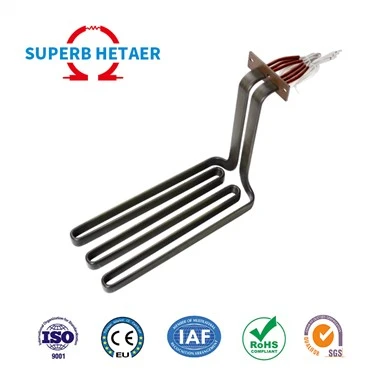
What are the advantages of single-head heating tubes compared to heating plates?
Leave a message
Single-ended heating elements and heating plates are both common heating elements, each with unique characteristics and advantages. The following is a detailed analysis of the advantages of single-ended heating elements compared to heating plates:
1. Structural and Design Advantages
Simple Structure, Ease of Manufacturing
Single-ended heating elements have a relatively simple structure, typically consisting of an internal resistance wire, thermally conductive material, and a metal casing. This simple structure allows for mature manufacturing processes and relatively low costs.
While heating plates also have a certain structure, their design and manufacturing process can be more complex than single-ended heating elements, especially when precise control of the heating area and temperature distribution is required.
Diversified Design, High Adaptability
Single-ended heating elements can be designed in various shapes, sizes, and power ratings to meet diverse heating requirements. This flexibility enables their widespread application in various heating applications, such as industrial heating, home appliances, and laboratories.
Heating plates typically have a fixed design, making them difficult to adjust to specific needs.
2. Heating Performance Advantages
Fast Heating, High Heating Efficiency
Single-ended heating elements generate heat quickly and reach the desired temperature quickly. This is due to the built-in resistance wire and thermal conductive material, which allow heat to be quickly transferred to the heated object.
While heating plates can also provide heating, their heating speed and efficiency may be slightly inferior to single-ended heating elements.
Concentrated Heat for Better Heating Effects
Single-ended heating elements concentrate heat near the resistance wire and quickly transfer it to the heated object through the thermal conductive material. This concentrated heat ensures better heating effects, allowing the desired temperature to be reached more quickly.
Heat distribution on heating plates is relatively uniform, but some areas may experience insufficient or overheating, affecting heating performance.
III. Usage and Maintenance Advantages
Easy Installation and Replacement
Single-ended heating elements are typically designed with threaded or flange mounting, making them easy to install and replace in a variety of equipment. This design reduces maintenance costs and improves equipment safety.
Heating plate installation can be relatively complex, especially when precise control of the heating area and temperature distribution is required, which may require additional installation and commissioning.
Easy Troubleshooting and Repair
The simple structure of single-ended heating elements makes troubleshooting and repair relatively easy. If a fault does occur, the problem can be quickly located and resolved, minimizing downtime.
Heating plate fault diagnosis and repair can be more complex, requiring more time and resources.
IV. Other Advantages
High-Temperature Stability
Single-ended heating elements are typically made of high-temperature resistance alloys (such as nickel-chromium alloys) or ceramics, enabling stable operation in high-temperature environments. This high-temperature stability makes them suitable for a variety of high-temperature heating applications.
Long Life and Low Maintenance Costs
High-quality single-ended heating elements offer a long service life and strong resistance to high temperatures and oxidation. This reduces maintenance costs and improves the overall economic efficiency of the equipment.
In summary, single-ended heating elements offer significant advantages over heating plates in terms of structure and design, heating performance, operation and maintenance, and other aspects. These advantages make them more widely applicable and more cost-effective in a variety of heating applications. However, the specific heating element selection should be carefully considered based on specific heating requirements, equipment conditions, and budget.