What are the heating elements? Introduction to common heating elements!
Leave a message
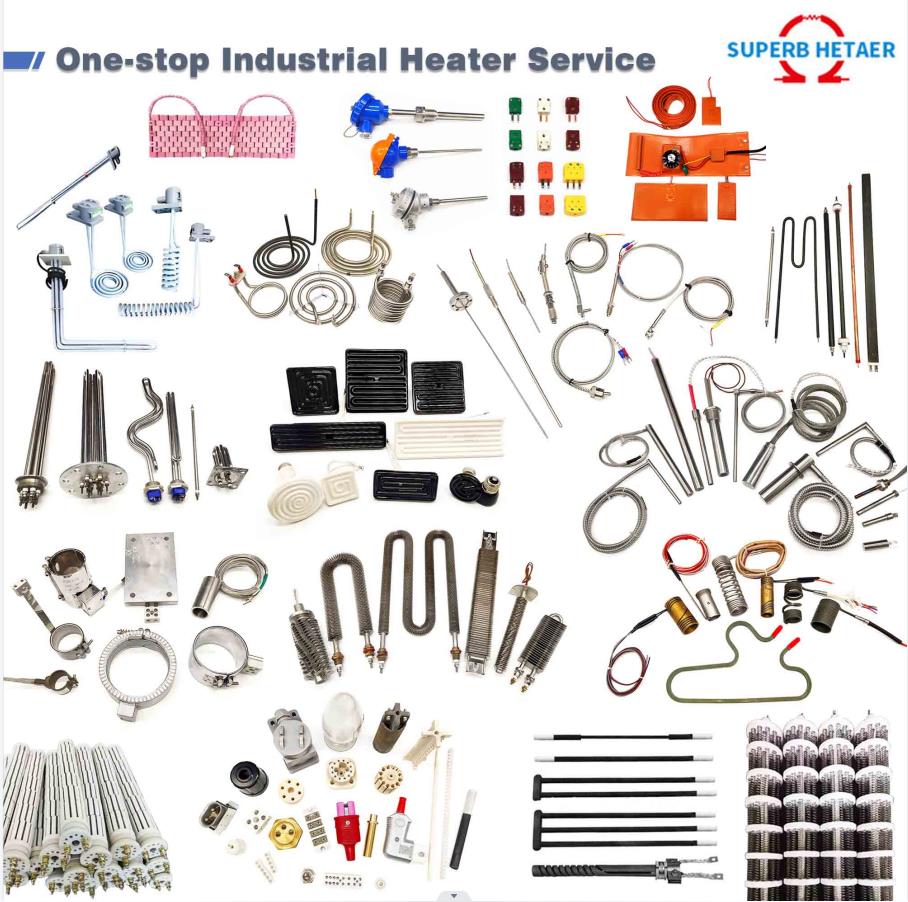
Heating elements mainly include metal heating elements and non-metallic heating elements. Metal material heating element. Among them, red copper has good plasticity and thermal conductivity, and the seamless air conditioning copper pipe made of it can effectively prevent water seepage. However, due to the high price of red copper and cost considerations, most companies choose stainless steel plate as the inner liner and heating element. The advantage of a large stainless steel plate heat exchanger is its low price, rapid heating, but easy fouling. Non metallic material heating element. The most important non-metallic material heater in the market is made of amethyst, quartzite, laminated glass, porcelain and other related materials, and the surface made of non-metallic materials is adhered with a layer of heating materials by high-temperature sintering, wiping at room temperature or packaging printing. The crystal material heating element was once favored by manufacturers and consumers. However, because amethyst is a kind of pure natural mineral lacking, which is expensive, and the production and production process is difficult, it is unlikely to be widely used in industrial production. At present, quartz glass tubes are mostly used in the market to replace amethyst.
There are generally three common types of continuous high-temperature heating elements: silicon carbon rods, silicon molybdenum rods, and lanthanum chromate. Zirconia ceramic continuous high-temperature heating element is a commonly used heating element in heating furnaces that can oxidize the atmosphere above 1800 ℃. It can be used for high-temperature melting production and processing of quartz glass tubes, high-temperature sintering of metal oxide raw materials, continuous high-temperature crystallization quenching, and continuous high-temperature crystallization growth equipment. Accurately selecting the surface load of electric heating materials based on the structure of heating equipment, working atmosphere, and environmental temperature is the key to the service life of silicon carbon rod electric heating materials.
PTC heating element, also known as PTC electric heater, is composed of PTC ceramic heating element and aluminum alloy tube. This type of PTC heating element has the advantages of low thermal conductivity and strong heat transfer efficiency, making it a fully automatic temperature control and energy-saving electric heating device. The significant characteristics depend on the safety factor, and under all operating conditions, it will not cause the surface of electric heaters such as heating tubes to turn red, resulting in safety risks such as burns and fire accidents. The PTC heating element is composed of hot-dip galvanized external pins, stainless steel corrugated springs, hot-dip galvanized internal pins, single-sided aluminum heat dissipation components, PTC heating fins, two-layer aluminum heat dissipation components, electroplated nickel copper electrode terminal blocks, and PPS continuous high temperature plastic electrical grade protective wire sleeves.