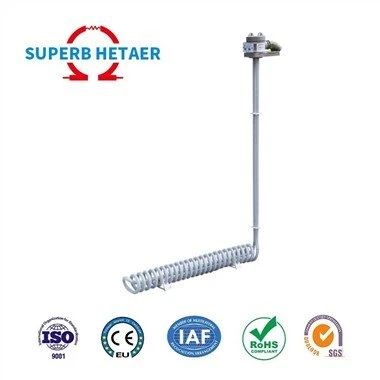
What is the power rating of the heating element?
Leave a message
The power rating of a heating element is usually marked on the element itself, but many are not. In such cases, the power rating needs to be calculated by measuring the resistance of the heating element: Power = Voltage * Voltage / Resistance. This is for situations where the power rating of a pre-made heating element is unknown. However, if you are preparing to customize a heating element and don't know its power rating, you can determine it using the following points:
Heating Element Power:
1. Dry Burning
Dry burning heating is mainly divided into: embedded heating and air dry burning. The power design differs between these two modes.
For embedded heating, the heating element power is determined by the surface load and size.
Typical surface loads are:
Domestic process: 5W/cm²;
Imported process, Grade A: 5W-12W/cm²;
Imported process, Grade AA: 12W-15W/cm²;
Imported process, Grade AAA: 15W-20W/cm²;
When dry-burning with air, the heating element power is designed based on the total length of the heating zone, typically between 1-1.5KW per meter. Power exceeding this range will shorten the heating element's lifespan. This is because air hinders heat conduction, so the heating element power should not be too high.
Note: When dry-burning with air, the heating element surface temperature is approximately 100 degrees Celsius higher than the operating temperature. Therefore, when selecting the heating element material for dry-burning with air, a heat-resistant material with a higher operating temperature should be chosen.
2. Water Heating
For water-heated electric heating elements, the ratio of the total length of the heating zone to the power must be between 1-3KW, where 3KW is the value. If this range is exceeded, the higher the power, the shorter the heating element's lifespan.
Note: For heating drinking water, the heating element should be made of food-grade 316 stainless steel.
3. Oil Heating
When designing an electric heating element for oil heating, the ratio of the total length of the heating zone to the power should be between 1 and 1.5. With high-quality oil, 1.5KW per meter is recommended. Choosing a suitable heating element requires considering all the above factors, including both the material and the power design; neither is dispensable.