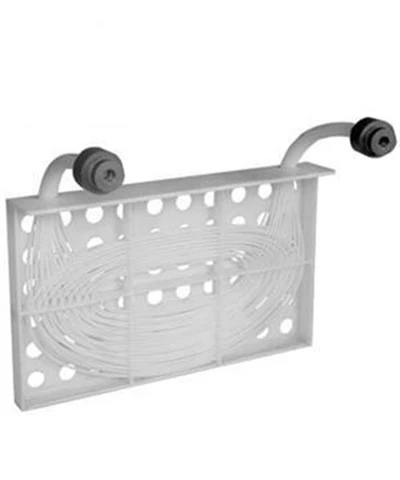
What to Check Before Installing a New PTFE Heating Tube
Leave a message
During the on-site installation of industrial electric heating tubes, a common and surprisingly simple mistake is that the crew receives a new PTFE heating tube and installs it immediately without any inspection. Only when they fire it up do they learn that the voltage is wrong-the tube overheats, trips protection devices, or fails within hours of operation. Many times this whole failure may have been averted with a few minutes of diligent checking before installation. Before the tube is even put into place, there is a key verification procedure that determines if the equipment will run safely, or fail prematurely.
Unboxing inspection is not just a formality, it is the first line of defence against both specification mismatch and concealed transit damage. PTFE heating tubes are sensitive components, whose service life is directly affected by the electrical integrity, condition of the sheath and quality of sealing. Neglect at this stage might lead to leakage, insulation failure or catastrophic burnout on installation. A formal check prior to installation confirms that the product provided is the exact product purchased and that it has survived shipping without damage.
The first and most critical step is to compare the nameplate data with the purchase order. The voltage must be precise of 240V, 380V or whatever the required rating is. A mismatch here is one of the most common field defects and one of the most dangerous, because overvoltage can cause rapid overheating and insulation breakdown. Next check wattage and then heated length and total tube length. Improper heat distribution might result in localised overheating in process tanks. It is also important to check the mounting parameters thoroughly such as the thread type, flange size, and depth of insertion. Any slight departure in mounting geometry can result in wrong alignment, uneven heating or sealing problems during installation.
After the specifications have been verified to be met, equal attention must be given to the physical condition of the PTFE sheath. A simple but efficient way is to run a hand slowly along the whole surface of the tube to feel for irregularities. Deep scratches, scrapes or blisters on the surface are major faults and are not cosmetic defects. Cracks are most likely to form in service at regions of stress concentration, namely the terminal region and any bends. Special care must be taken with these areas. PTFE is chemically resistant yet once the surface is breached it is subject to attack. "Just a little scratch can provide a conduit for chemicals to get in over time causing insulation degradation and premature failure.
Another important point of inspection is the terminal seal. The epoxy or silicone potting at the wire exit shall be intact, even and free from fractures or separation. This sealing area protects the electrical connection from moisture and chemicals. The use of PTFE heating tubes in humid or corrosive conditions raises the danger of insulation deterioration considerably when the seal is disrupted .
If possible, measure insulating resistance with a megohmmeter before installation. This is an optional but highly recommended test that will give a direct indicator of the internal dryness and electrical integrity. A healthy tube should normally exhibit insulation resistance in excess of 100 MΩ between the heating conductor and the metal sheath. If value is between 10 and 100 MΩ probable absorption of moisture during storage or transport. For these circumstances, controlled drying is advised, often by baking the tube in an oven at about 120°C for approximately 12 hours. If the insulation resistance is less than 10 MΩ, the tube should not be installed, but sent back or replaced, since the internal insulation might already be damaged beyond repair.
The straightness and general geometry should also be checked. The tube should not be bent too much, kinked or deformed. Some designs may have deliberate shape, but any unintentional distortion can influence the heat distribution and mechanical fit in the tank. Deformed heating elements may cause unequal heating zones, local stresses or installation misalignment.
The site has to be thoroughly prepped before the installation can start. The tank mounting port must be carefully cleaned of old gasket material, scaling, or chemical residue. Any contamination at the sealing interface can jeopardise the integrity of the installation and can lead to leakage or corrosion in time. It is recommended to have the necessary tools ready in advance, e.g. a torque wrench for regulated tightening, PTFE tape or suitable sealants for threaded connections and any essential installation fixtures. A dry and regulated atmosphere is also vital, especially for electrical testing and handling as moisture can skew insulation values and raise the likelihood of early stage failure.
Borderline insulation resistance which can be recovered is a viable correction action through controlled drying. If electrical integrity cannot be restored, forcing the installation will just move the failure from the workshop to the production line. That is a much more costly delay.
One rule you will always stress is to never install a PTFE heating tubing with a damaged sheath. Even a modest surface imperfection can be a source of long-term failure under chemical exposure and temperature cycling. What looks to be a little scratch during installation may become a big breakdown after weeks of operation.
The pre-installation phase is not an optional stage of the inspection, it is part of the reliability design of the complete heating system. A single hour spent on specs, condition inspections, and site prep can save days, even weeks, of unanticipated downtime. Fifteen minutes of thorough examination of a PTFE heating tube can determine if it will last a full service life or fail in the first working cycle. A successful installation doesn't start when the tube is dropped in the tank, it starts when the box is opened and the first check is done.