


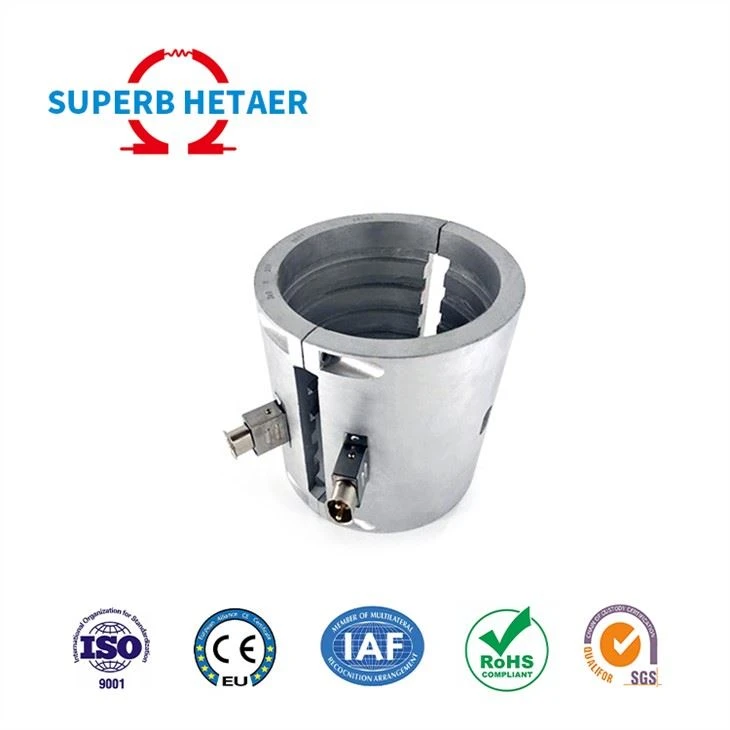


Hot Plate Aluminum Die Casting Heater
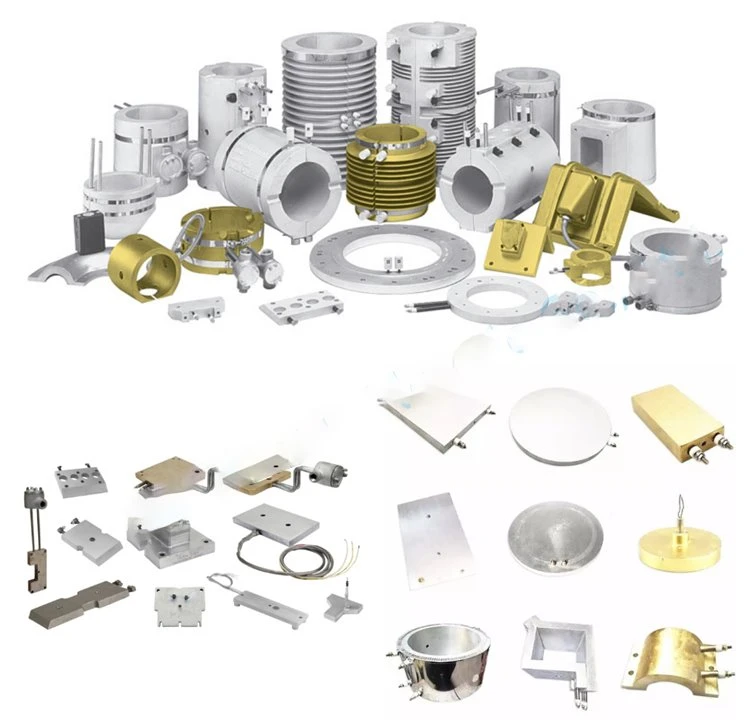
All types of plastics processing applications can use hot plate aluminum die casting heater, including hollow cast nozzle heaters, cooling jackets for cast-in barrel heaters, L-shaped heaters, vent cut-out heaters, air-cooled with shroud, and heat-only heaters for barrels. CAST-IN BARREL HEATERS...
Description
All types of plastics processing applications can use hot plate aluminum die casting heater, including hollow cast nozzle heaters, cooling jackets for cast-in barrel heaters, L-shaped heaters, vent cut-out heaters, air-cooled with shroud, and heat-only heaters for barrels.
CAST-IN BARREL HEATERS WITH LIQUID COOLING:
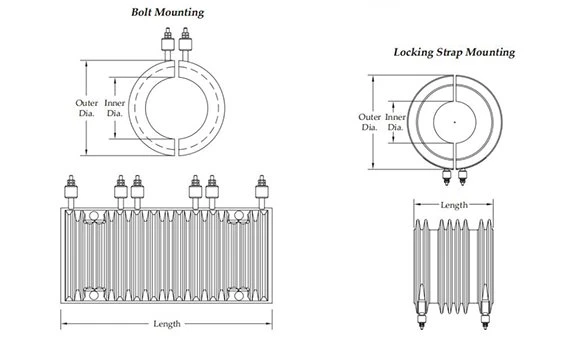
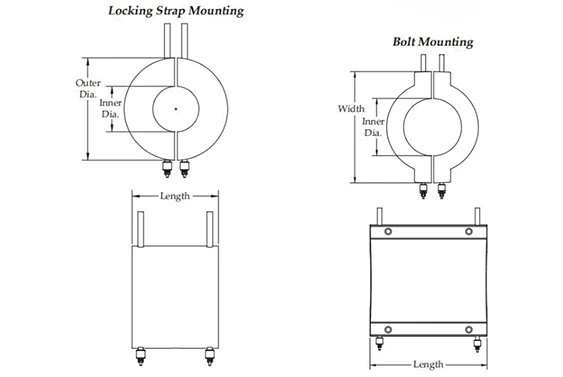
Cast band heaters (Cast-in) come in bronze (700 oC), brass (600 oC), and aluminum (400 oC). The most prevalent units are water-cooled cast aluminum ones. Both stainless steel cooling tubes and Incoloy encased heating components are present in the casting. The heaters can be ordered with separate stainless steel strap clamping or with bolt clamping. Standard threaded stud terminals for electrical connections are included with heating components. There are sheet metal terminal boxes and additional alternatives for termination.
FIN CAST-IN BARREL HEATERS:
Fin Cast Heaters have heating components covered in an Incoloy sheath. The fins provide a lot of surface area for the airflow that serves as the cooling medium. The shrouds for these heaters might be made of cast iron or sheet metal. The heaters come with a bolt fastening option or a separate stainless steel strap clamping option.
ALUMINIUM CAST HEATER PLATE:
Cast plates and platens come in an almost infinite number of shapes and sizes. They come in any material and might include choices for cooling and heating. There are many different machining choices, surface treatments, mounting holes, and notches available.
Hot Plate Aluminum Die Casting Heater Advantages.
•Gravity molding enables superb material homogeneity and thus ideal heat transmission.
• Appropriate shaping results in constant surface temperature.
• Because this heating is indirect, the resistance to heat is safeguarded. The substance or liquid that has to be heated is not in direct contact with the resistance.
• Excellent corrosion prevention
• Because we have complete control over the design and production processes, we can produce a product that properly complements your workflow.




Send Inquiry
You Might Also Like


