


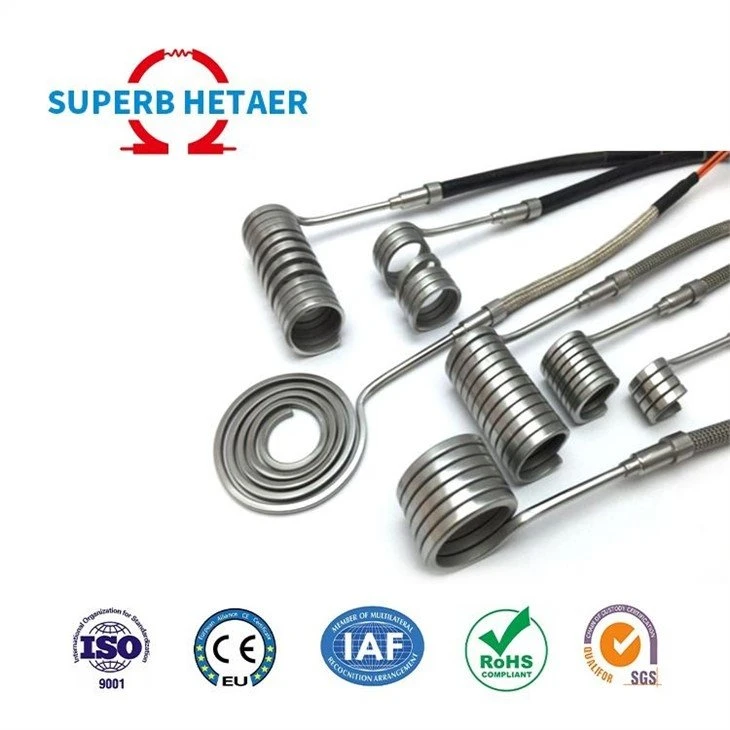

Hot Runner Nozzle Spring Coil Heater with Thermocouple
Nickel chrome resistance wire is used to make coil heaters, which are then compressed for quick and efficient heat transmission. The tubes are formed of chrome nickel steel and filled with Mgo powder. Hot Runner Nozzle Spring Coil Heater with Thermocouple is annealed to make them malleable so that they may be bent into any form.
Description
Product description
Nickel chrome resistance wire is used to make coil heaters, which are then compressed for quick and efficient heat transmission. The tubes are formed of chrome nickel steel and filled with Mgo powder. Hot Runner Nozzle Spring Coil Heater with Thermocouple is annealed to make them malleable so that they may be bent into any form. There are also hot runner heaters with built-in thermocouples. Hot Runner Nozzle Spring Coil Heater with Thermocouple with different cross sections, an inner brass coating, and an outside stainless steel cover are used to make hot runner bushes. It has a high operating temperature, quick heating, precise heating, a long service life, an automatically controllable area, strong thermal conduction, and while the exterior heating material may be reused, the inside heating material is damaged.
Advantages
1. High temperatures resistance
2. Unheated straight section
3. Precise temperature control
4. Fast response
5. Choice of lead orientation
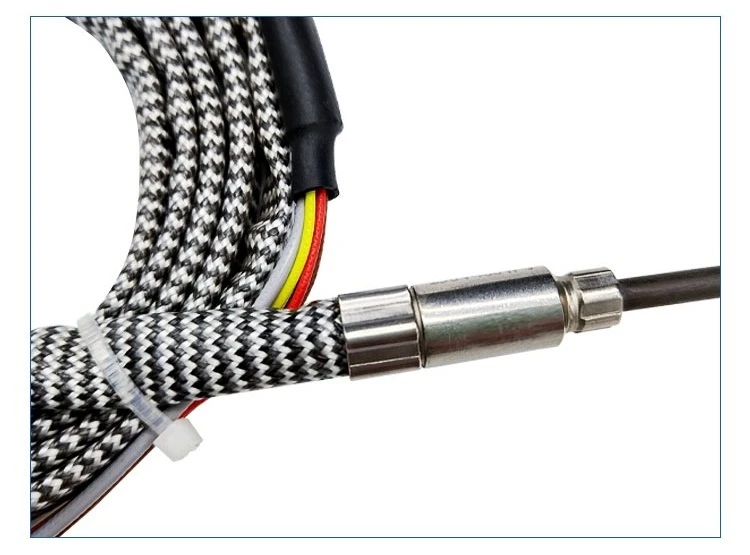
7. Choice of lead protection
8. Longer heat lifetime
9. Round, square and rectangular cable
10. High watt densities 10. Rugged, durable construction
11. Available with built-in thermocouple
12. Made to customers' requirements


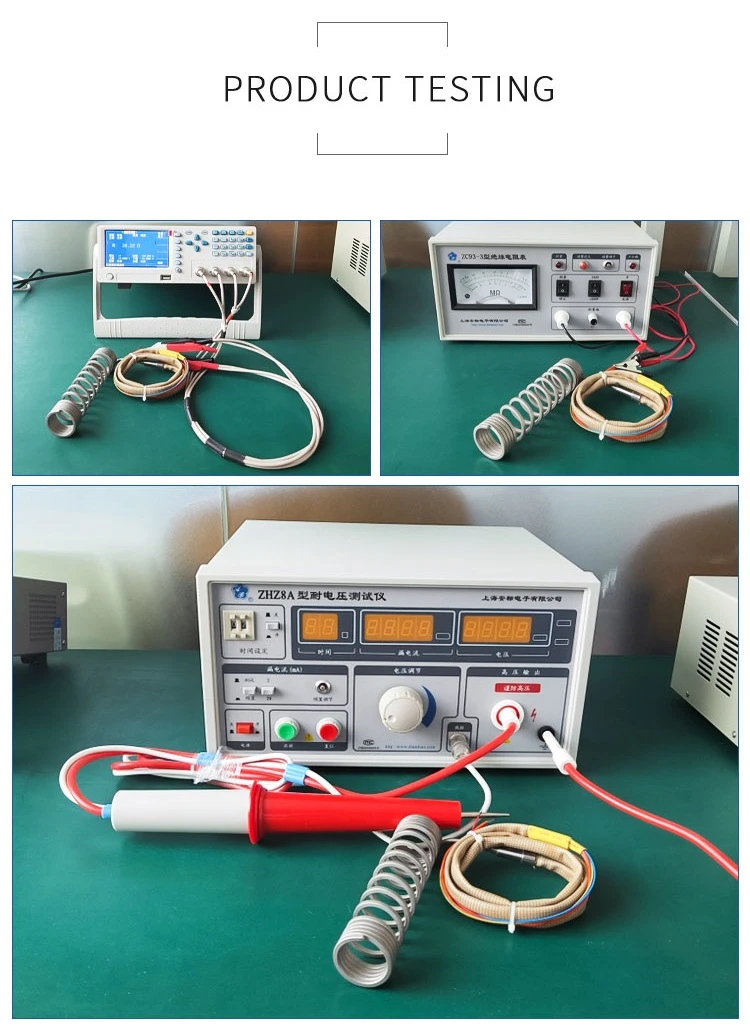
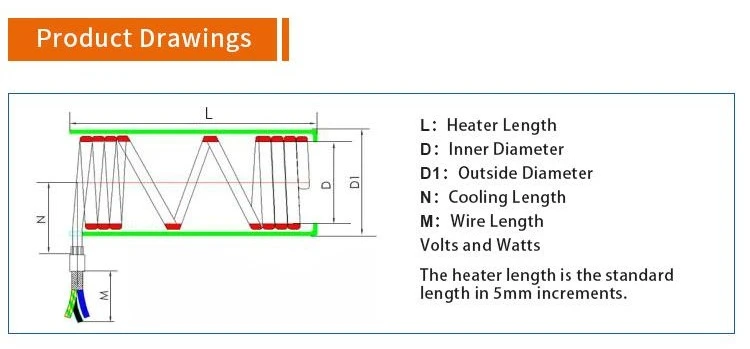

Product Application
1. Injection molding machine nozzle
2. Hot Runner Nozzles & Bushings
3. Packaging machinery
4. Hot runner Injection Molds
5. Injection & Blow Moulding Machine Nozzles
6. PET preform & Thin wall container Moulds
7. Hot runner Manifolds




FAQ
Q:Can we get some samples? Any charges?
Yes, free existing labels, you need to pay shipping cost.
Q: Are you a factory or trading company?
A: We are the factory and have 10 production lines.
Q: What's the Payment method?
A: T/T, 30% deposit before production, the balance before delivery. We suggest you transfer the full price at one time, because there will be a big bank fee if you pay twice.
Q: How do you make a heater coil?
Usually, the client or end-user specifies the line voltage. The intended temperature rise (T) and airflow volume (SCFM) are used to compute the total watts. W=SCFM/T / 3 The total wattage is divided by the quantity of coils in the circuit to determine the wattage of each coil.
Q: What material are electric heater coils often made from?
High temperature resistant alloys like nickel-chrome (NiCr), iron chrome aluminum (FeCrAl), or refractory metals like molybdenum (Mo), tungsten (W), or similar alloys are used to make electric heating elements.
Q: Can we use copper as heating element?
Copper has a heat conductivity that is, on average, 20 times greater than that of stainless steel. This indicates that copper may transport heat 20 times more quickly in real-world terms. So, copper will be helpful if you require speedy heating.
Q: How does an induction coil work?
In order to transfer energy to a work item that has to be heated, induction creates an electromagnetic field in a coil. A magnetic field is created around a wire when an electrical current flows through it.
Send Inquiry
You Might Also Like


