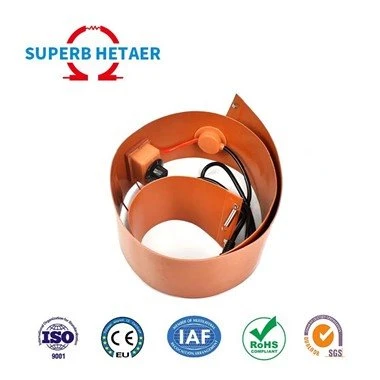
Analysis and Treatment of Common Faults of Electric Water Heater
Leave a message
4、 There is a noise when heating
After using for a period of time, the heating pipe will scale, and due to the noise generated by the convection of water, it is necessary to remove the scale and inspect and replace the heating pipe.
5、 The heating indicator does not light up after power on
1. First, check whether the temperature limiter has operated.
Test method: Use a multimeter to check whether there is voltage at the input terminal of the temperature limiter. If there is no voltage, it indicates a problem with the power cord or power socket. If there is 220V voltage, then check the output terminal. If there is no voltage, it indicates a problem with the temperature limiter. Press the push lever to reset it. Check the output terminal again. If there is voltage, it is normal, or there is no voltage. Replace the temperature limiter.
2. If the temperature limiter is normal, check whether the temperature regulator is adjusted too low, resulting in premature insulation;
3. Finally, check the indicator circuit and the indicator itself for any problems.
6、 No hot water/no hot water
1. Parts failure: premature action of the temperature controller, open circuit of the heater, action of the temperature limiter, burning and open circuit of the internal line, open circuit of the power line, power failure of the socket, perforation of the outlet pipe, etc;
2. Operating problems: insufficient heating time, excessive use time, improper adjustment of the water mixing valve, and failure to start the machine;
3. Other problems: power failure, water failure, water inlet pipe falling off, etc.
be careful:
√ According to experience, the most common reason for the lack of heat in the outlet water should be the small capacity of the water heater and the short usage time, so the user feedback is that the outlet water is not hot. For this phenomenon, proceed from reality and use data to correctly explain it to the user;
√ If the surface phenomenon is that the temperature limiter is not powered on and hot water is not produced due to its operation, it is necessary to focus on checking whether the temperature controller is normal, as the most common fault that causes the temperature limiter to operate is the temperature controller fault;
√ It is sufficient to provide reasonable explanations and guidance to the user on other operational issues. If the water heater initially works well and gradually decreases in length, it can be considered whether the water temperature has decreased or the inlet pipe has fallen off or blocked.
7、 No power/no heating
1. Part failure: When not powered on, focus on checking whether the part between the power cord plug and the heater has a path, and when not heating, focus on checking whether the heater is normal;
2. Operational issues: failure to reset after a missed protection trip, failure to turn on the power switch, etc;
3. Other issues: power failure, etc.
be careful:
√ If the leakage protection switch trips frequently, it is important to check whether the heater leaks electricity, whether the ground wire is live, and whether the environment is live;
√ A multimeter can be reasonably used to measure the continuity or resistance of the entire circuit to quickly determine whether there is an open circuit and whether the components are normal;
√ Other operational issues can only be reasonably explained and guided to the user.
8、 Water leakage/dripping
1. Parts failure: safety valve dripping, water mixing valve dripping, sprinkler breakage, hose damage, tank leakage, anti electric wall not tightened, heater leakage, etc;
2. Pipeline problem: water dripping at each pipeline connection.
be careful:
√ Pay attention to whether the water pipe of the electric wall is not tightened, or the sealing ring at the interface between the electric wall and the inlet and outlet water pipe of the inner tank is broken, or there is water leakage at the heater flange or the inner tank. If any of the above situations occur, it may have a serious impact on the safety of use. After maintenance, it is also necessary to carefully check whether the water leakage causes open circuit and leakage;
√ For water leakage at the connection, replace the sealing ring, wrap some raw material tape appropriately, and retighten it;
9、 Troubleshooting Methods for Circuit Boards
1. There are few components in the circuit board that can be repaired and replaced, mainly relays, transformers, and voltage stabilizing tubes;
2. Use a multimeter to check whether the above components are normal;
Detection method:
√ Whether the relay input is normal;
Check whether the relay output is normal after startup;
√ Check whether the safety tube is open;
Check whether the primary resistance of the transformer is normal (600-1000 Ω);
√ Whether the secondary output of the transformer is normal (compared to the nominal secondary output of the transformer);
√ If the relay has a "popping" sound but still cannot work properly, it may be that the relay contacts have acted but cannot be contacted together, and it is necessary to replace the relay at this time; Conversely, if the relay has no sound but everything else is normal, you can manually apply a current to both ends of the induction coil of the relay and observe whether it can be pulled in to determine whether the problem is with the relay or the microcontroller.
The above content is organized by Superb heater Company, super heater. Mainly professional production: industrial heating elements, temperature measuring elements, production equipment, accessories, and raw materials such as tubular heaters, tubular heaters, belt heaters, ceramic heaters, silicone rubber heaters, thermocouples, etc.
Welcome global industry partners to discuss cooperation!