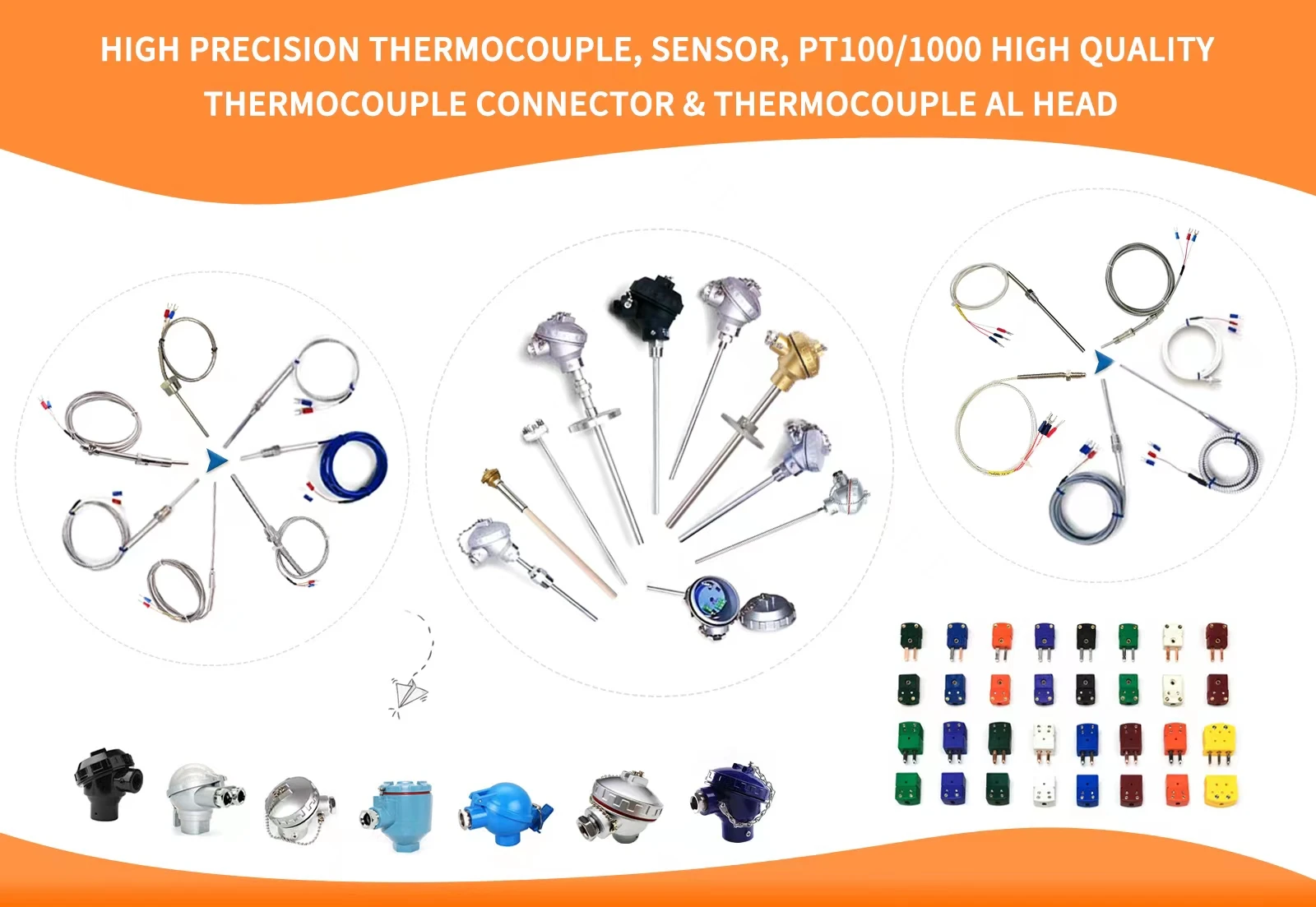
Corrosion-Resistant Thermocouples: Designed for Long-Term Use in Harsh Conditions
Leave a message
Accurate temperature measurement is crucial in the intricate realm of scientific research and industrial activities. For long-term usage in challenging environments where conventional thermocouples may malfunction, corrosion-resistant thermocouples have become a dependable option.
Thermocouples that are resistant to corrosion are specially designed to resist the corrosive effects of different substances. Because of the materials used in their construction, these thermocouples are very resistant to chemical assault, guaranteeing precise temperature readings even when harsh chemicals are present.
The selection of materials is one of the primary characteristics of corrosion-resistant thermocouples. They are often constructed from alloys such as Hastelloy, Inconel, and stainless steel. Excellent resistance to a variety of corrosive substances, including as acids, alkalis, salts, and organic solvents, is provided by these materials. For instance, corrosion-resistant thermocouples manufactured of hastelloy can precisely detect the temperature of the reaction vessels in a chemical facility that produces acids or alkalis without being harmed by the corrosive environment.
Another crucial factor is how long these thermocouples last. High temperatures, pressure variations, and exposure to hazardous chemicals are common in industrial operations. Thermocouples that are resistant to corrosion are designed to endure these circumstances and provide consistent temperature readings for an extended length of time. They can operate well even under the most trying conditions because to their sturdy design and corrosion resistance. These thermocouples may be mounted in reactors and pipes to monitor temperature and guarantee safe and effective operations in petrochemical refineries, where temperatures can reach very high levels and the atmosphere is teeming with corrosive hydrocarbons.
When it comes to corrosion-resistant thermocouples, accuracy is crucial. These thermocouples are designed to provide very precise temperature readings even in the most challenging environments. Because of the steady thermal characteristics of the materials used in their manufacture, the temperature measurements will stay constant throughout time. This is crucial for chemical operations because maintaining product quality and process efficiency requires exact temperature control. Corrosion-resistant thermocouples may offer precise temperature monitoring to guarantee the quality and effectiveness of the products in a pharmaceutical manufacturing facility where stringent temperature control is required for medication synthesis.
Another benefit of corrosion-resistant thermocouples is their versatility. To suit diverse uses, they may be made in a variety of sizes and forms. For example, tiny corrosion-resistant thermocouples may be used to assess the temperature of tiny reaction vessels in a laboratory environment, where space is sometimes at a premium. Long-stemmed thermocouples may be used in industrial settings to monitor temperature at various depths by being placed into deep tanks or reactors.
Nevertheless, there are several drawbacks to corrosion-resistant thermocouples. The price of them is one possible disadvantage. These thermocouples are more costly than conventional thermocouples due to the use of premium corrosion-resistant materials and sophisticated production processes. For certain applications where money is a key consideration, this can be an issue. To guarantee reliable temperature readings, installation and calibration must be done correctly. This raises the total complexity and expense of employing these thermocouples by requiring specialised equipment and skilled staff.
Corrosion-resistant thermocouples are designed to withstand severe environments over an extended period of time. They are an important tool in many different sectors because of their resilience to corrosion, precision, flexibility, and longevity. The advantages they provide in terms of accurate temperature monitoring and process safety often exceed these disadvantages, notwithstanding possible cost and installation constraints. Corrosion-resistant thermocouples are expected to become progressively more advanced and popular in applications where temperature monitoring in corrosive environments is essential as technology develops. These thermocouples are crucial to the performance of crucial activities and processes, whether they are used in pharmaceutical manufacture, petrochemical refining, or chemical processing.