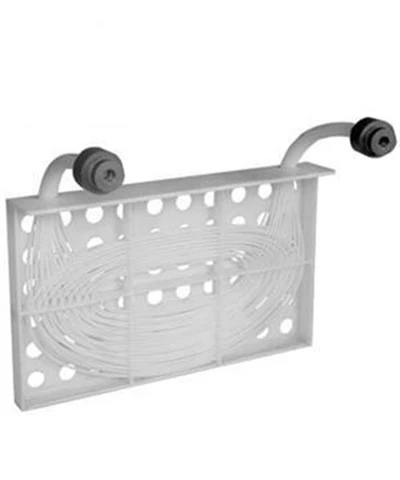
How Are PTFE Exchangers Used in Cooling Hot Vapors from a Salt Bath Nitrocarburizing Furnace?
Leave a message
Salt bath nitrocarburizing is a process that forms a hard, wear-resistant surface on steel objects by placing them in a molten bath of cyanate and carbonate salts. This furnace produces hot exhaust gases, which are caustic and poisonous and are highly charged with condensable salt particles. This toxic gas stream can be safely cooled using a PTFE heat exchanger that recovers important heat without corrosion or blockage.
The issue of treating chemically demanding furnace exhaust and providing dependable, long-term operation is the sole concern of the PTFE exchanger salt bath nitrocarburizing cooling applications debate in metal heat-treatment facilities. Here is where PTFE heat exchangers come in . They offer the combination of good chemical inertness and a smooth , non-stick surface , which makes them less prone to fouling by condensed salts .
Salt Bath Nitrocarburizing Exhaust – Explained
Salt bath nitrocarburizing is a process for diffusing nitrogen and carbon into the surface of steel by using molten cyanate and carbonate salt solutions. During working, the furnace emits hot exhaust gasses containing:
Vapour of cyanate
Carbonate vapors
Alkali condensations
Salt Aerosol
Fine particulate matter
As the gases cool, some of the vapour stream condenses to highly corrosive liquid droplets and crystalline solids. The condensate rapidly attacks metal surfaces and accumulated salts hinder gas movement, making this environment challenging for traditional metal heat exchangers.
The exhaust stream hence is a dual challenge of fouling and corrosion at the same time.
Why We Use PTFE Here
PTFE possesses a range of features that are well suited for corrosive exhaust gas cooling.
Total Resistance to Aggressive Chemistry
The condensed vapours created during nitrocarburising can be extremely alkaline and chemically reactive. PTFE is generally unaffected by:
Cyanates.
Carbonate condensates
Alkali wash solutions
Cleaning agents – acidic
Salt aerosol with moisture
The resistance protects the exchanger tubes from quick degradation experienced by many metallic alloys.
Non-Stick Surface Performance
PTFE's most important property in exhaust cooling service is its extremely low surface stickiness.
The flat surface of fluoropolymer prevents buildup of:
Crystalline salt deposits
Concentrated condensates
Semi solid fouling layers
This property allows for far lower clogging risk than conventional metal exchangers.
The PTFE cooler in the heat-treat factory is a strong, corrosion-proof lung for one of the most challenging gas streams in thermal processing.
How Does a PTFE Heat Exchanger Work
In majority of the systems, the corrosive exhaust gas flows through the shell side of the exchanger and the cooling media flow in the PTFE tubes.
Shell side gas cooling
The fume-laden gas stream is cooled initially and then enters the exchanger shell. When the gas encounters colder PTFE tube surfaces:
Sensible heat is dissipated
Condensable vapors chill
Salt particles start to fall out
Creates corrosive condensate
PTFE is chemically inert allowing the exchanger to handle both the gas and liquid phases of the process stream.
Tube side cooling fluid
The cooling side could utilize:
Recycled water
Cooling water for the plant
Ambient air systems
Ethylene glycol-based coolants
The recovered thermal energy can subsequently be directed to other parts of the plant.
Benefits of Heat Recovery
The PTFE exchanger salt bath nitrocarburizing cooling system is of great utility for the waste heat recovery.
The energy that is recovered can be used for:
Preheating of combustion air
Boiler feedwater heating
Supporting plant hot water systems
Improving the overall efficiency of the furnace
Decreasing fuel consumption
Since nitrocarburizing furnaces are generally operated constantly, even slight gains in heat recovery can lead to large reductions in plant energy demand.
Avoiding fouling and plugging
Controlling fouling is crucial for exhaust systems that are salt-laden.
The PTFE Smooth Surface Advantage
Metallic exchangers tend to produce hard crystalline layers firmly attached to the inside surfaces. They lower the efficiency of heat transfer and increase the pressure drop.
The non-stick properties of PTFE lessen the strength of attachment of deposits and hence make it easier to remove accumulated residues during maintenance cycles.
Integrated Washdown Systems
Spray bars are installed within the shell part in several installations. These systems periodically flush the gas side with water or chemical cleaning treatments.
PTFE's resistance to severe cleaning chemistry allows operators to use stronger wash solutions without harming the exchanger tubes.
Typical cleaning fluids include:
Alkali detergents
Descaling solutions are acidic
Water flushing systems.
Industrial specialized detergents
The fluoropolymer tubes remain chemically stable during all these maintenance operations.
Process Note
Dilution Air Requirement Upstream of the PTFE Exchanger
The exhaust gas temperatures for raw nitrocarburizing are usually between:
200 °C and 400 °C.
These temperatures exceed the recommended continuous working limit of PTFE (~110°C).
This is why the gas stream needs to be cooled prior to the entry into the PTFE heat exchanger. This is often done by injecting regulated amounts of dilution air upstream of the exchanger input.
A diluting air damper system is often used to:
Gas temperature at the inlet
Prevent local overheating
Steady the operation of the exchanger
Protect the PTFE tube assembly.
Temperature measurement at the exchanger intake is deemed vital for safe long-term operation.
Why Metal Exchangers Frequently Fail In This Service
In the process of nitrocarburizing, exhaust systems present various problems to conventional metallic exchangers.
Corrosion of the Condensate
Many stainless steels and coated metals are attacked by condensed salts and alkaline solutions.
Adhesion to the Deposit
Crystalline salts have a strong affinity for metal surfaces which accelerates fouling and clogging.
Limitations of Cleaning
Aggressive cleaning solutions may damage the metallic tube material or protective coating.
Thermal Cycling Stress
In metallic components exposed to chemically active condensates, several thermal cycles enhance the coupling of corrosion and fatigue.
PTFE overcomes several of these concerns, not just in terms of corrosion resistance, but because of its chemical inertness.
PTFE Exhaust Coolers: Design Considerations
Several engineering aspects are critical in the design of PTFE exchangers for furnace exhaust service.
Temperature Controls
Fluoropolymer tubing needs to be protected by closely controlling the inlet temperature.
Control of gas velocity
The gas flow should be sufficient to prevent excessive settling of the particles, but not so high as to cause excessive pressure decrease.
Drainage Design
The condensate drainage systems shall be designed to prevent pooling of liquid in the shell of the exchanger.
Access for Maintenance
Access ports and wash down systems allow for easy cleaning of any build up of salt deposits.
Structural supports
The mechanical strength of PTFE is less than that of metals so sufficient tube support spacing is essential to avoid vibration or sagging.
Summary
PTFE heat exchangers are rugged, low-maintenance solutions for waste-heat recovery from one of the most chemically hostile exhaust streams in the metal heat-treating industry. With its smooth non-stick surface, PTFE can withstand corrosive condensates, resist cyanate and carbonate chemistry, and minimize salt fouling, allowing for reliable cooling in situations where many metallic exchangers fail.
Recovered thermal energy can be used to improve plant efficiency by preheating combustion air, heating boiler feedwater, and wider integration of energy recovery . With adequate inlet temperature control and dilution air management, the PTFE exchangers perform well even in harsh nitrocarburizing furnace service.
With the right fluoropolymer material system, today's thermal processing plants can even transform harmful and corrosive exhaust gases into a lucrative source of energy.