How immersion heaters work
Leave a message
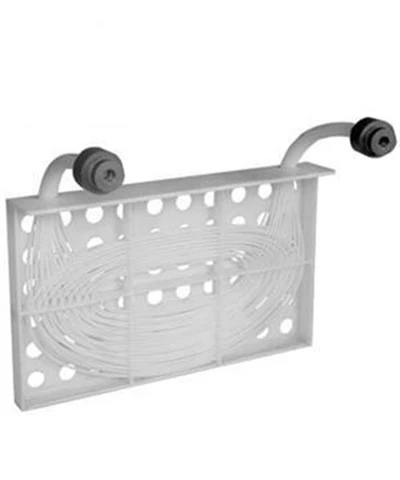
Immersion heater uses U-shaped tubular electric heating element. It is assembled on the flange cover according to the design specifications and power configuration requirements of different heating media. It is inserted into the material to be heated. When the heating element is working, a large amount of heat is transferred to the heated medium, increasing the temperature of the medium to meet the required process requirements. When the medium temperature reaches the set value required by the process, the control system adjusts the output power of the electric heater based on the temperature sensor signal and PID operation to achieve temperature control of the resistive load of the heating element. Make the medium temperature uniform and meet the requirements; when the heating element is over-temperature or the liquid level is low, the heating element interlock protection device immediately cuts off the heating power to prevent the heating element from burning out and extend the service life.
(Note: The flanges of gas explosion-proof heating pipes are generally divided into threaded flanges and flat flanges. The sizes of threaded flanges are generally 1 inch, 1.2 inches, 1.5 inches, and 2 inches. Threaded flanges are commonly used. Pipes are generally applicable For low-power heating, the general power setting is from a few kilowatts to more than ten kilowatts. The flat flange size is available from DN10-DN1200. Different powers are designed according to customer requirements. Generally, high-power flange electric heating pipes use flat flanges. Ranges from a few kilowatts to hundreds of kilowatts.)
Gas explosion-proof heating tube technical parameters:
1. Reference voltage: 220V/380V
2. Flange and thread head materials: stainless steel, carbon steel, copper, titanium, etc.
(This product can be customized according to customer requirements, drawings, voltage, power, and size are provided)
3. Heating tube diameter: Φ8.5-Φ22
4. Heating tube material: SS304 stainless steel, SL3316 stainless steel, No. 10 steel, copper, titanium (anti-corrosion)
5. Main power: 3KW-1000KW
6. Working pressure: 1.0MPa-3.0MPa
Features of gas explosion-proof heating tube:
1. Most of the combined gas explosion-proof heating pipes use argon arc welding to connect the electric heating pipe to the flange. Fastening devices can also be used, that is, fasteners are welded on each electric heating tube. Then lock it with the flange cover with nuts. Pipes and fasteners are argon arc welded to prevent leakage. The fastener seals adopt scientific technology, and it is extremely convenient to replace a single piece, which greatly saves future maintenance costs.
2. Use imported and domestic high-quality materials. Scientific production technology and strict quality management ensure the superior electrical performance of electric heating tubes.
3. The surface power is large and can heat the air 2 to 4 times the surface load.
4. The structure is dense and compact. Because the whole is short and dense, it has good stability and does not require brackets during installation.
Things to note when using gas explosion-proof heating pipes:
1. The electric heating tube should be positioned and fixed, and the effective heating area must be completely immersed in liquid or metal solid. It is strictly prohibited to burn in air. When scale or carbon deposits are found on the surface of the pipe, it should be cleaned in time before use to avoid affecting heat dissipation and shortening the service life.
2. When heating fusible metals or solid nitrates, alkali, asphalt, paraffin, etc., the voltage should be lowered first and then raised to the rated voltage after the medium melts.
3. The components are allowed to work under the following conditions:
A. The relative humidity of the air is not greater than 95%, and there are no explosive or corrosive gases.
B. The working voltage should not be greater than 1.1 times the rated value, and the shell should be effectively grounded.
C. Insulation resistance ≥1MΩ Dielectric strength: 2KV/1min
4. The wiring part should be placed outside the insulation layer to avoid contact with corrosive, explosive media and moisture; the leads should be able to withstand the temperature and thermal load of the wiring part for a long time, and excessive force should be avoided when tightening the wiring screws.
5. Components should be stored in a dry place. If the insulation resistance is lower than 1MΩ due to long-term storage, it can be dried in an oven at about 200°C, or heated at a reduced voltage until the insulation resistance recovers.
6. When heating air, the elements should be arranged evenly across each other so that the elements have good heat dissipation conditions and the air flowing through can be fully heated.
7. When heating nitrate, measures should be taken to prevent explosion accidents.
Gas explosion-proof heating tube application scope:
Gas explosion-proof heating pipes are mainly used as insulating heating materials in various storage tanks, containers and oil tanks in petroleum, chemical, food, machinery and other industries. The connection method can adopt flange or threaded end face seal
Performance and uses of gas explosion-proof heating pipe:
The gas explosion-proof heating pipe is made of multiple heating pipes welded on the flange and heated centrally. Mainly used for heating open and closed solution tanks and circulation systems.