How Micro Thermocouples Support Mini Hot Runner Molds For C Electronics
Leave a message
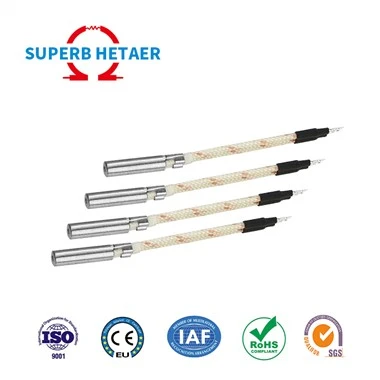
With the development of 3C electronic products such as mobile phone middle frame, watch structural parts, connector pins and wearable device accessories toward miniaturisation, thinning and high accuracy, micro hot runner moulds are widely applied. Traditional conventional thermocouples have a big probe diameter and huge installation space, therefore they cannot be set in small nozzle runners and thin manifold gaps. The micro hot runner thermocouple with ultra-fine probe, compact structure and ultra-fast reaction become the fundamental assurance for stable temperature control of small mould.
Micro thermocouples are commonly designed as ultra-fine probes of 0.5mm to 1.0mm, which can be inserted into the tiny reserved mounting holes of micro nozzles and do not occupy any additional space in the mould. The internal high-purity alloy core adopts small-size drawing process, which keeps the full thermoelectric characteristics and reduces volume, and temperature measurement accuracy is not less than standard models. Its one-piece seamless welding construction solves the loose welding spots of small-size split parts, enhances the vibration resistance and bending fatigue resistance, and is suitable for the frequent high-speed mould opening and shutting of 3C moulds .
The temperature window for moulding 3C precision plastics is small, and slight temperature fluctuation will induce thin-wall filling deficiency, surface shrinkage and internal stress deformation. Micro thermocouples own fast heat conduction speed and sensitive signal response, can catch slight instantaneous temperature change in the micro runner, transmit back to the controller in real time and complete rapid power compensation to keep the melt viscosity stable. For multi-point dense pattern micro hot runners, the micro thermocouple arrangement does not interfere with each other, and the temperature of each pouring point can be monitored independently and accurately .
The 3C moulds are generally in continuous long-term operation with high cycle speed, which requires micro thermocouples to have high-temperature oxidation resistance and anti-aging performance. Special sealed anti-corrosion sheath can separate oil mist, dust and weak corrosion gas created by modified polymers, which can extend service life and prevent frequent replacement downtime. The technological growth of small 3C hot runner moulds is inseparable from the iterative upgrade of micro thermocouples, which supports high precision, high cycle and high stability production of electronic precision parts.