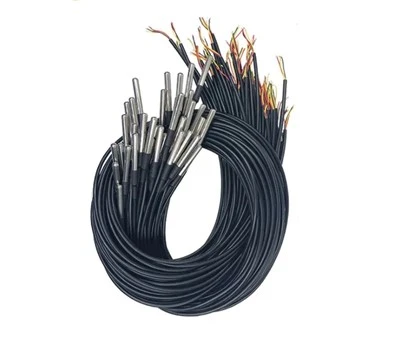
How to avoid pores when welding and sealing the insulation layer of a straight stainless steel electric heating coil
Leave a message
In order to avoid pores when welding the insulation layer of the sealed straight stainless steel electric heating coil, measures can be taken from the aspects of pre-welding preparation, welding material selection, and welding process control, as follows:
Pre-welding preparation
Surface cleaning of weldment: Before welding, the oil, rust, moisture and other impurities on the surface of the weldment must be thoroughly removed. These impurities will decompose and produce gas during the welding process, thereby increasing the probability of pore formation. Mechanical cleaning can be performed using tools such as sandpaper and wire brushes, or wiping and cleaning with organic solvents such as acetone and alcohol.
Insulation layer treatment: If the insulation layer is made of ceramic fiber or other materials, ensure that it is dry to prevent moisture from vaporizing and forming pores under high welding temperatures. For damp insulation layers, drying treatment is required. The drying temperature and time are determined according to the characteristics of the insulation layer material. Generally, it can be dried at 100-200℃ for 2-4 hours.
Selection of welding materials
Welding rods or welding wires: Select welding materials with reliable quality and matching the parent material. The coating or shielding gas of the welding rod or welding wire should have a good protective effect, effectively isolate the air, and prevent oxygen, nitrogen, etc. in the air from entering the weld to form pores. For example, the 308L stainless steel welding wire commonly used in welding stainless steel electric heating rings must ensure that it meets the relevant standards and is not damp or deteriorated.
Shielding gas: When using gas shielded welding, it is necessary to select a suitable shielding gas and its flow rate. For stainless steel welding, the commonly used shielding gas is argon, and the purity should not be less than 99.99%. A suitable gas flow rate can form a stable shielding gas hood and effectively protect the welding area. The general gas flow rate is between 10-20L/min, which can be adjusted according to factors such as welding current and welding speed.
Welding process control
Welding parameter setting: Select a suitable welding current, voltage and welding speed. Excessive current can easily overheat the weldment, resulting in increased ionization of the shielding gas and poor protection effect. At the same time, it will also cause the gas in the molten pool to not have time to escape and form pores; too small a current will cause shallow melting depth, which is not conducive to gas discharge. If the welding speed is too fast, the gas will not have time to escape from the molten pool; if the speed is too slow, the molten pool will overheat, the gas solubility will increase, and pores will be easily formed. For example, for a welding rod with a diameter of 3.2mm, the welding current can be between 100-130A, the voltage can be around 22-24V, and the welding speed can be controlled at 15-30cm/min.
Operation technique: When welding, you must maintain the correct operation technique. For example, short arc welding can make the arc burn stably and reduce the chance of air intrusion into the molten pool. At the same time, the angle of the welding rod or welding wire should be appropriate to ensure that the shielding gas can effectively cover the molten pool. When closing the arc, pay attention to filling the arc pit to avoid pores due to rapid cooling in the arc pit.
Environmental control: The welding environment should be kept dry and well ventilated, and avoid welding in a humid or windy environment. A humid environment will cause moisture in the air to enter the weld, and strong winds will blow away the shielding gas, resulting in poor protection effect, thereby increasing the possibility of pores. When the ambient humidity is high, dehumidification equipment can be used for dehumidification; when welding outdoors, if the wind is strong, windproof measures should be taken, such as setting up a wind shield or welding in a sheltered place.