How to Maintain Hot Runner in Off-season Storage
Leave a message
Scientific targeted maintenance of hot runner systems can prevent moisture erosion, metal oxidation, thermocouple failure, and heating component aging during off-season production, holiday shutdown, and mold standby storage. It can also guaranty that the equipment can be started up smoothly with stable performance after being placed for an extended period of time.
Prior to storage, thoroughly clean all internal materials. Empty all leftover melt from manifolds and nozzles, remove internal carbon deposits and precipitates completely, and prevent retained materials from deteriorating and adhering to the flow channel wall after prolonged static placement, which can be challenging to clean later and obstruct the flow channel.
Second, perform a thorough drying and moisture-proofing treatment. Use special high-temperature sealing plugs to shut all feed ports, nozzle outlets, and process holes once the hot runner has fully cooled to room temperature. To maintain a dry and ventilated storage environment, apply desiccant around the mold storage position and clean the exterior heating rings, thermocouple probes, and wiring terminals of any oil dirt or water mist.
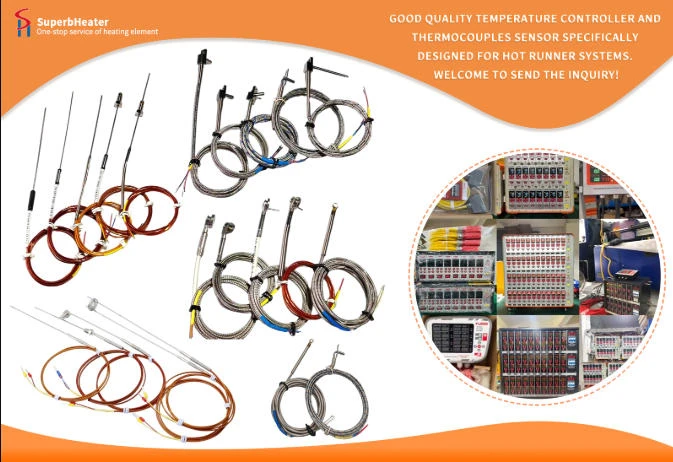
Third, safeguard heating and temperature measurement devices that are susceptible. Apply a thin layer of anti-rust heat-conducting lubricant to the probe portion for isolation protection, retract and secure dispersed thermocouple wires neatly, and steer clear of extrusion, bending, and high pressure placement. To avoid extrusion distortion and damage to the insulation layer, remove readily detachable external heating equipment and keep them in a dry box.
Fourth, for long-term storage, conduct routine periodic inspections. Take out the molds for visual inspection on a regular basis if they have been stored for longer than three months. Look for signs of wet and loose sealing, aged and fractured thermocouple wires, and rusty and oxidized probes. In order to prevent irreversible harm from long-term quiet degradation, promptly address concealed threats.
Fifth, before reusing, conduct a pre-start inspection and trial operation. Avoid overheating quickly when turning on after long-term storage. Adopt low-temperature preheating and moisture removal mode, verify that all temperature zones measure temperature accurately and heat steadily, and then formally enter production after verifying the circuit continuity and thermocouple signal normalcy. After production resumes, regular off-season storage maintenance can significantly lower equipment failure rates and maintenance costs.