How to Select Suitable Hot Runner Thermocouples According to Plastic Materials
Leave a message
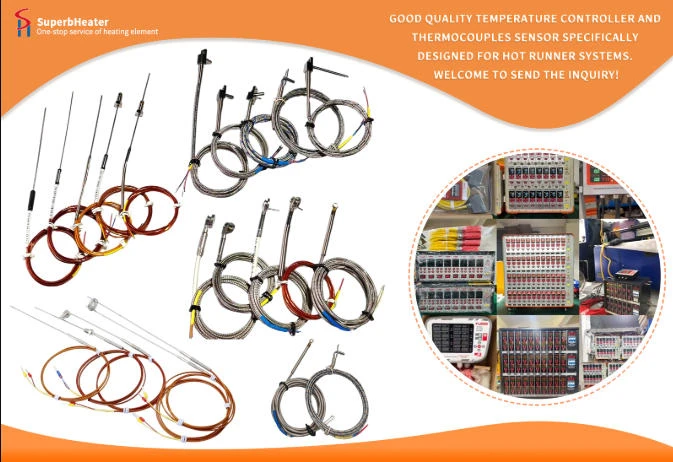
The selection criteria for matching hot runner thermocouples are directly influenced by the significant variations in melting point, thermal stability, fluidity, and chemical properties of various plastic raw materials. We can only guaranty precise temperature monitoring, steady control, and extended service life by choosing targeted thermocouples based on material characteristics.
Common general-purpose plastics like ABS, PP, PE, and PS have stable material properties and few corrosive volatile gasses produced during melting when the molding temperature is concentrated between 180°C and 260°C. Standard K-type ordinary thermocouples are the best option in this situation. These goods can fully fulfill daily continuous production demands due to their moderate pricing, fast temperature response speed, and steady basic precision. They also have low comprehensive usage costs and are convenient for future procurement, replacement, and maintenance.
The molding temperature must be between 260°C and 320°C for engineering plastics with medium and high melting points, such as PA, PC, POM, and PBT. These materials easily produce a mildly corrosive gas during high-temperature melting. High-temperature resistant improved thermocouples with thickened probes and anti-oxidation treatment must be chosen. These thermocouples use high-purity, high-temperature alloy wire cores that can withstand prolonged high-temperature baking, efficiently reduce internal thermal aging and temperature drift, and preserve steady temperature measurement accuracy in high-temperature operating environments.
The working conditions are more severe for modified polymers that contain glass fiber, talc powder, and flame retardant. Strong, corrosive smoke will be produced by different additives, and hard filler particles will continuously scour the probe surface at a fast pace. Wear-resistant and corrosion-resistant special thermocouples must be preferred. The probe's toughened and anti-corrosion coated surface can withstand chemical erosion and physical abrasion, significantly extending its service life in challenging work environments.
The ultrahigh molding temperature places exceptionally stringent requirements on the overall high-temperature performance of thermocouples for special high-temperature resistant polymers like PEEK and PPSU. To prevent insulation failure and signal disorder at extremely high temperatures, complete ceramic insulated ultrahigh temperature thermocouples must be chosen. In order for the chosen thermocouples to adapt to the production environment for a long time, lower failure frequency, and increase production benefits, businesses must first define the molding temperature range and raw material characteristics, give up on the one-size-fits-all matching mode, and fairly balance performance and cost.333