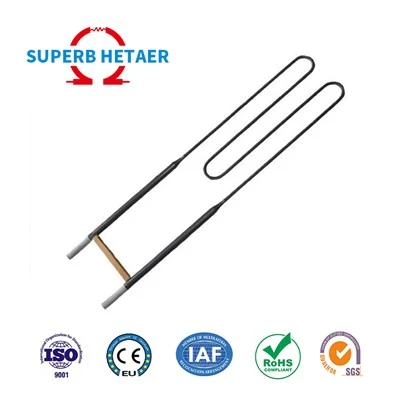
Introduction to the two main methods of direct heating and indirect heating of pipe heaters
Leave a message
There are two main heating methods for pipe heaters: 1. Direct heating (internal heating): This is achieved by applying a parallel, straight-line application to the pipe; the other is by wrapping a spiral, equidistantly around the pipe to provide direct heating. 2. Indirect heating (far-infrared heating): This is achieved by using a far-infrared electric heating device. Each of these heating methods is described in detail below.
Method 1: Direct Heating (Internal Heating)
Direct heating involves inserting a flanged tubular heating element inside the pipe heater into the reactor jacket, heating the thermal oil and transferring heat energy from the heater to the chemical raw materials in the reactor. Alternatively, the heating element can be inserted directly into the reactor, or heating tubes can be evenly distributed around the heater's walls. This method is called internal heating. Internal heating offers rapid heating and high efficiency.
The pipe heater is a new generation of reactor heaters for internal systems. It utilizes electric heating combined with far-infrared technology to evenly distribute heat within the reactor. Pipe heaters save over 30% in production costs compared to conventional thermal oil and steam heating systems. Their temperature control system utilizes thyristors (SCRs) as key components, along with a computer interface. This computer analyzes and controls temperature differences, making operation easier for operators. The far-infrared radiation in these heaters promotes blood circulation and is beneficial to the human body. Driven by energy conservation, emission reduction, and environmental protection, their development prospects are expanding. Many large chemical plants, both domestically and internationally, are transitioning from thermal oil and steam heating to far-infrared heating.
Method 2: Indirect Heating (Far-Infrared Heating)
Indirect heating has emerged in recent years. It utilizes a far-infrared electric heating device, which covers the bottom of the reactor and the middle and lower sections of the reactor. Direct contact heating is not required. The far-infrared electric heating system within the reactor boasts a large internal heating area, ensuring a steady and rapid temperature increase. Heat release is uniform, and the heater is easily controlled. The heater can be controlled in sections, with upper, middle, and lower sections. The reactor wall temperature is easily controlled, and the heater has no adverse effects on the reactor contents, nor does it cause carbonization, as is the case with lined reactors. The heater operates silently and pollution-free, is durable, and offers significant energy savings.
Far-infrared pipe heaters absorb far-infrared radiation energy simultaneously within the heater's interior and on its surface molecules at a certain depth. This energy, like solar energy, generates heat, heating the material within the pipe. Heat is distributed evenly, preventing variations in heat volume due to varying degrees of thermal expansion. This ensures that the heated object's shape, physical and mechanical properties, durability, and color are preserved to the greatest extent possible. Pipe heaters are widely used in electronics, electrical appliances, textiles, energy, and other fields. Far-infrared electric pipe heaters offer advantages such as excellent radiation effects, energy savings, ease of use, and flexibility.
The two heating methods mentioned above each have their own advantages, and the choice should be based on the specific production situation.