K-Type Thermocouples: Versatility Meets Affordability in Temperature Measurement
Leave a message
K-Type thermocouples have made a name for themselves as a dependable and adaptable choice in the field of temperature monitoring, providing a special blend of performance and cost. Because they provide precise temperature readings in a range of settings, these thermocouples are extensively used in many different sectors and applications.
The two metal wires that make up K-Type thermocouples are alumel and chromel. A voltage that is exactly proportional to the temperature differential is produced when subjected to a temperature gradient. Their ability to sense temperature is based on the thermoelectric effect theory.
The broad temperature range of K-Type thermocouples is one of its main benefits. They are appropriate for a wide variety of applications since they can detect temperatures with accuracy between -200°C and 1350°C. For instance, K-Type thermocouples can provide accurate temperature readings at very low temperatures in cryogenic operations including the transportation and storage of liquefied gases. Conversely, they can tolerate the extreme heat in high-temperature industrial furnaces and keep an eye on the temperature to guarantee correct processing.
Another important advantage of K-Type thermocouples is their cost. They are reasonably priced to produce and install in comparison to various other kinds of temperature sensors. For situations where cost is a key factor, this makes them the perfect option. K-Type thermocouples provide a cost-effective option without compromising accuracy for small organisations or projects with a tight budget.
One characteristic of K-Type thermocouples is their versatility. They may be used in a range of contexts, including scientific research labs and industrial production facilities. They may be used in the automobile sector to detect engine component temperatures in order to maximise performance and guarantee dependability. They may keep an eye on the temperature of refrigeration units and ovens in a food processing plant to ensure the safety and quality of the final product. They are a useful tool for a variety of users due to their versatility to various settings and applications.
Another remarkable feature of K-Type thermocouples is their longevity. They are made to resist a variety of challenging conditions, such as high temperatures, corrosive materials, and mechanical strain. Usually, oxidation and corrosion-resistant materials are employed to make the metal wires used in their construction. This guarantees that even under difficult circumstances, the thermocouples can operate dependably. For example, K-Type thermocouples may be used in conveyor belts and crushers to monitor temperature and avoid overheating in mining operations where dust, moisture, and heavy gear are widespread. These thermocouples' longevity minimises downtime and the need for frequent replacements.
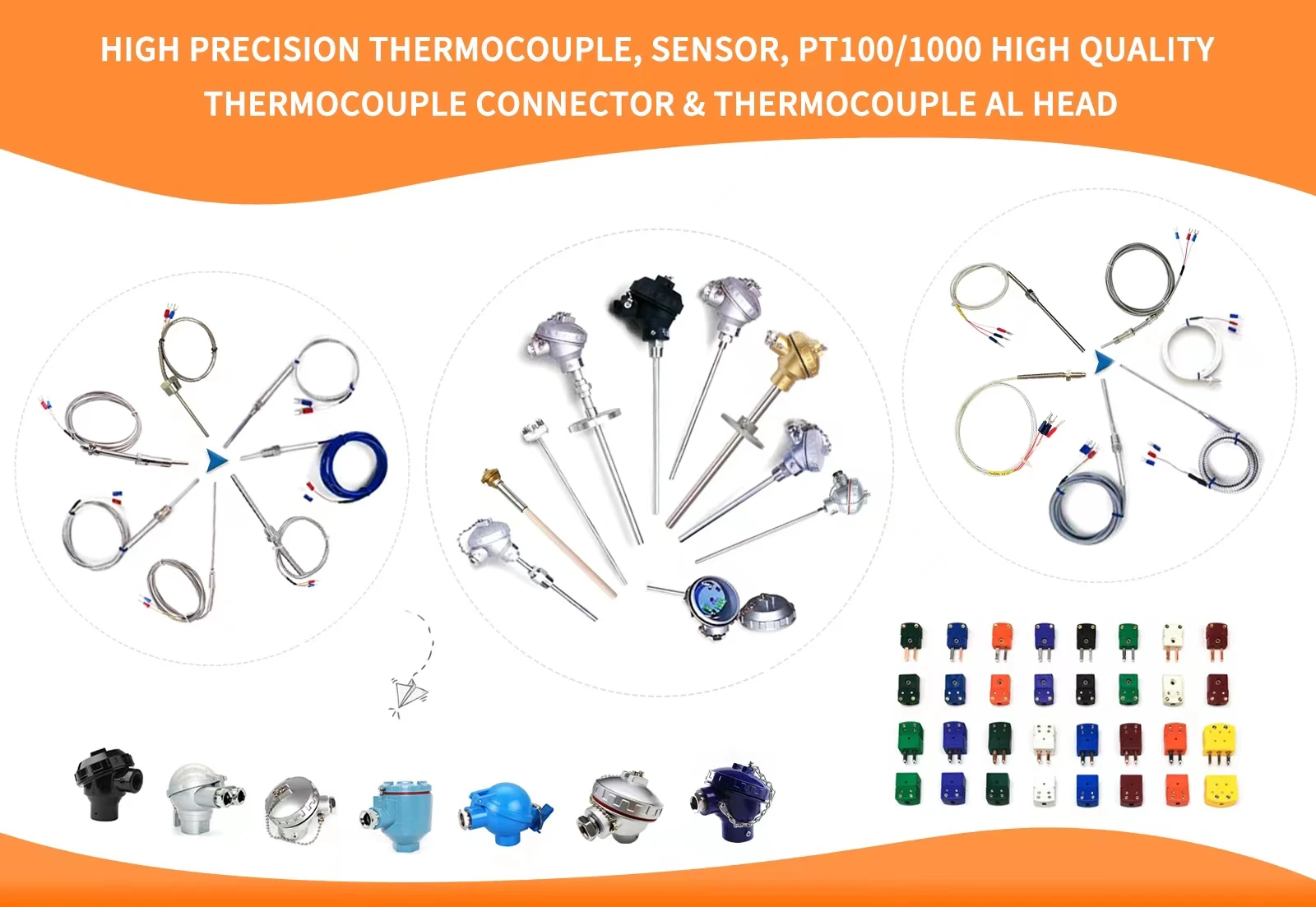
Apart from its useful benefits, K-Type thermocouples also provide installation freedom. To accommodate diverse applications and installation needs, they may be made in a range of sizes and forms. Miniature K-Type thermocouples, for instance, may be used in applications with limited space or in confined areas. To detect temperature at various depths, long-stemmed K-Type thermocouples may be placed within reactors or deep tanks. Furthermore, K-Type thermocouples are simple to incorporate into current systems since they can be linked to a wide range of temperature measuring instruments.
Nevertheless, K-Type thermocouples have drawbacks just like any other technology. Their vulnerability to electrical interference might be a disadvantage. The precision of the temperature measurements may be impacted in areas with high electromagnetic fields. To reduce interference, the thermocouple wires must be carefully shielded or filtered using the proper methods. Another drawback is that, in comparison to some other temperature sensors, they are not as stable over extended periods of time. To guarantee accurate results, regular calibration could be necessary.
K-Type thermocouples provide a strong blend of cost and adaptability in temperature measurement. They are a well-liked option for many applications because to their broad temperature range, robustness, ease of installation, and affordability. Despite several drawbacks, their overall effectiveness and affordability make them a dependable choice for a variety of temperature sensing applications. K-Type thermocouples are anticipated to become increasingly more sophisticated and extensively used as technology develops further, offering precise temperature readings at a reasonable cost. K-Type thermocouples are crucial for maintaining the security and effectiveness of several activities, whether they are used in scientific research, industrial processes, or other domains.