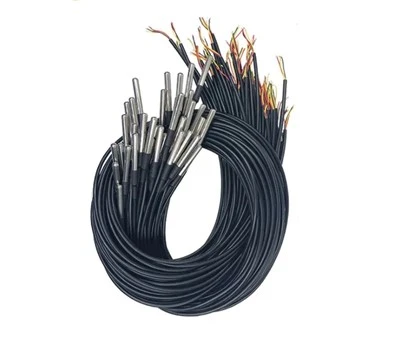
Maintenance Guide for Long-Term Idle Single-Head Electric Heating Element
Leave a message
Single-ended heating elements are commonly used in industrial production and household appliances. If left idle for extended periods without proper maintenance, they are prone to oxidation, corrosion, decreased insulation, and damaged terminals, affecting subsequent safety and lifespan. The following details the maintenance methods for single-ended heating elements that will be idle for a long time, focusing on three core stages: preparation before idleness, maintenance during idleness, and inspection before reuse.
I. Before Idleness: Thorough Cleaning and Condition Check
Comprehensive preparation before idleness is fundamental to preventing subsequent malfunctions. The core principles are "cleaning, drying, and checking" to ensure the heating element enters its idle period in good condition.
1. Thoroughly Clean Surface Stains
First, disconnect the power supply to the heating element and allow it to cool completely before cleaning. For surface stains such as oil, scale, and dust, choose the appropriate method based on the type of stain: For dust or light oil stains, gently wipe with a dry, soft cloth (such as cotton or lint-free cloth); for heavier oil stains, use a small amount of neutral detergent (avoid strong acids or alkalis to prevent corrosion of the metal casing), wipe with a cloth, and then rinse with clean water; for scale (especially on heating elements used for liquid heating), soak in a citric acid solution or a special descaling agent for 30-60 minutes, gently wiping the scale during this time, and then rinse thoroughly with clean water. During cleaning, avoid vigorously scraping the protective layer on the heating element surface to prevent damage to the casing.
2. Ensure complete drying
The cleaned heating element must be completely dry; otherwise, internal moisture can easily cause the insulation layer to become damp and metal parts to rust. Two methods can be used: natural air drying or low-temperature drying. For natural air drying, place the heating element in a well-ventilated, dry environment away from direct sunlight and let it stand for 24-48 hours to ensure that there is no residual moisture in the tube and terminals. For low-temperature drying, an oven can be used with the temperature set to 50-80℃ for 1-2 hours. Someone must be present during the drying process to prevent damage to the insulation material of the heating element due to excessive heat.
3. Comprehensive Condition Check
After drying, conduct a comprehensive inspection of the heating element to check for potential faults: First, check the appearance of the tube body for deformation, cracks, bulges, rust on the metal casing, etc. If there is slight rust, gently sand it off with fine sandpaper and then apply a thin layer of anti-rust oil. If the rust is severe or there are cracks or deformations, repair or replace it before leaving it idle. Second, check the terminals for looseness and oxidation. If there are traces of oxidation, clean them with fine sandpaper to ensure good contact at the wiring points; tighten any loose terminals promptly. Thirdly, a simple insulation performance test can be performed. A megohmmeter (or similar measuring instrument) can be used to measure the insulation resistance between the heating element's outer casing and the terminals. Normal insulation resistance should not be less than 2MΩ. If it is lower than this value, it indicates that the insulation layer may be damp or damaged. It needs to be dried and measured again. If it still does not meet the standard, repair is necessary.
Secondly, during idle periods: Environmental control and regular inspections
The key during idle periods is to provide a suitable storage environment for the heating element, avoiding damage caused by external factors. At the same time, its condition should be checked regularly, and any abnormalities should be addressed promptly.
1. Choose a suitable storage environment
The storage environment must meet the requirements of being "dry, well-ventilated, non-corrosive, and away from heat sources": First, avoid humid environments. Do not place the heating element in basements, bathrooms, open areas, or other places prone to moisture or rain to prevent the insulation layer from aging due to moisture and metal parts from rusting. Second, keep away from corrosive substances. Avoid contact with acidic or alkaline solutions, flammable or explosive gases, chemical reagents, etc., to prevent corrosion of the casing and terminals. Third, maintain ventilation. The storage space should have air circulation to reduce moisture accumulation. Fourth, keep away from heat sources. Avoid placing it near radiators, ovens, stoves, or other high-temperature equipment to prevent the insulation material from aging and deteriorating due to high temperatures.
2. Scientific Packaging and Placement
To prevent dust accumulation and damage from impacts during storage, the heating elements need to be packaged: Each heating element can be tightly wrapped in plastic film or cling film before being placed in a cardboard box or foam box. A desiccant (such as silica gel desiccant) can be placed inside the box to absorb residual moisture. If there are multiple heating elements, avoid squeezing or colliding with each other; place foam or soft cloth between each element to separate them. When placing them, keep them upright or flat, avoiding excessive bending to prevent deformation of the internal heating wire.
3. Regular Inspection and Maintenance
Even after long-term inactivity, regular inspections are necessary. It is recommended to inspect every 3-6 months: First, check the packaging for damage or signs of moisture. If damaged, replace the packaging and replenish the desiccant. Second, open the packaging and randomly inspect the heating element for new rust and oxidation of the terminals. If slight rust or oxidation is found, sand it down with fine sandpaper and apply rust-preventive oil. Third, retest the insulation resistance to ensure stable insulation performance. If the insulation resistance has decreased, re-dry the heating element.
III. Before Reuse: Comprehensive Inspection and Pre-treatment
Before reusing the heating element after long-term inactivity, a comprehensive inspection and pre-treatment must be performed to ensure it meets usage requirements and prevent safety hazards such as short circuits and leakage after power-on.
1. Appearance and Cleaning Re-inspection
After unpacking, first inspect the appearance of the heating element. Check for deformation, cracks, or increased rust. Check the terminals for looseness or oxidation. If dust is present, wipe it clean with a dry cloth. If rust or oxidation is present, re-sand with fine sandpaper and apply rust-preventive oil.
2. Insulation Performance and Resistance Testing
Before reuse, two key indicators must be tested: First, insulation resistance. Use a megohmmeter to measure the insulation resistance between the heating element casing and the terminals, ensuring it is not less than 2MΩ. If the insulation resistance is insufficient, dry the heating element (50-80℃, 1-2 hours) and measure again. If it still does not meet the standard, repair or replace it. Using a heating element with poor insulation is strictly prohibited. Second, DC resistance. Use a multimeter to measure the DC resistance of the heating element and compare the measured value with the rated resistance value on the heating element's nameplate. The error should be within ±5%. If the error is too large, it indicates that the internal heating wire may have broken or short-circuited problems, requiring repair before use. 3. Trial Run Pre-treatment
After passing the inspection, the device cannot be directly put into normal operation. A trial run is required: First, connect the heating element to a suitable power supply and use the "no-load preheating" or "low-power operation" method. For no-load preheating, power on for 5-10 minutes and observe whether the heating element heats up normally, and whether there is any odor, abnormal noise, or leakage. If used for liquid heating, the heating element must be completely immersed in the liquid before powering on for trial run to avoid dry burning and damage to the element. During the trial run, closely monitor the temperature change and operating status of the heating element. If any abnormality occurs, immediately disconnect the power and troubleshoot the problem.