Scientific Mold Preheating Process Based on Single-End Heating Rods
Leave a message
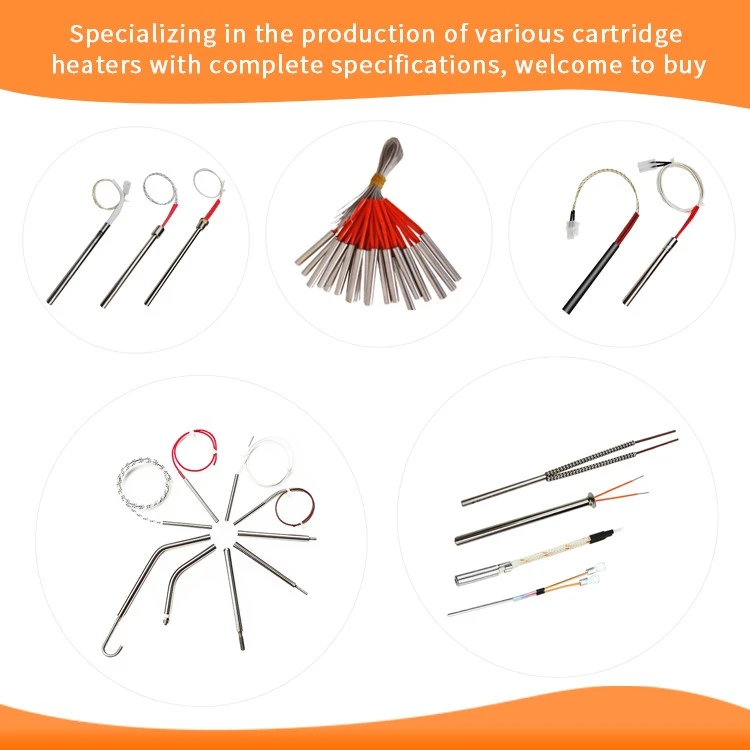
Mold preheating is the first critical operation of mechanical molding and injection molding production, which directly influences the product qualification rate, mold service life and production stability. Non-standard preheating methods such as quick heating at full power and unequal local heating often cause thermal stress deformation of the mold, internal stress flaws of the product and unbalanced temperature fields. Heating rods with single end heating and accurate fixed-point heating and adjustable zoning layout can constitute a scientific and standardized mold preheating system. An essential method of improving production efficiency and product quality is to optimize the preheating process in accordance with the parameters of the heating rod.
The main goal of mold preheating is to make the temperature rise consistent and to eliminate the inner thermal stress. It is a thick integrated metallic construction with a great thermal inertia. When the whole power is heated quickly, the surface temperature of the mold will rise quickly, the temperature of the inner core is low, and the temperature difference between the interior and outside is large. The temperature differential leads to high thermal expansion stresses, producing small deformations of the mold and internal structural fatigue. Longtime buildup will produce mold precision deviation and permanent distortion. The graded slow preheating using single-end heating rods can realize synchronous temperature rise inside and outside the mold and eliminate the thermal stress .
Zoned preheating layout uses mold structural peculiarities of asymmetry. Traditional overall preheating of special-shaped molds with uneven wall thickness and multi-cavity unequal-size molds is prone to unbalanced temperature rise. Single-end heating rods may carry out targeted preheating compensation for thick-wall heat accumulation sections and thin-wall quick heat dissipation areas by virtue of advantages of variable layout. The zoned preheating mode provides synchronous temperature rise of all mold cavity positions, achieves overall thermal balance, and minimizes product warpage and size deviation caused by local temperature differential.
Graded temperature increase preheating process can effectively protect heating rod performance. The scientific preheating procedure is separated into three stages, low temperature preheating, medium temperature consistent temperature, and high temperature reaching standard. The low temperature stage is low power slowly heating, to remove the internal moisture of the mold and the heating rod, thus avoiding the impact of instant high temperature steam. In the middle temperature stage, the temperature within and outside the mold is balanced at a constant temperature. In the high temperature stage, the power is correctly increased to reach the process standard temperature. This graded mode reduces the impact of the full power cold start and extends the service life of heating rods.
Preheating and then heat preservation at a constant temperature stabilizes the mold temperature field. You can not start manufacturing straight away when the production temperature is reached. The consistent temperature should be maintained for 10-20 min (depending on the thickness of the mold) to guarantee a thorough heat transfer and a uniform temperature of all mold structures. At this stage, the single-end heating rods retain a steady low-power heat preservation state, eliminating the temperature variation caused by frequent power switching, and laying a stable basis for subsequent batch manufacturing.
The different varieties of mold correspond to different preheating conditions. The small precision molds have high speed of heat conduction and short preheating cycle, whereas large thick-wall molds need longer graded heating and heat preservation time. The high-precision thin-wall product molds require slower temperature increase rate to carefully regulate thermal deformation. Matching tailored preheating parameters according to mold characteristics helps balance the efficiency of production and precision of process.
The standardized preheating process based on the single-end heating rods not only optimizes the initial production process, but also effectively protects the mold equipment and heating accessories, reduces the defective rate of initial trial production products and achieves the stable and efficient start-up operation of automated production lines.