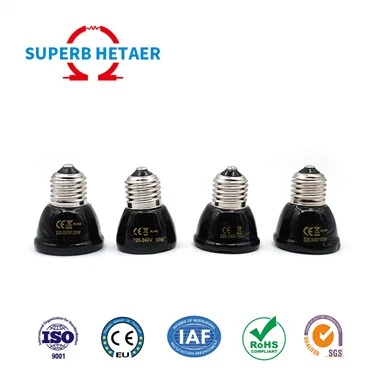
Specification requirements for electric heating tubes
Leave a message
Specification requirements for electric heating tubes
1、 Temperature requirement of electric heating tube: Under the test voltage, the time for the component to rise from the ambient temperature to the test temperature should not exceed 15 minutes;
2、 Rated power deviation of electric heating tube: Under sufficient heating conditions, the deviation of the rated power of the component should not exceed the following specified range; ± 10% for components with rated power less than or equal to 100W. For components with a rated power greater than 100W, it is+5% to -10% or 10W, whichever is greater;
3、 The strength of the cold and hot leakage current of the electric heating tube: The cold leakage current, as well as the leakage current after water pressure and sealing tests, should not exceed 0.5mA. The hot leakage current at working temperature should not exceed the calculated value in the formula, but the maximum should not exceed 5mA I=1/6 (tT × 0.00001) I - Hot state leakage current mA t - Heating length mm T - Working temperature ℃ When multiple components are connected in series to the power supply, leakage current tests should be conducted on this group of components as a whole;
4、 Electric heating tube cold and hot insulation resistance: During factory inspection, the cold insulation resistance should not be less than 50M Ω. After sealing test, the insulation resistance after long-term storage or use should not be less than the calculated value in the formula. However, the minimum insulation resistance should not be less than 1M Ω R="(10-0.015T)/t" at the working temperature × 0.001 R - thermal insulation resistance M Ω t - heating length mm T - working temperature ℃; Technical treatment of electric heating wire
Iron chromium aluminum or tungsten molybdenum electric heating alloy wires are tightly wound and can be used vertically. The surface is treated with insulation, oxidation resistance, and self diffusion. The surface has good insulation and oxidation resistance, almost no oxidation at rated power temperature, and no nickel chromium oxide pollution.
The service life of this product is several to dozens of times longer than that of ordinary electric heating wires, and its main performance is as follows:
1) Operating voltage: 6-380V
2) Thermal shock performance: capable of withstanding 500-6000 cold and hot impacts without deformation
3) Single layer insulation layer with withstand voltage greater than AC 50V without breakdown
4) Insulation resistance: infinitely large when detected by a multimeter
5) Surface insulation and oxidation resistance layer thickness: 3-12 microns
Www.superbheater.com