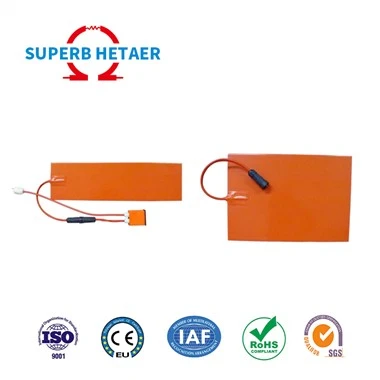
Teflon heaters are widely used in chemical plants
Leave a message
The Teflon heater cannot remove the electric heating tube from the liquid during the heating process. After a power outage, the electric heating tube should be cooled for a few minutes. In addition, everyone should ensure that the electric heating part of the Teflon heater must be soaked in aqueous solution, otherwise the electric heating tube will be burned and damaged. During the production process, it is necessary to add liquid medicine in a timely manner to maintain the calibration of the liquid level gauge. It has the effect of preventing the car engine from getting damp. If the car engine is placed for a long time, it is used to remove moisture from the heating heater and avoid damaging the car engine when adjusting the power socket. It is also important to note that the grounding wire resistance of the motor always maintains a relatively high value to prevent changes in the operating temperature of the motor under high environmental humidity conditions, which may cause condensation due to water accumulation. Therefore, the internal winding structure is damp and cold, and the insulation layer is reduced; Therefore, if such a situation occurs, it can prevent the motor from overheating and causing some temperatures to rise, leading to insulation aging. Some measures should be taken to reduce the operating temperature of the motor. The function of a Teflon heater is to prevent the car engine from starting normally due to low temperatures (mainly used in areas with slightly lower temperatures). Every item has its own meaning, and in our daily lives, there are many essential items and products. In industrial applications, there are still many industrial equipment that have played their roles in different fields, and the same applies to the heat transfer of Teflon. Today, let's take a look at the characteristics of Teflon heat exchangers? If you are interested, let's continue reading together.
Teflon has comprehensive advantages that other materials do not have, especially the temperature characteristics and corrosion resistance of Teflon raw materials used in heat exchangers. This has led to the widespread use of Teflon heat exchangers in fields such as chemical plants, acid pickling and passivation, electroplating processes, pharmaceuticals, and anodizing treatment. PTFE cold hot alternate heat exchanger/PTFE Teflon heat exchanger has extremely strong corrosion resistance and aging resistance performance. Due to its excellent heat resistance, it is suitable for both steam heat exchangers and boiling water heating; The key to Teflon heat exchangers is their excellent corrosion resistance. Because polytetrafluoroethylene is an organic chemical inert material, it can basically work in all media except for high-temperature compounds such as fluorine, molten alkaline earth metals, hydrogen trifluoride chloride, and perfluorinated gasoline. For example: dilute hydrochloric acid, hydrochloric acid, hydrochloric acid, sodium cyanide, ammonium sulfate, glacial acetic acid, hydrochloric acid, sodium hydroxide, calcium hydroxide, naphthalene, benzene, xylene, sulfuric acid, xylene, various organic solutions, ETC. Teflon raw materials are not contaminated, so they are not prone to scaling. Because of the chemical plasticity, smooth surface, refractive index and high thermal expansion coefficient of the PTFE pipe, the heat conduction surface is not easy to scale, which greatly reduces the frequency of equipment maintenance and management, and ensures a relatively stable thermal conductivity and productivity. Long distance race.