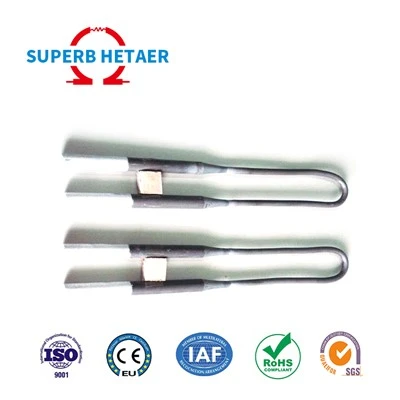
The advantages of waste incinerator thermocouples are mainly reflected in these aspects
Leave a message
Thermocouples for waste incinerators are mainly used for temperature measurement in the furnace and flue of waste-to-energy incinerators. The double-layer casing structure is the best. The outer layer is made of CYT301 high-temperature corrosion-resistant and erosion-resistant alloy material, and the long-term temperature resistance can reach 1200℃; the inner layer is made of corundum material. It can effectively withstand the corrosion, wear and high temperature caused by the incineration flue gas. The product has the characteristics of high measurement accuracy, wide temperature measurement range, high temperature resistance, corrosion resistance, erosion resistance, stable and reliable performance, etc.
The thermocouples for waste incinerators are made of plasma spraying technology, high chromium cast iron and high-temperature alloys. Wear-resistant protective tubes are specially designed and manufactured for measurement occasions in high, medium and low temperature wear-resistant environments. They can be used in industrial sites such as circulating fluidized beds, boiling furnaces, pulverized coal furnaces, ball mills, etc. Armored or high-temperature armored cores are used, and wear-resistant casings of different materials and specifications are used. They have good wear resistance, vibration resistance, and thermal shock resistance. In various harsh occasions with the highest degree of wear, the service life of the product can reach several times that of ordinary products, which greatly improves production efficiency and reduces cost consumption.
Advantages of the thermocouple product of the garbage incinerator:
1. Domestic garbage can be automatically sorted and loaded, saving labor costs. High level of automation.
2. Continuous pyrolysis and drying of domestic garbage. The entire process of continuous pyrolysis and drying is carried out under anaerobic conditions. Domestic garbage is first thermally cracked to generate volatile small molecular products, namely combustible gases and some charred products. Then the gas generated by pyrolysis enters the furnace body through the gap, and performs combustion-supporting and self-ignition in the furnace body, and cracking charred products for auxiliary combustion.
3. Designed according to the characteristics of domestic garbage, a reciprocating mechanical grate is used to spread the garbage flat, realize the "layer combustion" of garbage, and burn more fully, which can save fuel costs.
4. The hot flue gas generated is recycled back and forth to utilize heat energy to pyrolyze and dry the garbage. It helps to achieve continuous drying and pyrolysis of garbage and save energy.
5. The burner is equipped with a thermocouple to automatically control the switch of the burner. When the temperature in the furnace is lower than 850℃, the burner automatically turns on and adds fuel to help combustion; when it is higher than 1000℃, the oil supply is automatically stopped and the garbage helps combustion by itself. Thus, the temperature control is convenient and fuel is saved.
6. A good exhaust system keeps the furnace under negative pressure at all times, so there is no worry of backfire, and the operation is safe and reliable.
7. Low operating cost, the whole set of equipment is compact and reasonable in design, which makes the waste fully, efficiently and effectively burn, reduces fuel consumption, and has a high heat recovery rate, which greatly reduces the operating cost.
Thermocouples in waste incinerators are commonly used temperature measuring elements in temperature measuring instruments. They directly measure temperature and convert temperature signals into thermoelectric potential signals, which are converted into the temperature of the measured medium through electrical instruments (secondary instruments). The appearance of various thermocouples is often very different due to needs, but their basic structure is roughly the same. They are usually composed of main parts such as hot electrodes, insulating sleeve protection tubes and junction boxes, and are usually used in conjunction with display instruments, recording instruments and electronic regulators.