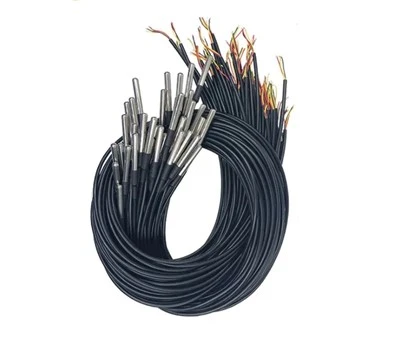
There is still a difference between dry burning heating tubes and liquid heating tubes
Leave a message
There is still a difference between dry burning heating tubes and liquid heating tubes
The heating medium is different, and the selected heating tube is also different. The material of heating pipes varies depending on the working environment. Heating tubes can generally be divided into air dry firing and liquid heating. In industrial equipment use, dry firing heating tubes are mostly divided into two types: stainless steel heating tubes and finned electric heating tubes. Their common characteristic is the use of stainless steel material, which uses electric heating wires to generate heat and transmit it to the air, causing the temperature of the heated medium to rise. (Note: There are also heating pipes made of carbon steel in industrial equipment. Due to the advantage that carbon steel is less prone to rusting in extremely dry conditions, there are also heating pipes made of this material on the market. However, experiments and research have found that carbon steel heating pipes are easily oxidized after a period of use, and once oxidized and rusted, they cannot function properly. Therefore, it is better to choose metal stainless steel materials.)
Although dry burning is allowed for heating pipes, there are still differences between dry burning heating pipes and liquid heating pipes.
Liquid heating tube. We need to know the liquid level height and whether the liquid is corrosive. The liquid heating tube must be completely immersed in the liquid during use to avoid the phenomenon of dry burning of the electric heating tube, which may cause the surface temperature to be too high and cause the heating tube to burst. If it is for ordinary softened water heating pipes, we can choose ordinary stainless steel 304 material. The liquid is corrosive, and according to the degree of corrosiveness, there are options for corrosion-resistant heating pipes such as stainless steel heating pipes made of 316 material, Teflon heating pipes, titanium pipes, etc; If heating the oil card, we can use carbon steel or stainless steel materials. Carbon steel materials have a lower cost and will not rust when used in heating oil. Regarding the setting of power, it is generally recommended that customers do not exceed 4KW per meter when heating media such as water. It is best to control the power per meter at 2.5KW, and do not exceed 2KW per meter when heating oil. If the surface load of the heating oil is too high, the oil temperature will be too high, which is prone to accidents. Therefore, caution must be exercised. The surface of the heating tube should be regularly observed for scale and carbon deposition, and measures should be taken to avoid affecting heat dissipation and shortening its service life.
Dry burn heating tube. There are stainless steel heating tubes for ovens, single head heating tubes for mold hole heating, and fin heating tubes for heating air. Different shapes and powers are designed according to customer requirements. Under normal circumstances, the power of the dry burning tube is set to not exceed 1KW per meter, and can be increased to 1.5KW with fan circulation.
Www.superbheater.com