What are the advantages of using single-head heating tubes in industrial heating?
Leave a message
Single-ended heating elements (also known as single-ended heating elements), core components in the industrial heating field, are widely used in applications such as plastics machinery, mold heating, packaging equipment, medical equipment, food processing, and chemical reactors due to their unique design and performance advantages. Their core advantages can be summarized in the following five aspects:
1. Thermal Response and Precise Temperature Control
Single-ended heating elements utilize a compact, single-ended design, concentrating heat at the front end of the tube. Combined with high-purity magnesium oxide powder filling and a spiral resistance wire structure, they achieve a thermal efficiency of ≥95%. Experimental data shows that their surface load can reach 8-15 W/cm², increasing heating speed by over 30% compared to traditional double-ended heating elements. For example, in the barrel heating of an injection molding machine, single-ended heating elements can heat the barrel from 200°C to 300°C in just 15 minutes, significantly shortening production cycles. Furthermore, their rapid thermal response, combined with a PID temperature control system, keeps temperature fluctuations within ±1°C, meeting the requirements of precision mold heating.
2. Spatial Adaptability and Installation Flexibility
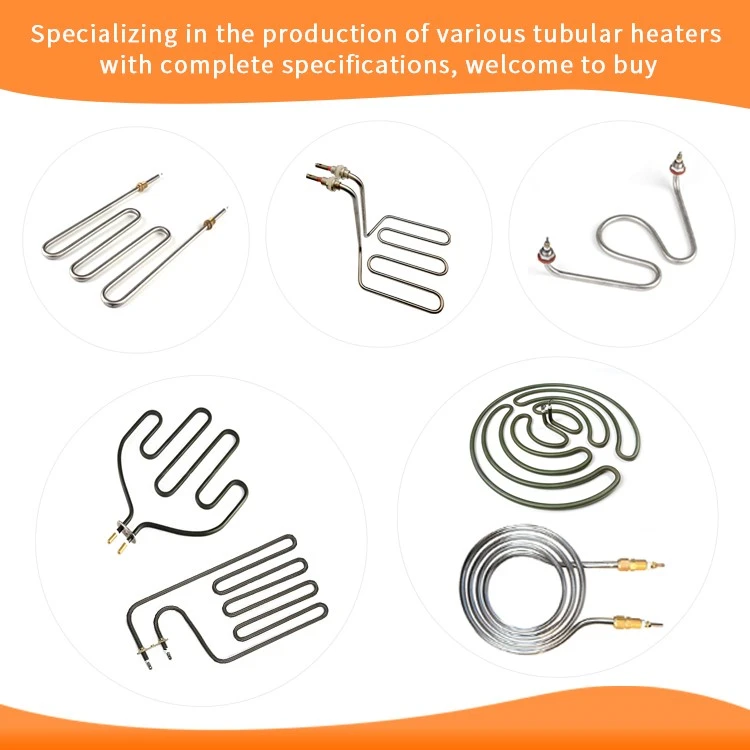
The single-ended design reduces the axial dimension of the heating tube by 40%-60%, making it particularly suitable for installation in confined spaces. For example, a miniature single-ended heating tube with a diameter of 6mm and a length of 50mm can be inserted into an 8mm diameter hole, making it suitable for micro devices such as 3D printer nozzles and medical catheters. Its L-shaped, U-shaped, and customizable capabilities further expand its application scenarios. For example, the heat sealing blades in packaging machinery feature a right-angle bend design for contact-based, localized heating, while food baking lines utilize an array-like layout for uniform heat radiation.
Single-End Heating Tubes
III. Material Weatherability and Media Compatibility
Single-End Heating Tubes offer differentiated material solutions for different industrial media:
Basic Applications: 304 stainless steel housings are suitable for dry air and light oil media, with an operating temperature ≤ 600°C.
Corrosive Environments: 316L stainless steel or Incoloy 800 alloy withstands weak acid and alkali solutions, with a lifespan exceeding 8,000 hours in electroplating tanks.
Extreme Operating Conditions: Titanium alloys resist chloride ion corrosion in desalination equipment, while quartz tube housings are used in strong acid and alkali environments.
A chemical company demonstrated that single-end heating tubes made of Incoloy 840 operated continuously in a concentrated sulfuric acid environment for two years without leakage, far exceeding the three-month lifespan of ordinary heating tubes.
IV. Safety Protection and Design
The double-layer insulation structure (resistance wire - magnesium oxide powder - metal housing) achieves a 1500V withstand voltage test and a ground resistance of less than 0.1Ω, complying with the IEC60519 safety standard. Anti-dry burn protection is implemented via a built-in thermal fuse, which automatically shuts off power when the tube temperature exceeds a critical threshold (typically 850°C). Tests at an automotive parts manufacturer showed that in the event of a sudden coolant leak in a mold, the thermal protection device of the single-head heater element cuts off power within 0.3 seconds, preventing equipment damage.
V. Maintenance Ease and Lifecycle Cost
The modular design allows for quick replacement, with a single heater element replacement time of 5 minutes or less, improving maintenance efficiency by 60% compared to traditional coil heaters. For example, for an injection molding machine operating 8,000 hours per year, the energy cost of a single-head heater element is approximately 0.12 yuan per hour, representing a 25% energy saving compared to far-infrared ceramic heaters. Although the initial purchase cost is 20%-30% higher, the total cost over three years can be reduced by over 40% when considering energy consumption, maintenance, and downtime. Data from a production line renovation at a home appliance manufacturer shows that switching to single-head heater elements resulted in annual electricity savings exceeding 120,000 yuan and a 75% reduction in equipment failure rates.
Typical Application Scenarios
Plastic Machinery: 12mm diameter single-ended heating elements are embedded in an array in the barrel, combined with temperature zone control to achieve ±2°C temperature uniformity.
Packaging Equipment: Custom-shaped heating elements and heat-sealing blades are integrated, and contact heating improves seal strength by 40%.
Food Baking: Precisely controlled spacing between the U-shaped heating element and the conveyor belt ensures 98% Maillard reaction uniformity on the biscuit surface.
Through thermodynamically optimized design, innovative materials engineering, and intelligent control integration, single-ended heating elements are evolving from traditional heating elements to industrial thermal system solutions. With the application of new technologies such as silicon carbide coatings and nano-insulation materials, their energy efficiency and intelligence levels will continue to break new ground, making them a key foundation for flexible manufacturing in the Industry 4.0 era.