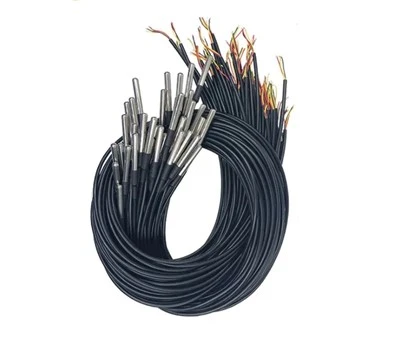
What are the installation precautions for Type S and Type T thermocouples
Leave a message
Type S and Type T thermocouples have very different material properties, temperature ranges, and environments in which they can be used. Because of this, the measures that need to be taken when installing them are likewise different. Type S thermocouples are made of high-precision noble metals, so it's important to focus on preventing contamination, making them resistant to interference, and making sure they stay stable over time during installation. Type T thermocouples are made of low-temperature base metals, thus they need to be protected from oxidation, high temperatures, and making sure the cold connection is sealed.
I. General Installation Guidelines: These work for both Type S and Type T thermocouples.
To make sure that both types of thermocouples give accurate temperature readings, the following are general installation requirements:
Choose a representative temperature measuring point:** The place where the installation takes place should be far away from valves, elbows, furnace doors, or places where the temperature changes a lot to make sure that the measured temperature is a good indicator of the overall state of the measured medium.
Make sure there is enough contact and depth of insertion:
The end of the thermocouple that works must touch the medium being measured all the way around. It is best to insert it at least 8 to 10 times the outer diameter of the protective tube.
When putting the protective tube in a pipeline, the end should stick out 5 to 10 mm past the centerline of the pipeline. This will put it in the area of maximum flow velocity, which will speed up the response time.
Avoid losing heat and making mistakes with radiation.
If the temperature of the pipe wall is much higher or lower than typical when monitoring gas temperature, the thermocouple may cause the measurement to be off because of heat radiation. A shielded structure, like a shielded thermocouple, can help lessen this effect.
To keep heat from escaping, exposed areas should be well insulated.
Using Compensating Leads the Right Way
You need to choose compensating leads that match the thermocouple's calibration, and the polarity connection must be proper to avoid adding extra potential.
The temperature around the compensatory lead joint should not be more than 100°C. If it is, you need to take steps to keep the heat in.
Ways to stop electromagnetic interference
You should keep signal cables away from places where there are high electric and magnetic fields. To avoid signal distortion, it is best to use shielded wires and make sure they are properly grounded.
Sealing and fixing with tools
When there is negative pressure or dangerous gases, the installation interface must be tightly sealed so that outside air can't get in and mess up the measurements.
Installation should be safe so that vibration or impact doesn't move or break anything. If needed, put in support brackets.
II. Special safety measures for installing Type S thermocouples (high-temperature, high-precision measurement with precious metals)
Type S thermocouples (platinum-rhodium 10-platinum) are good for measuring temperatures with great accuracy below 1300°C. During installation, you should keep the following things in mind:
Stay away from "platinum brittleness" and contamination
Type S thermocouples are very sensitive to dirt and other things that shouldn't be there. When installing, don't let oil, dust, metal vapors, or reducing gases (such H₂ or CO) touch the wires. If you do, "platinum brittleness" may happen, which can cause the wires to break.
It is best to use in oxidizing or inert environments. It is strictly forbidden to run for a long time in places where sulfur or carbon deposits are present.
Suggested Use of High-Purity Protective Tubes
It is best to use protective tubes made of 99% high-purity alumina (corundum) or silicon carbide to make the service life longer and keep the tubes from getting dirty.
To keep air from moving through the gap between the protective tube and the furnace wall, it should be tightly sealed with refractory material. This will keep the temperature measurement from being affected.
Control of the temperature at the cold junction and the position of the junction box
Do not put the junction box right up against the wall of the furnace that gets hot. To keep the signal stable, the cold junction should be at least 200 mm away from the furnace wall.
To keep rain, dust, or condensation from getting in, the cover of the junction box should be facing up or the cable outlet should be facing down.
Recommendation for Vertical Installation
To keep the protective tube from bending under its own weight at high temperatures, the installation should be as vertical as feasible. If you need to mount it horizontally, the depth of the hole should not be more than 500 mm, and a bracket that can withstand heat should be added for support.
III. Special installation tips for Type T thermocouples (base metal type, low temperature dedicated)
Type T thermocouples (made of copper and constantan) are often employed in places where the temperature is between -200 and 350 degrees Celsius. During installation, it is important to pay close attention to preventing corrosion and oxidation:
Not Allowed to Be Used in Environments Where Oxidation Happens at High Temperatures
Above 350°C, the copper positive electrode's oxidation rate goes up quickly. It is best to keep the temperature below this range for long-term use.
If you need to be able to handle 400°C for a short time, you need to put on a protective sheath made of stainless steel or ceramic. You shouldn't just put it on bare.
Keeping moisture and rust at bay
In humid conditions, constantian negative electrodes are more likely to corrode electrochemically, which might influence the stability of thermoelectric potential.
It is best to seal the junction box with wax in places with high humidity, including cold storage and cold chain facilities, to keep moisture out.
Flexible installation and treatment to stop oxidation
Copper electrodes are easy to bend and break, thus it's best to use a spring-loaded anchoring structure to avoid stress damage.
A high-temperature anti-oxidation paste can be used to slow down the oxidation process in places where the temperature is above 300°C.
More stringent standards for cold junction compensation
Type electrodes are more sensitive to changes in cold junction temperature. To get more accurate temperature readings, you should utilize an ice-point compensator or a high-precision cold junction compensation module.