what is immersion heating
Leave a message
What is Immersion Heating? A Practical Guide for Industrial Buyers
Immersion heating is exactly what it sounds like: a heating method where the heating element is directly immersed (submerged) into the liquid or medium that needs to be heated.
This straightforward approach makes immersion heaters one of the most efficient, responsive, and widely used industrial heating solutions across dozens of industries - from food & beverage and chemical processing to oil & gas, pharmaceuticals, water treatment, and metal surface finishing.
How Immersion Heaters Actually Work
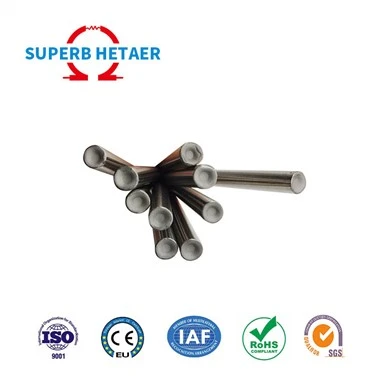
The core component is an electric heating element (usually tubular) that is submerged directly in the target liquid. When electric current passes through the resistance wire inside the element, heat is generated and transferred directly to the surrounding liquid through the sheath material (typically stainless steel, Incoloy, titanium, or sometimes quartz/PTFE for corrosive environments).
Because there's no intermediate air gap or indirect heat transfer surface (like in jacketed vessels or external heat exchangers), thermal efficiency is very high - typically 95–99%.
Main Types of Immersion Heaters Used in Industry
TypeTypical ApplicationMaterial OptionsSpecial FeaturesTypical Power DensityFlanged Immersion HeaterLarge tanks, pressure vessels, oil preheatingSS304/316, Incoloy 800/825, TiANSI/DIN flange, easy to install/remove5–20 W/cm²Screw Plug HeaterSmall–medium tanks, IBCs, rinse tanksBrass, SS, Incoloy1"–2.5" NPT/BSP thread, economical4–16 W/cm²Over-the-Side HeaterOpen tanks, pickling baths, degreasingSS, Titanium, FluoropolymerNo tank penetration needed, easy to move3–12 W/cm²Circulation HeaterClosed-loop, continuous flow heatingSS316L, IncoloyInline heating, very fast response8–30 W/cm²Deep Tank / Bayonet HeaterVery deep storage tanks, asphalt/bitumenIncoloy, heavy wall SSLong elements (up to 8–10m), removable4–10 W/cm²Teflon®/PTFE Coated HeaterAggressive acids (HCl, H2SO4, HF, etc.)PTFE, PFA coating over SSUltimate chemical resistance2–8 W/cm²
Why Customers Choose Immersion Heating (Real Buying Reasons)
Highest energy efficiency
Almost all electrical energy becomes useful heat - very little waste compared to steam systems or indirect electric heating.
Fast temperature response
Direct contact means rapid heat-up times and excellent temperature control (especially important for temperature-sensitive products like edible oils, resins, or pharmaceutical solutions).
Relatively low initial investment
Compared with building a complete steam boiler system or external heat exchanger loop, immersion heaters usually have much lower CAPEX.
Very good temperature uniformity
(when properly designed with baffles or agitators) - critical for many processes like electroplating, anodizing, food processing, and paint/paint production.
Easy maintenance & replacement
Most designs allow element replacement without draining the entire tank (especially flanged and screw-plug types).
Common Mistakes Buyers Make When Specifying Immersion Heaters
Choosing too high watt density → leads to coking, scaling, film boiling, or dramatically shortened heater life
Ignoring sheath material compatibility → classic example: using 304SS for nitric acid or titanium for fluoride-containing solutions
Forgetting low-level protection → dry fire is the #1 killer of immersion heaters worldwide
Undersizing circulation heaters for viscous fluids → resulting in huge ΔT and burnt product
Not considering sludge legs or sediment zones in storage tanks → bottom heaters get buried and fail quickly
Quick Reference Watt Density Guidelines (W/cm²)
Water, light aqueous solutions → 10–20
Light oils, hydraulic oil → 8–12
Heavy fuel oil, asphalt, molasses → 2–6
Corrosive chemicals (depending on type) → 3–10
Very viscous materials (resins, adhesives)| → 1.5–5
Highly corrosive acids (with PTFE) → 2–8
Immersion heating may seem basic compared to some sophisticated heating technologies, but its combination of simplicity, efficiency, rapid response, and reasonable cost keeps it as one of the most popular industrial heating methods in 2025–2026.
When you're evaluating suppliers, remember: the cheapest heater is rarely the most economical heater in the long run. Good thermal design, proper material selection, and realistic watt density almost always deliver significantly lower total cost of ownership.