


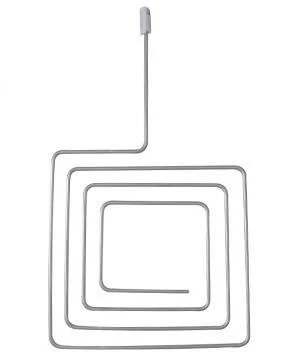


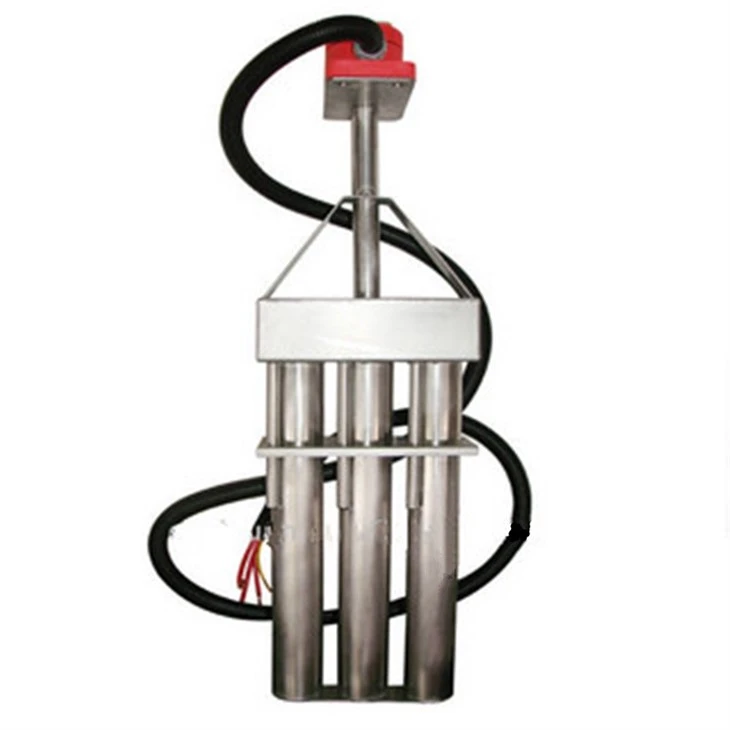

Tubular Teflon Electric Immersion Heater
Product Detail We offer a variety of materials to match your application (titanium, stainless steel 304 or 316, and plain steel) in sizes up to 36KW. Standard and custom configurations for over-the-side and bottom installations in open tanks. Thermal overtemperature protection standard (except...
Description
Product Detail
1. Our tubular teflon electric immersion heater is made of stainless steel (SUS316 or SUS304) jackied with DuPont PTFE/PFA tube, which is resistant to erosion and applicable to heat in various erosive liquid.
2. Designing each heater with low surface power, which insures service life of the heater.
3. Attention should be paid on the installation location of each heater in order to avoid any scraping. Users are suggested to prevent solid contents sinking on the surface of heater.
4. It is not applicable to heat in over-sticky liquid because poor heat dissipation will influence the service life of the heaters.
5. All heaters are matched with overheat protection switch or PT100 heat detector so as to insure the service life and security of their accessories.
6. As Teflon (PTFE) material has excellent chemical corrosion resistance, it is widely used in gold plating, copper plating, nickel plating of oxidizing acid and various chemical corrosive liquids.
7. We are able to design a wide range of styles, such as, "L" shape, "U" shape, "W" shape, coil shape, combination style and so on.
8. All heaters have passed the CE certification of EU market.

What is an Immersion Heater?
An immersion heater is a fast, economical, and efficient method for heating liquids in tanks, vats, or equipment. Known as bayonet heaters, they have heating elements that can be directly inserted into a container of water, oil, or other material in order to heat the entire contents.
By using the direct heat transfer of an immersion heater, liquids quickly reach the desired temperature. Made of bundles of tubing, immersion heaters can be mounted on the side of a container or submerged in the contents. Their heating coils transfer heat to the contents, which spreads throughout the container.
Immersion heaters are a cost effective and ecologically sound method for heating material and provide a clean source of energy without leaving residual discharge or pollutants. In nuclear reactors, immersion heaters are used to keep heated water at a constant temperature for creating steam.
The two types of immersion heaters are direct and indirect. Direct immersion heaters have their heating elements placed directly in the liquid. Indirect immersion heaters use radiation or convection. Over the side and in line heaters are direct since their sheathed heating elements come in contact with the liquid. Pipe and infrared immersion heaters are classified as indirect and do not have contact with a liquid.
Parts of an Immersion Heater
When examining an immersion heater, there are certain elements that have to be closely observed. They include:
Sheath material
Power density
Wattage
Enclosure
Temperature range
Heating element
Each of these factors are discussed below.
Sheath Material
The most important consideration regarding the sheath is the material or fluid that will be in direct contact with it since different sheath materials react differently to certain liquids. The chart below is a short guide regarding sheath materials. Immersion heater manufacturers provide charts regarding sheathing regarding which ones are appropriate for certain applications.
The selection of the correct sheath material is critical since its failure can lead to extremely serious issues. The most common type of failure is corrosion, and no immersion heater manufacturer provides a warranty against corrosion.
| Sheath Materials Selection Chart | |||
|---|---|---|---|
| Sheath Material | Max Sheath Temperature | Max WSI | Application |
| Copper | 350°F | 55 | Clean water, water solutions non-corrosive to copper, boilers, cooling towers. |
| Steel | 750°F | 22 | Immersion in oils, alkaline cleaning solutions, tars and asphalt, wax, petroleum, heat transfer mediums. |
| 304 Stainless Steel | 1200°F | 30 | Process water, Corrosive liquids, food processing equipment, soap, soluble cutting oils, hospital equipment. |
| Incoloy | 1500°F | 40 | Air heating, radiant heating, cleaning and degreasing solutions, plating & pickling solutions, corrosive liquids, air or gas. |
Of the different types of sheathing materials, incoloy, a nickel based, corrosion resistant alloy, is most used. It has superior strength at high temperatures and comes in several alloy forms to fit any type of fluid, liquid, or chemical.

How an Immersion Heater Works?
Immersion heaters have an electrical resistant heating element encased in a sheath. When the heating element is activated, it heats its enclosing jacket that heats the sheath, which heats the liquid. Its effectiveness depends on the conductivity of the jacket and sheath.
Direct and indirect immersion heaters use two different methods for heating liquids. A direct immersion heater is inserted directly into the liquid at the top or in a fitting on the side. Its heating element comes in contact with the fluid to be heated. Once positioned, it is turned on and electricity runs through the heating element into the liquid.
An indirect immersion heater is inserted into a pipe with a closed end and immersed in the liquid. The heating element heats the air inside the pipe creating an oven effect that heats the liquid. The advantage and purpose of an indirect immersion heater is that it does not come in direct contact with the fluid, which prevents contamination and corrosion.
The amount of time it takes to heat a material depends on the quantity and power level of the immersion heater. Immersion heaters are designed for specific types of materials to be heated.


Send Inquiry
You Might Also Like
-

Vertical Triple Metal Electric Immersion Heater
-

L-shaped Spiral Teflon(PTFE) Electric Immersion Heaterr
-

Metal Electric Immersion Heater
-

Electric Industrial Immersion Flanged Heating Elemen...
-

Stainless Steel Industrial Flange Electric Oil Heati...
-

Electric Screw Immersion Cartridge Heater with Therm...