Common troubleshooting for maintenance of rice cookers
Leave a message
Fault 1: Plug in the power plug and the power fuse will immediately blow
Repair and cause inspection of rice cookers: 1. Water ingress or rice soup in the power socket of the rice cooker, causing a short circuit. In this case, the socket can be blown dry and then reused; 2. The power socket or plug of an electric rice cooker has carbonized and short circuited on its surface due to long-term use. In this case, the surface carbonization layer can be ground off with fine sandpaper and wiped clean with alcohol.
Fault 2: Unable to keep warm after cooking the meal
Repair and cause inspection of the rice cooker: This fault may be due to dirt or erosion on the surface of the normally closed contact of the insulation switch, causing excessive contact resistance, causing the contact to close and the circuit to be blocked. The heating tube does not generate heat, and the rice cooker cannot be insulated. At this point, the contact surface can be cleaned with fine sandpaper and coated with a layer of tin. If the insulation is still not maintained, the insulation switch can be replaced.
Fault three: cooking burnt rice
Repair and cause inspection of the rice cooker: This fault may be due to the sintering and sticking of the normally closed contacts of the insulation switch. Although the rice has been cooked and the temperature limiter has also tripped, the insulation switch continues to power on the heating tube, causing the rice to burn. At this point, a small knife can be used to separate the contacts, and then the surface of the contacts can be cleaned with fine sandpaper.
Fault 4: Boiling uncooked rice
Electric rice cooker maintenance and cause inspection: This fault is generally caused by the weakening of the permanent magnetic ring in the temperature limiter. At this point, the temperature limiter of the rice cooker can be disassembled to check whether the magnetic ring is broken and how the suction is. If the permanent magnetic ring is broken, a temperature limiter of the same model must be replaced; If the suction decreases, the temperature regulating screw on the temperature limiter can be adjusted by 1/4 turn at a time, adjusting once to try cooking.
Fault 5: Unable to cook
Repair and cause inspection of the rice cooker: 1. Open circuit in the source wire. Check the power wire with the ohm gear of a multimeter; 2. The current limiting resistor is blown. At this point, the resistance can be checked using the ohm range of a multimeter. If the resistor is blown, it must be replaced by a current limiting resistor of the same model and cannot be directly replaced by a wire; 3. The heating tube is burnt out. The rice cooker without a current limiting resistor works for a long time and burns out the heating tube. At this point, use the ohm gear of the multimeter to check the heating tube. If there is an open circuit, it must be replaced together with the heating plate.
Fault 6: The insulation light is on, and the cooking light is not on
Repair and cause inspection of the rice cooker: 1. The heating plate is not heating, and the power cord is poor; 2. The heating plate does not heat, and usually the metal switch contacts are ignited and oxidized. Simply use sandpaper or a small file to polish the contacts; 3. Heat the heating plate and check the cooking indicator light and current limiting resistor.
Fault 7: The rice has burnt yellow, and the magnetic steel lever cannot fall, automatically resetting
Repair and cause inspection of rice cookers: 1. If the compression spring in the magnetic steel temperature limiter is insufficient or loses elasticity, check the spring performance and replace the magnetic steel temperature limiter; 2. Foreign objects jamming the spring, removing foreign objects or replacing the magnetic steel temperature limiter; 3. The magnetic steel lever is not flexible, skewed, or hung. Check the installation of the magnetic steel temperature limiter and lever bracket, and adjust or replace the magnetic steel lever component.
Fault 8: The circuit board cannot automatically enter the state of stewing and insulation
Repair and cause inspection of the rice cooker: 1. The main circuit board is damaged, replace the main circuit board; 2. The main temperature controller is abnormal, replace it.
The above is an introduction to common faults and maintenance methods of rice cookers. Generally, if there are problems with rice cookers, it is better to have professional maintenance personnel repair them. If there are major problems, you can also purchase a new rice cooker now, which will be more safe.
Illustration of maintenance methods for rice cookers
Fault 1: Plug in the power and the fuse will blow immediately
Illustration of maintenance methods for rice cookers:
1. Water or rice soup enters the power socket of the rice cooker, causing a short circuit. In this situation, you can use a tissue to suck out the moisture from the socket, then use a hair dryer to dry the socket with cold air, and then use it again;
2. The power socket or plug of the rice cooker is short circuited due to surface carbonization caused by prolonged use. In this case, the carbonized layer on the surface can be gently ground off with fine sandpaper, then wiped clean with alcohol and dried.
Fault 2: No power supply
Illustration of maintenance methods for rice cookers:
1. The insurance is burnt out. Replace the insurance (replace the 10A insurance for 300W-1000W, replace the 15A or 20A insurance for 1600W-3950W, or replace a connecting wire);
2. There is a problem with the circuit. View the route.
Fault 3: The insulation light is on, and the cooking light is not on
Illustration of maintenance methods for rice cookers:
1. The heating plate is not heating, which may be due to a poor power cord. Check the wiring;
2. If the heating plate does not heat, it may also be due to the ignition and oxidation of the metal switch contacts. Use sandpaper or a small file to polish off the oxidized part of the contact point;
3. Heat up the heating plate, check the light plate, and if it's broken, just replace it with a new one.
Fault 4: Unable to cook
Illustration of maintenance methods for rice cookers:
1. The power wire is open circuit. Check the power wire with the ohm gear of a multimeter;
2. The current limiting resistor is blown. At this point, the resistance can be checked using the ohm range of a multimeter. If the resistor is blown, it must be replaced by a current limiting resistor of the same model and cannot be directly replaced by a wire;
3. The heating tube is burnt out. The rice cooker without a current limiting resistor works for a long time and burns out the heating tube. At this point, use the ohm gear of the multimeter to check the heating tube. If there is an open circuit, it must be replaced together with the heating plate.
Fault 5: Rice cooker
Illustration of maintenance methods for rice cookers:
1. Due to prolonged overloading or water ingress, the normally closed contacts of the insulation switch are sintered and stuck together. Although the rice has been cooked and the temperature limiter has also jumped down, the insulation switch continues to power on the heating tube, causing the pot to become sticky due to continuous heating. At this point, a small knife can be used to separate the contacts, and then the surface of the contacts can be cleaned with fine sandpaper.
2. The tripping temperature of the magnetic steel is incorrect, and the tripping temperature of the magnetic steel used for different sizes of pots is different. For example, using a 700W pot with a 2500W pot with magnetic steel can easily cause pot fouling. Replace the matched magnetic steel.
3. Due to heat transfer, heat dissipation, and other reasons, iron pot liners can easily burn, rust, and cause sand holes. It is best not to choose iron pot liners that look thick and heavy.
Fault 6: Boiling uncooked rice
Illustration of maintenance methods for rice cookers:
1. The ratio of rice to water is incorrect, the water is insufficient. Adjust the ratio of rice and water and try again.
2. Generally, it is caused by the weakening of the permanent magnetic ring in the temperature limiter. At this point, the temperature limiter of the rice cooker can be disassembled to check whether the magnetic ring is broken and how the suction is. If the permanent magnetic ring is broken, a temperature limiter of the same model must be replaced; If the suction decreases, the temperature regulating screw on the temperature limiter can be adjusted by 1/4 turn at a time, adjusting once to try cooking.
3. There is a foreign object at the connection between the bottom of the pot and the heating plate. Clean up any dirt or foreign objects;
4. The pot liner is deformed, or the heating plate is deformed due to strong heating by humans, resulting in the pot liner being unable to come into contact with the heating plate. Shaping, replacing, or replacing the heating plate of the pot;
5. Magnetic steel has unavoidable suction or poor elasticity. Replace with new magnetic steel.
6. The temperature control is broken. Replace and replace the temperature control (1600W-2000W replace 10A temperature control 2800W-3950W replace 15A-20A temperature control)
Reminder: If the electric rice cooker trips in advance, it indicates that there must be some cause or malfunction. It is necessary to first investigate the cause and not blindly press and hold the button to force heating, as it may burn out the heating plate or cause other hazards.
Fault 7: Long cooking time
Illustration of maintenance methods for rice cookers:
Measure with a multimeter to see if a set of heating tubes have been burned out in the heating plate. If there is a problem with the heating plate, replace it with a new one.
Fault 8: Unable to automatically insulate
Illustration of maintenance methods for rice cookers:
1. The main temperature controller is abnormal, replace it;
2. The surface of the normally closed contacts of the insulation switch is dirty or burnt, causing excessive contact resistance, causing the contacts to close and the circuit to be blocked. The heating tube does not generate heat, and the rice cooker cannot maintain insulation. At this point, the contact surface can be cleaned with fine sandpaper and coated with a layer of tin. If the insulation is still not maintained, the insulation switch can be replaced.
Fault 9: Leakage
Illustration of maintenance methods for rice cookers:
1. Connect the wrong wire. Check the wiring diagram of other new pots and rewire them;
2. The heating tube inside the heating plate has leakage. Replace the heating plate;
3. Water ingress or dampness. Remove moisture with a clean tissue and air dry it in a cool place or use a hair dryer to dry with cold air;
Common troubleshooting for maintenance of rice cookers
1、 Fault phenomenon: The indicator light is not on, and the heating plate is not heating up
Common troubleshooting methods for repairing rice cookers:
1. First, check if the plug of the power cord has poor contact.
2. Check if the overheat fuse of the rice cooker has blown. If it has blown, first check if it is caused by deformation at the bottom of the rice container or if there are rice grains on the bottom of the rice container and the surface of the heating plate, causing the magnetic steel test temperature to be inaccurate, causing the heating plate temperature to be too high and causing the fuse to blow. To replace a good fuse, it is necessary to solve the above problems first.
2、 Fault phenomenon: The indicator light is on and the heating plate is not heating up
Common troubleshooting methods for repairing rice cookers:
1. The automatic rice cooker first checks for poor contact or detachment of the two electrode wires connected to the heating plate, and then checks whether the heating wire inside the heating plate is disconnected. Identify the fault and replace the corresponding accessories.
2. Check the electronic rice cooker according to the first item first, and if not, replace it with a good electronic light board.
3、 Fault phenomenon: undercooked cooking
Common troubleshooting methods for repairing rice cookers:
1. When the cooking switch button is pressed and powered on for ten minutes, the "cooking" and "insulation" lights continuously switch on, and the magnetic steel switch contacts for cooking cannot be closed. Treatment method: Use a blade or sandpaper to scrape off the contact oxide on the metal sheet of the magnetic steel lever, and adjust the elasticity of the metal sheet.
2. The aging of the magnetic attraction of the magnetic steel temperature limiter can be replaced.
4、 Fault phenomenon: The rice bottom is burnt
Common troubleshooting methods for repairing rice cookers:
1. Keep the contacts of the insulation temperature controller open, and adjust the contact distance of the bimetallic sheet of the insulation temperature controller slightly further.
2. The temperature controlled by the magnetic steel temperature limiter is too high. Use pliers to lift the lever parallel to the pull rod connection of the magnetic steel temperature limiter by an angle of 20 degrees, or replace the magnetic steel temperature limiter.
5、 Fault phenomenon: Unable to keep warm after cooking the meal
Common troubleshooting methods for repairing rice cookers:
If the insulation temperature controller fails, replace it.
6、 Fault phenomenon: Leakage of the casing
Common troubleshooting methods for repairing rice cookers:
1. There are water droplets on the plug of the power cord. Clean the plug with a tissue or dry it with a hair dryer.
2. The iron foot of the heating plate's electrode has rust. Use a blade or sandpaper to clean the rust and then seal it with insulating tape.
3. The insulation of the internally charged insulation wire is broken and laid on the metal shell.
4. Rust, poor contact or looseness between the shell and the grounding wire.
7、 Fault phenomenon: heating plate melting, base melting
Common troubleshooting methods for repairing rice cookers:
1. If the white porcelain small particles on the insulation temperature controller fall off, this phenomenon can occur. Replace the insulation temperature controller and the fused heating plate.
2. The lever contacts of the magnetic steel temperature limiter are closed and continuously open, without being controlled by the lever. Simply adjust the height of the contacts. (If it is controlled by a microswitch, it should also be checked whether the control point of the switch is pressed down by a lever and whether the microswitch is damaged.)
3. The deformation of the bottom of the rice container or the separation of rice grains between the bottom of the rice container and the surface of the heating plate results in inaccurate temperature measurement of the magnetic steel temperature limiter, leading to the melting of the heating plate due to excessive temperature. Replace the damaged inner liner and heating plate.
4. The spring inside the magnetic steel temperature limiter is weak or has debris, causing the magnetic steel spring to not spring open. Replace the magnetic steel temperature limiter.
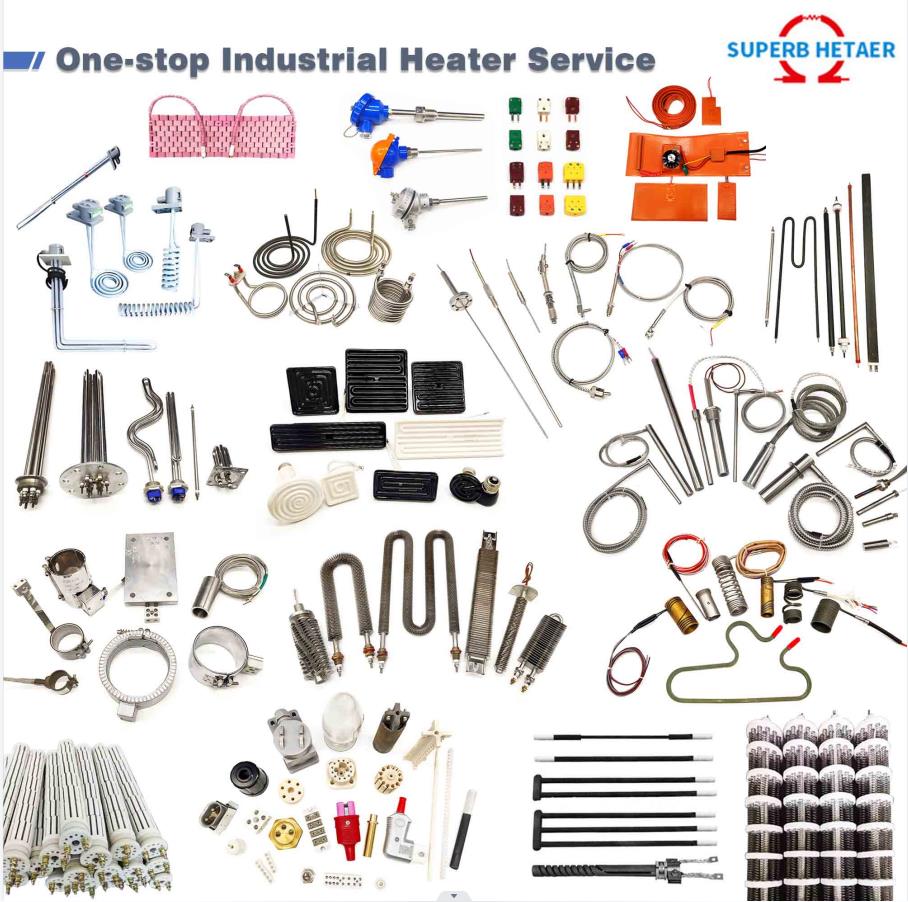
The above content is organized by Superb heater Company, super heater. Mainly professional production: industrial heating elements, temperature measuring elements, production equipment, accessories, and raw materials such as tubular heaters, tubular heaters, belt heaters, ceramic heaters, silicone rubber heaters, thermocouples, etc.
Welcome global industry partners to discuss cooperation!