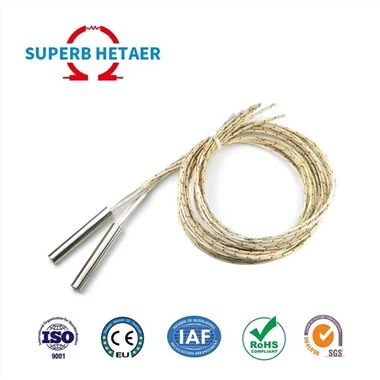
Electrothermal tube electroplating laser irradiation on the surface of the substrate
Leave a message
Electrothermal tube electroplating laser irradiation on the surface of the substrate
Laser irradiation of the substrate surface can occur during electroplating or chemical plating processes, as well as before or after this. Therefore, laser treatment can be divided into pre plating, plating, and post plating according to the different stages of laser treatment intervention. Among them, laser treatment after plating can be divided into three types based on the bonding between the coating and the substrate: the first type, if the coating and substrate are melted by laser and the coating is completely diluted by the substrate, it is laser surface alloying. The second type, if the coating and substrate are partially melted, the coating is diluted by the substrate, and the interface between the coating and substrate is metallurgical bonding, then it is a preset laser cladding. The third type, if the coating and substrate are not melted or metallurgical bonded, is laser heat treatment. The first and second types of coatings are preset layers for laser processing and are part of the laser processing process. The third type is to improve the performance of the coating, which is a part of the electroplating or chemical plating process. The factors that affect the bonding between the coating and the substrate mainly include the material of the substrate and the coating, the thickness of the coating, and the specific energy of the laser Es=P/DV (P is the laser power, D is the laser spot area, and V is the laser scanning speed). It is used as a preset coating before laser surface alloying, laser cladding, and laser gradient cladding, The coating can consist of one or several layers of different materials with a certain thickness.
Conventional electroplating is carried out between two electrodes immersed in an electrolyte. The metal substrate to be plated is placed in a salt solution containing a certain metal, and is driven by an external power source. Through electrolysis, metal ions are reduced and deposited on the surface of the substrate to form a metal coating. The analysis and research on the process of rapid electrolytic deposition indicate that the formation of an electroplated coating on the cathode substrate mainly includes three processes: ion migration, charge conversion, and lattice transformation, and the deposition rate is mainly determined by the ion migration rate and charge exchange rate. Further research shows that there are three main modes of ion migration: diffusion, convection and electromigration. To increase the rate of these three modes, the following measures can be taken: (1) increase the temperature of electrolyte, (2) stir the electrolyte, (3) increase the voltage between electrodes or reduce the distance between electrodes, and (4) increase the concentration of electroplating solution.
www.superbheater.com