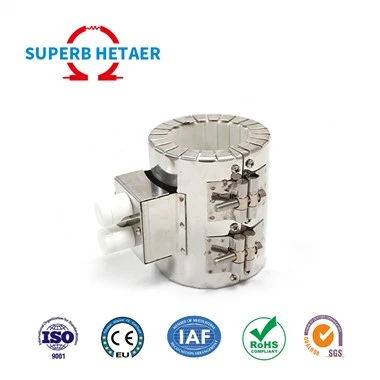
Composition of electric heat tracing tape and electric heat tracing system
Leave a message
Compliance with industrial heat tracing systems is the bottom line for production safety. Many companies fail safety inspections and create potential safety hazards due to incorrect component selection and improper system configuration. The key to compliance lies in selecting the right type of electric heat tracing tape and ensuring all certified components are in place. Understanding the electric heat tracing tape and system composition is essential to creating a compliant industrial heat tracing system.
Step 1: Select the Right Electric Heat Tracing Tape for the Scenario to Ensure Core Equipment Compliance
Safety standards vary significantly across different industrial scenarios, requiring precise matching of electric heat tracing tape selection to environmental requirements. In **flammable and explosive areas** such as petrochemical plants and coal mines, explosion-proof electric heat tracing tapes with Ex dⅡC T4 or higher certification must be used. Their casing and wiring structure can prevent internal sparks from contacting external flammable and explosive media. One chemical plant failed a safety inspection and had to suspend production for a week for rectification because it used ordinary heat tracing tape instead of explosion-proof tape.
In highly corrosive environments such as acid and alkali pipelines and electroplating workshops, corrosion-resistant heat tracing systems with fluoroplastic or 316L stainless steel sheaths must be selected, and their corrosion resistance rating must meet GB/T 10125 standards to prevent short circuits caused by exposed core wires due to sheath corrosion. For high-temperature conditions (such as boiler pipelines), high-temperature heat tracing systems with a temperature resistance of over 200℃ must be selected to prevent low-temperature heat tracing systems from burning out due to overheating. A food factory mistakenly used a room-temperature heat tracing system on a high-temperature sterilization pipeline, resulting in the heat tracing system melting and a two-day production line shutdown.
The second step: Ensure all certified accessories are available to avoid "compliant main equipment but lagging accessories."
A compliant heat tracing system requires not only a qualified heat tracing unit, but also correspondingly certified accessories; neither is dispensable. Junction boxes must match the explosion-proof and corrosion-resistant ratings of the heat tracing system. Explosion-proof junction boxes should be used in explosion-proof scenarios, while corrosion-resistant junction boxes should be used in corrosive scenarios. In one oilfield, the use of ordinary junction boxes with explosion-proof heat tracing resulted in sparks at the wiring points triggering an explosion-proof alarm. Thermostats must have automatic power-off functionality when temperatures exceed limits, with an accuracy error ≤2℃, and must be industrial safety certified to prevent overheating or freezing due to control failure.
Furthermore, insulation layers and fixing clips also have specific requirements: insulation layers must be made of flame-retardant materials with an oxygen index ≥32 to prevent fire spread; clips must be made of high-temperature resistant and corrosion-resistant materials, with spacing controlled at 30-50 cm to prevent heat tracing displacement from affecting heat transfer. In one pharmaceutical factory, the use of non-flame-retardant insulation layers caused a short circuit in the heat tracing system, resulting in insulation combustion and a significant safety hazard.
Step Three: System Configuration Follows "Scenario Adaptation + Standard Installation" to Ensure Overall Compliance
After selecting the correct equipment and accessories, system configuration must strictly adhere to installation specifications to avoid compliance issues due to improper construction. When applying heat tracing, overlapping and wrapping are prohibited to prevent localized overheating. Spacing must be at least equal to the width of the heat tracing wire. Grounding must be reliable, with a grounding wire cross-sectional area at least 2.5 mm² and a grounding resistance at least 4 Ω. In one chemical plant, excessive grounding resistance prevented timely current dissipation during heat tracing leakage, resulting in electrified equipment casings.
Compliance with industrial heat tracing systems is not a matter of individual equipment; it requires a comprehensive, end-to-end approach, from heat tracing selection and accessory matching to installation. Only when every step meets safety standards can official inspections be passed, potential safety hazards be fundamentally eliminated, and a robust safety barrier be built for industrial production.