


how does an electric immersion heater work
Leave a message
How Does an Electric Immersion Heater Work?
If you've ever wondered how your home's backup hot water system manages to heat an entire tank of water without any flames or gas, the answer usually comes down to a surprisingly simple but clever device: the electric immersion heater. Often nicknamed "the giant kettle in your cupboard," it's one of those things most of us take for granted until the main boiler breaks down on a cold winter morning.
So, how exactly does it turn electricity into nice hot water for your shower? Let's break it down step by step.
The Basic Principle: Joule Heating (a.k.a. Resistance Heating)
At its core, an electric immersion heater works on the same principle as your toaster, electric kettle, or space heater - something called Joule heating (or resistive heating).
When electric current flows through a material that has resistance, the electrons collide with atoms in the material. Those collisions generate heat - lots of it. The higher the resistance and the more current you push through, the hotter it gets. That's the entire magic trick.
In an immersion heater, this heating happens inside a specially designed element that's submerged directly in the water.
What's Inside a Typical Immersion Heater?
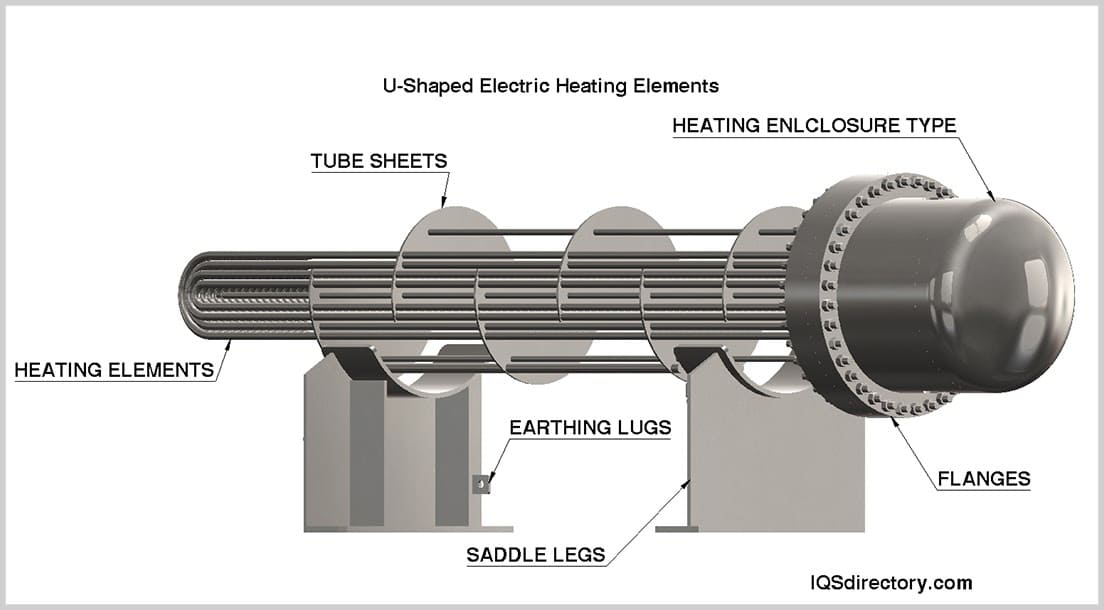
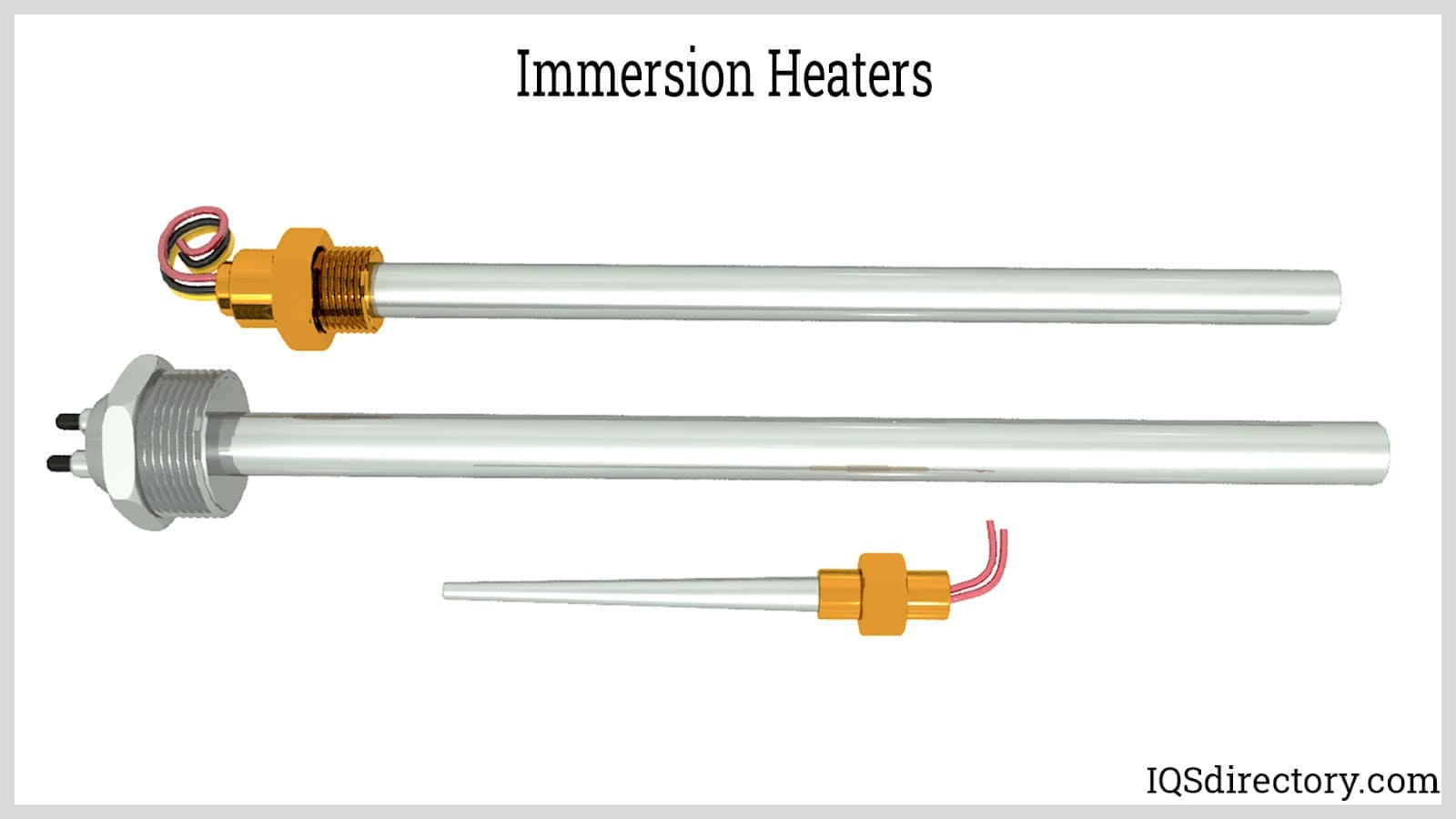
Most household immersion heaters look like a long metal rod (often with a slight U-shape or straight design) that screws into the side of your hot water cylinder. Here's what you would see if you could cut one open:
Here are a few clear visuals of what the heating element and overall setup actually look like:
iqsdirectory.com
iqsdirectory.com
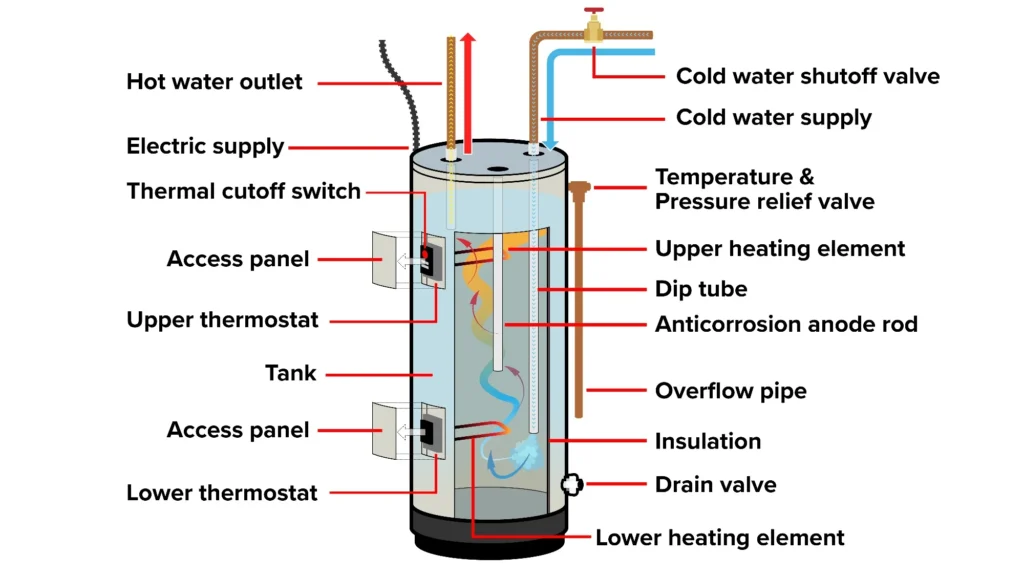
And here's a cutaway view showing how the heater sits inside a typical hot water tank:
logan-inc.com
Parts of a Water Heater: The Complete Guide
The key parts include:
The heating coil - Usually made of nichrome wire (a nickel-chromium alloy that's excellent at resisting current and producing heat).
Electrical insulation - Magnesium oxide (MgO) powder surrounds the coil. It insulates the live wire electrically but conducts heat very well.
Protective sheath - A metal tube (most commonly copper, stainless steel, or sometimes Incoloy for harder water areas) encases everything. This is the part that actually touches the water.
Thermostat - A built-in temperature-sensing rod runs alongside the element. You set it (usually 50–60°C) and it automatically cuts the power when the water reaches your chosen temperature, preventing overheating and saving energy.
Head/terminal block - The part outside the tank where the electrical cable connects.
Step-by-Step: What Happens When You Switch It On?
You flip the switch (or the timer kicks in).
Electricity flows from your household supply (typically 230–240V in most places) into the heating coil.
The resistant nichrome wire quickly heats up - often glowing red-hot inside its sheath if you could see it.
Heat transfers through the MgO insulation to the metal sheath (conduction).
The sheath then transfers heat directly into the surrounding water (again conduction, plus some convection as the water starts moving).
Warm water rises (hot water is less dense), creating natural circulation in the tank.
Cold water near the bottom sinks toward the element, gets heated, and the cycle continues.
Once the thermostat senses the target temperature has been reached, it opens the circuit and the heating stops.
The water slowly cools over time (especially if the tank isn't well insulated), and the heater cycles back on when needed.
The whole process is surprisingly efficient - almost 100% of the electrical energy gets converted to heat in the water (unlike gas boilers, which lose some energy through the flue).
A Few Practical Notes
Most domestic immersion heaters are rated at around 3kW, which means they can heat a typical 120–250 litre tank from cold in 2–4 hours depending on size and starting temperature. They're rarely used as the primary hot water source these days (combi boilers or system boilers are far more convenient and usually cheaper to run), but they remain incredibly valuable as a backup.
Next time your boiler is down for repair and you still have hot showers, remember - it's just good old resistance heating doing its quiet, reliable job inside that tank in the airing cupboard. Simple, effective, and surprisingly clever engineering.


